We couldn’t leave Siena without one last visit to our favorite restaurant, La Taverna di San Guieseppi.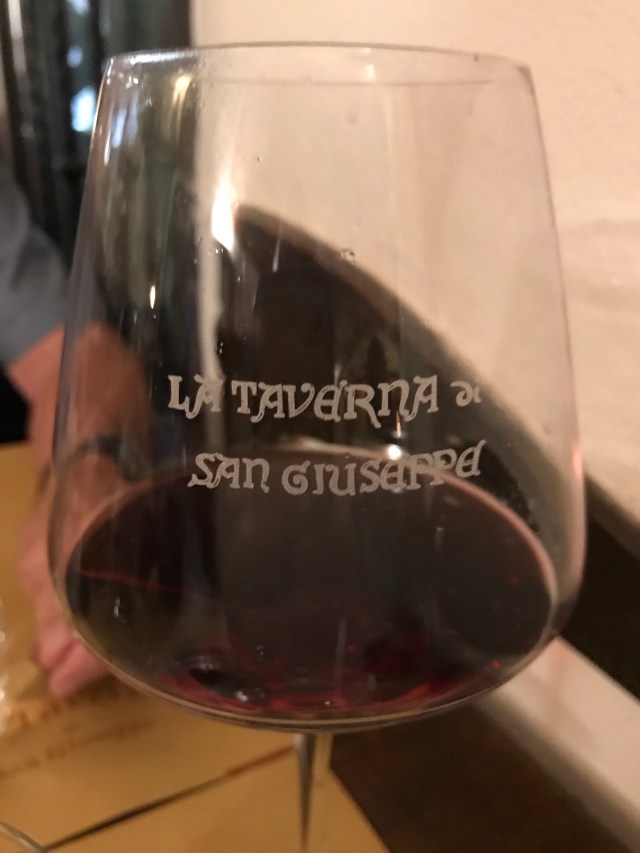 La Taverna is a very special place. It specializes in Tuscan cuisine and is often rated the best restaurant is Siena. It is really well run with great attention to detail. The service is outstanding; visible when you want something but unobtrusive when you don’t. The service, although friendly, never gets in the way of your meal.
La Taverna is a very special place. It specializes in Tuscan cuisine and is often rated the best restaurant is Siena. It is really well run with great attention to detail. The service is outstanding; visible when you want something but unobtrusive when you don’t. The service, although friendly, never gets in the way of your meal.Karl was particularly struck by this one time when, shortly after we sat down, a complimentary glass of Prosecco appeared to right of his plate. He didn’t see it being placed there; no one interrupted our conversation to take credit for it, it just appeared. After we ordered our food, Karl noticed that the empty glass was gone. Again, he didn’t notice a waiter, the glass just disappeared!
Our farewell visit was during truffle season, which a big deal in Tuscany and other parts of Italy. Karl loves truffles and had enjoyed pasta with black truffles a day or two earlier. La Taverna’s menu, which changes seasonally, had several truffle items which had just been added. Two of the items featured white truffles. The common truffle is rare and black. White truffles are much rarer and white. And much more expensive. Karl thought, well, when in Tuscany during truffle season, do as the Toscani, do so he decided to have white truffle pasta first, followed by a beef filet with white truffles.
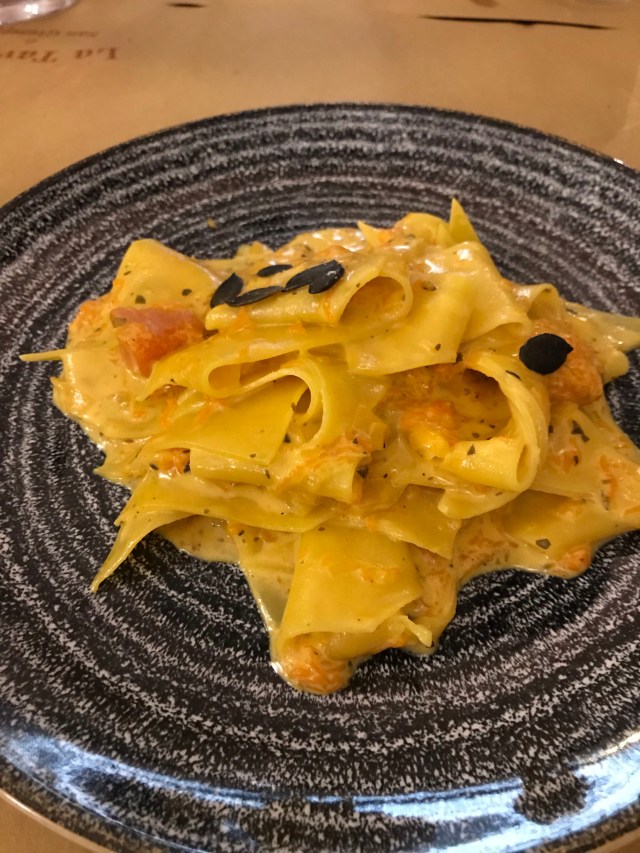
Partly because of their cost, truffle dishes usually have just a little grating of truffle on them. At La Taverna, a waiter rolled up a cart to our table on which he had Karl’s pasta, a bowl covered by a linen napkin, a grater, and a scale! The waiter reverently unwrapped the truffle from the napkin, put it on the scale, tared (zeroed) out the scale and began vigorously grating away, putting the truffle back on the scale from time to time to see how much truffle was on the pasta. When he got to nine grams (about three tenths of an ounce) he served the pasta with a flourish.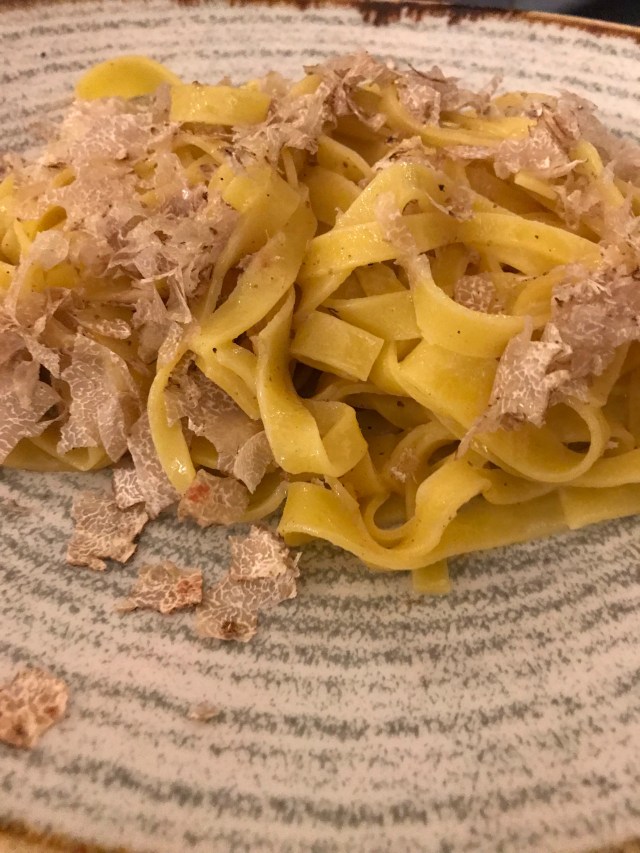 It was outstanding, as was Leslie Ruth’s pasta with zucca (pumpkin) sauce.
 When it was time for our second courses, out came the cart with Karl’s steak, the scale, and the lovingly wrapped white truffle. For this dish, the headwaiter himself, Lucca, did the honors, grating a full 10 grams onto the steak.
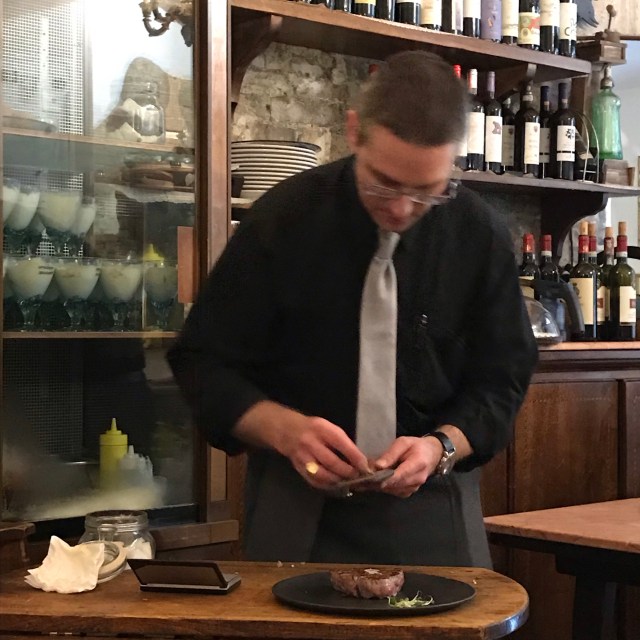 Again, both dishes we ordered, Karl’s steak
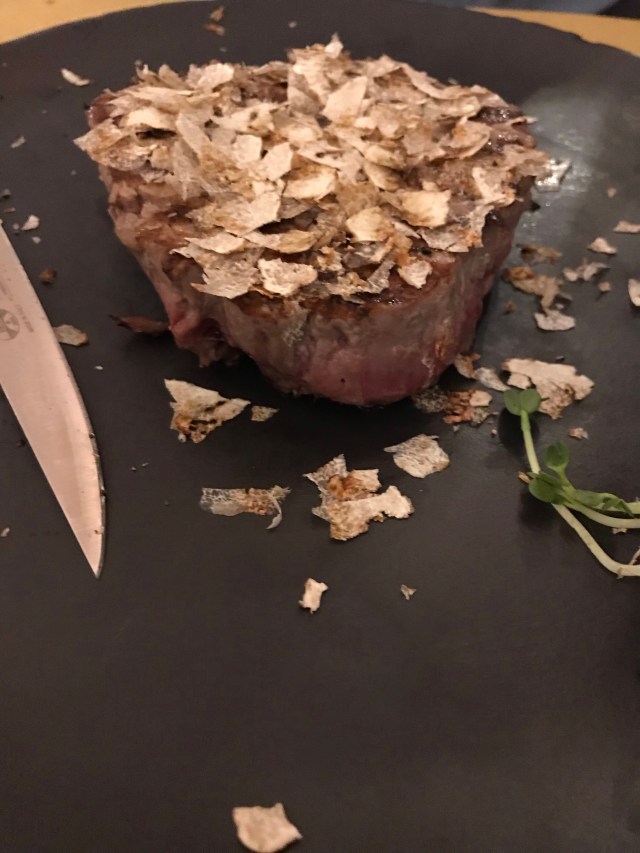 and Leslie Ruth’s Tuscan Chianti based beef stew
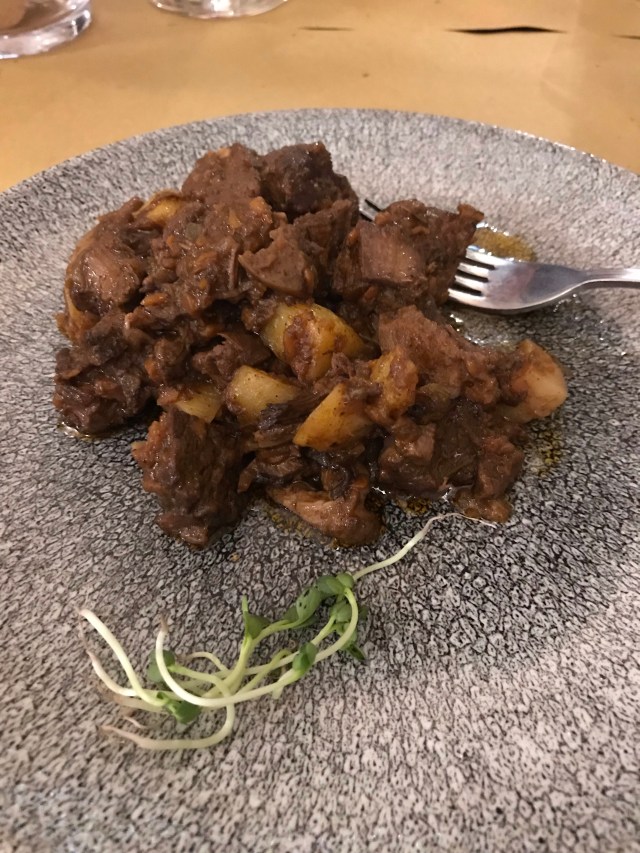 were outstanding, as was the Chianti one of the owners had recommended.
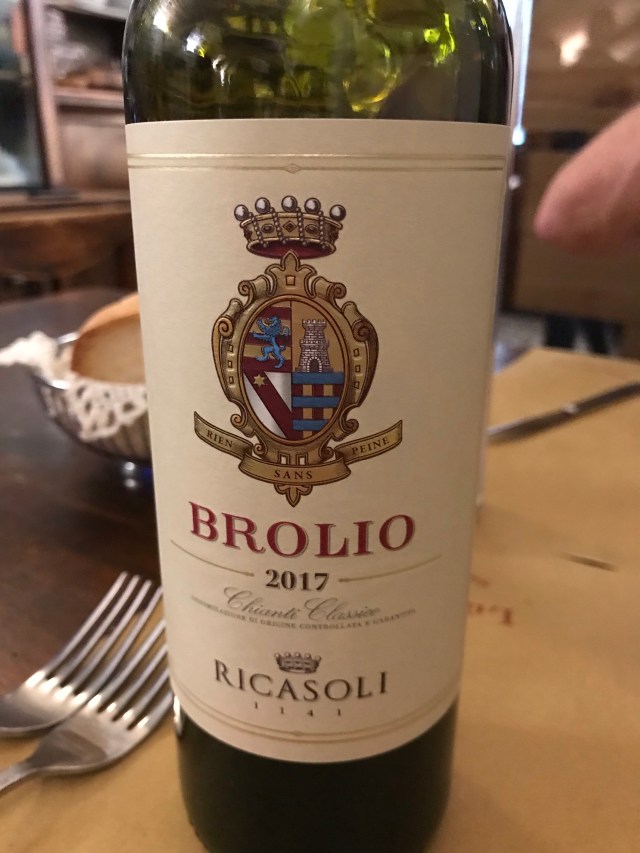 Dessert was special. When we had visited La Taverna earlier this trip, we had asked for their wonderful candied pear, only to be told, ”well, no, you can’t have candied pear, we aren’t really in the height of the season. We can give you candied peach, though” (which was excellent, but just not as good as the candied pear we remembered so fondly). This time, pears, like truffles, were in season and we both had one.
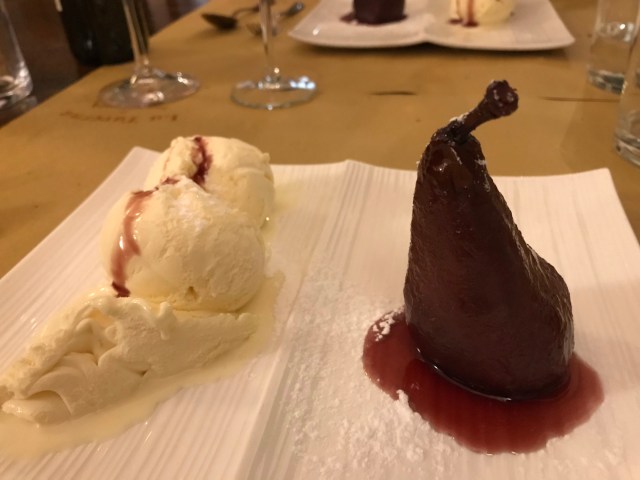 After dinner, one of the two owners (a father and son, this was the son) came by to say ciao and offer us some grappa, sort of a brandy made by fermenting the pulp and skins left over after grapes are crushed and the juice is poured off to make wine. It is then distilled and aged. Mateo explained that this grappa was made by a friend of his father who was a retired wine maker. He produces only 50 bottles a year; La Taverna gets eight of them.
It was outstanding, as was Leslie Ruth’s pasta with zucca (pumpkin) sauce.When it was time for our second courses, out came the cart with Karl’s steak, the scale, and the lovingly wrapped white truffle. For this dish, the headwaiter himself, Lucca, did the honors, grating a full 10 grams onto the steak.Again, both dishes we ordered, Karl’s steakand Leslie Ruth’s Tuscan Chianti based beef stewwere outstanding, as was the Chianti one of the owners had recommended.Dessert was special. When we had visited La Taverna earlier this trip, we had asked for their wonderful candied pear, only to be told, ”well, no, you can’t have candied pear, we aren’t really in the height of the season. We can give you candied peach, though” (which was excellent, but just not as good as the candied pear we remembered so fondly). This time, pears, like truffles, were in season and we both had one.After dinner, one of the two owners (a father and son, this was the son) came by to say ciao and offer us some grappa, sort of a brandy made by fermenting the pulp and skins left over after grapes are crushed and the juice is poured off to make wine. It is then distilled and aged. Mateo explained that this grappa was made by a friend of his father who was a retired wine maker. He produces only 50 bottles a year; La Taverna gets eight of them.Some grappa is firewater. Some grappa is good. Some, like the Brunello Reserva grappa we tasted with Karl’s sister Jane and bother-in-law Jim earlier this trip, is excellent. This was outstanding, even better than the Brunello. Leslie Ruth and Karl shared one glass (needless to say, they dole it out very sparingly) and it was a perfect end to a perfect meal.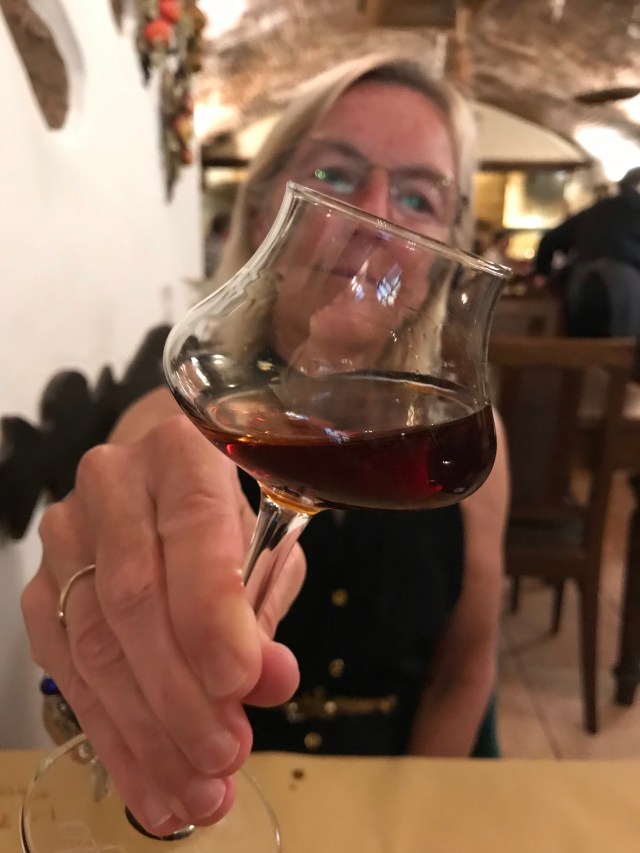 We won’t be back to La Taverna for quite a while, but we have the memories of this outstanding meal to remember it by!
We won’t be back to La Taverna for quite a while, but we have the memories of this outstanding meal to remember it by!(On rereading the title of this post it occurs to your dedicated bloggers that some of our readers who knew us in our youth may have misinterpreted it. It just goes to show you must not jump to conclusions!)
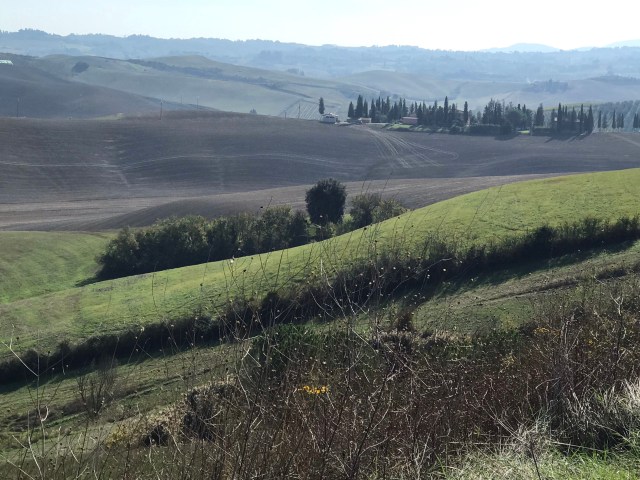
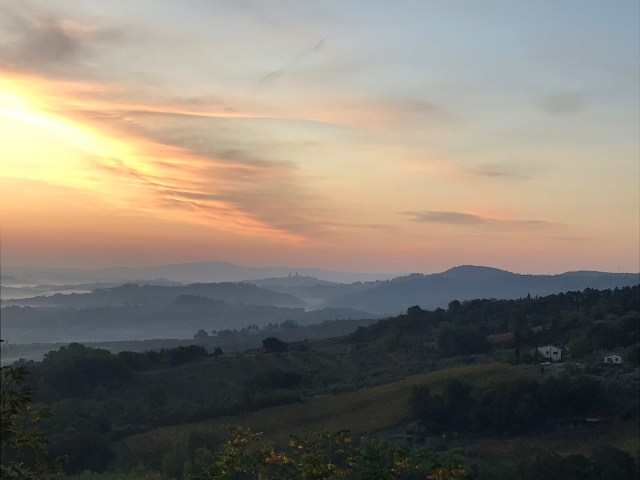
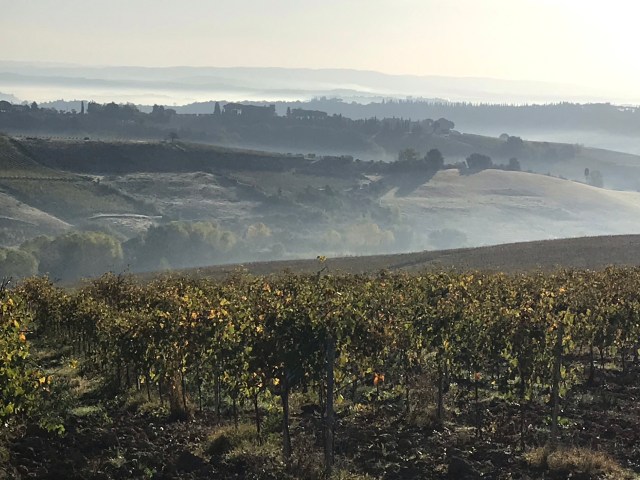
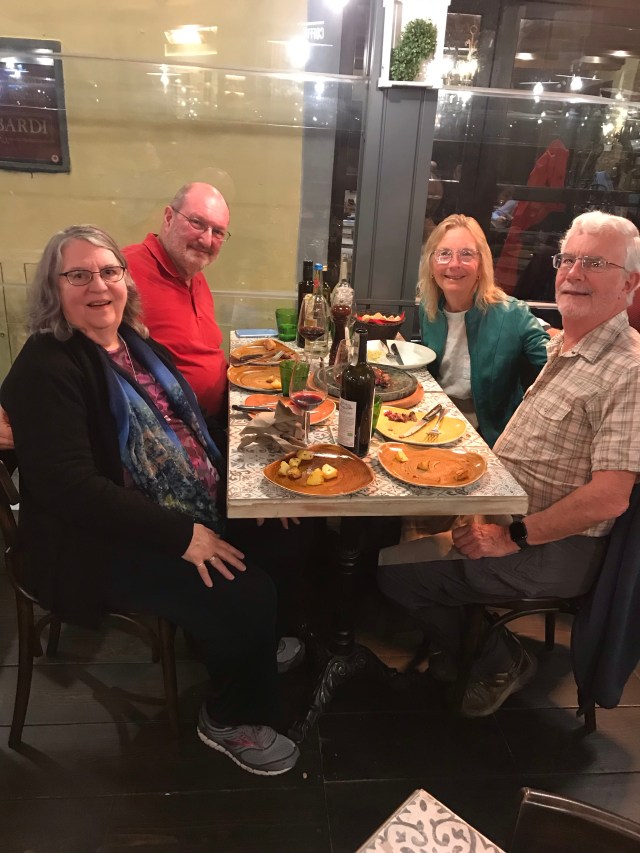 with Jane, Jim, and Karl enjoying the famous bistek Florentine.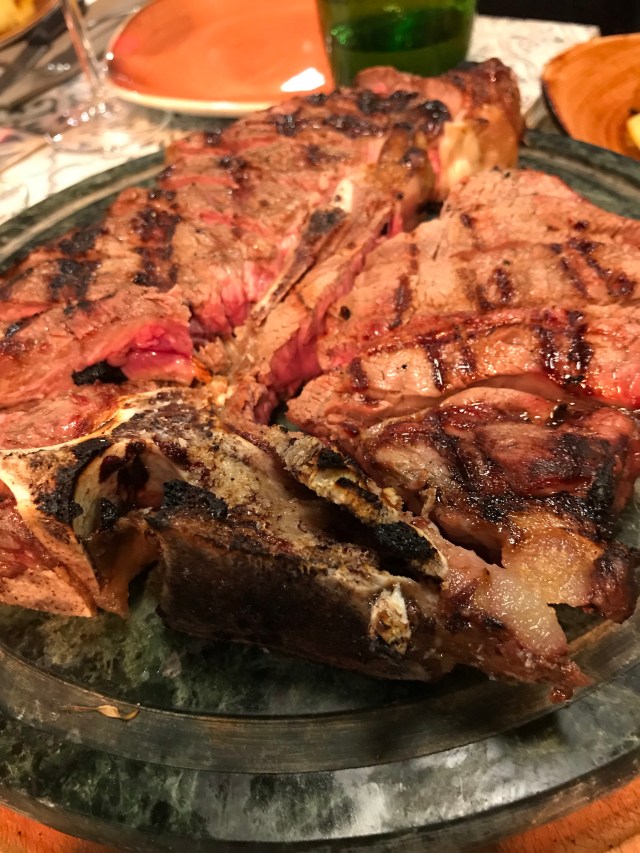
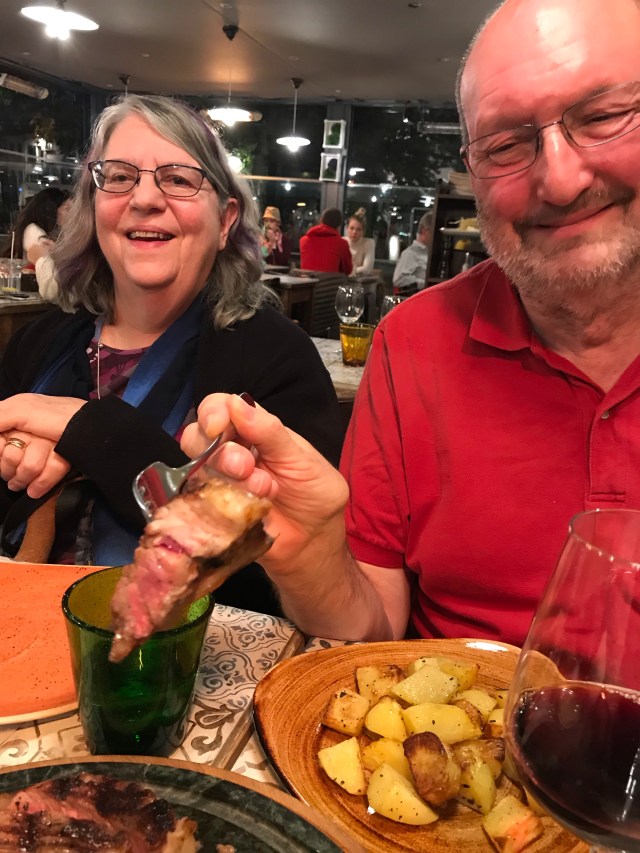
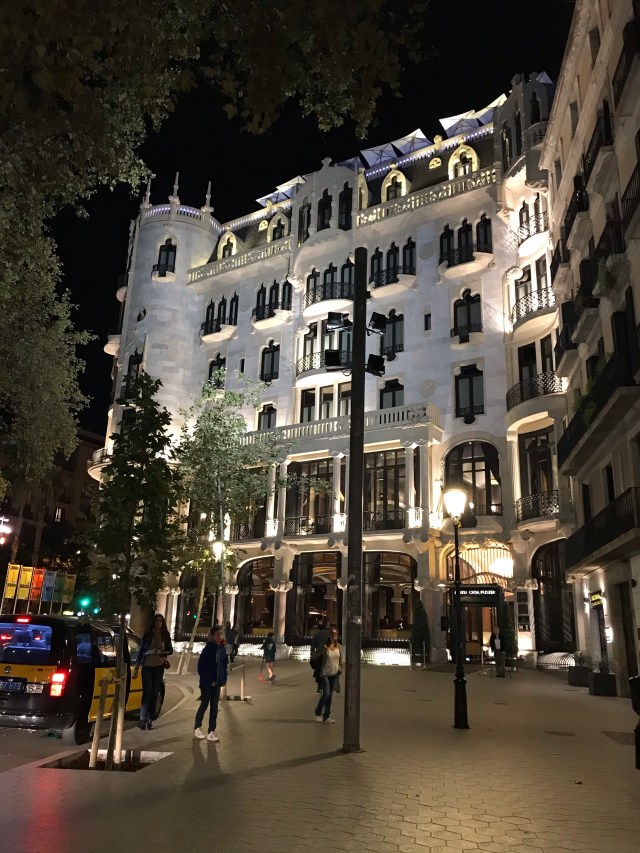 and fresh fish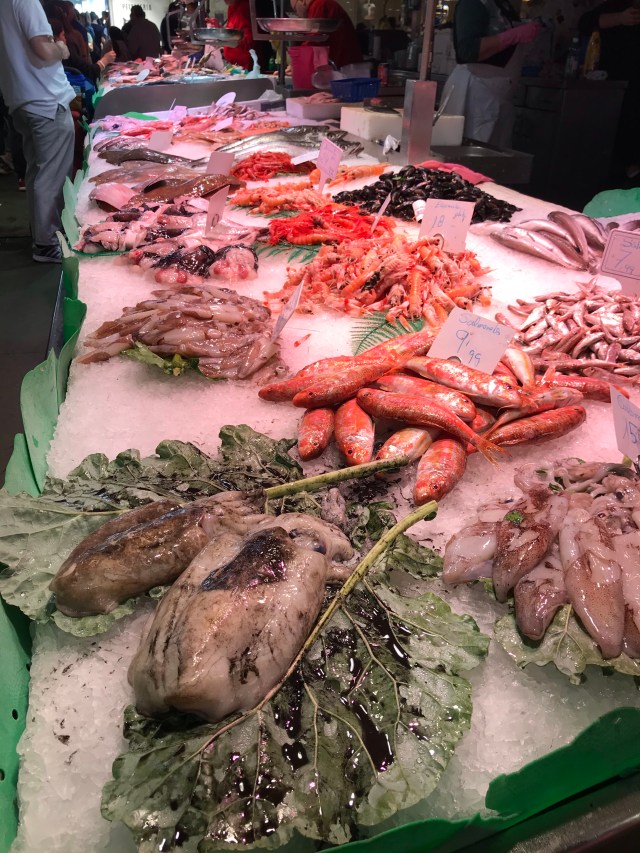
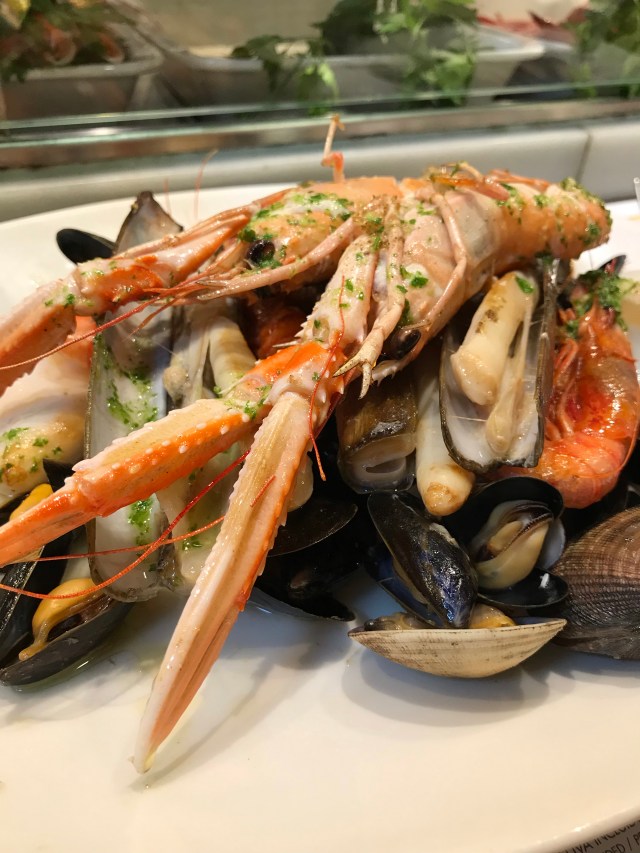 and tapas
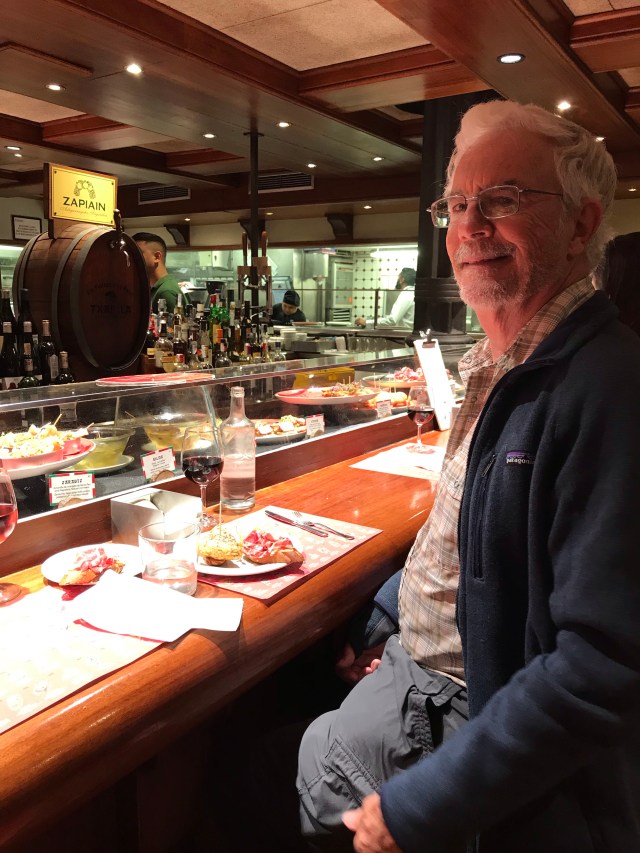 in the city. We even managed to find fresh sardines.
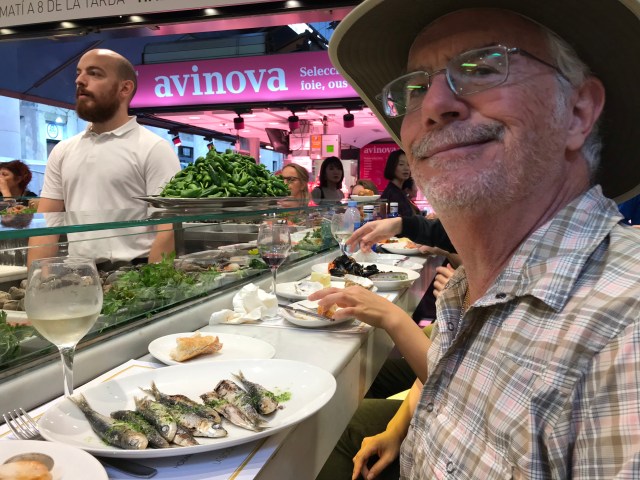 We first discovered them 6 years ago in Santiago, Spain, at the end of our 1,000 mile walk. They are salty and firm but tender, and nothing like what my Pop Hale used to buy in a tin and eat on saltine crackers.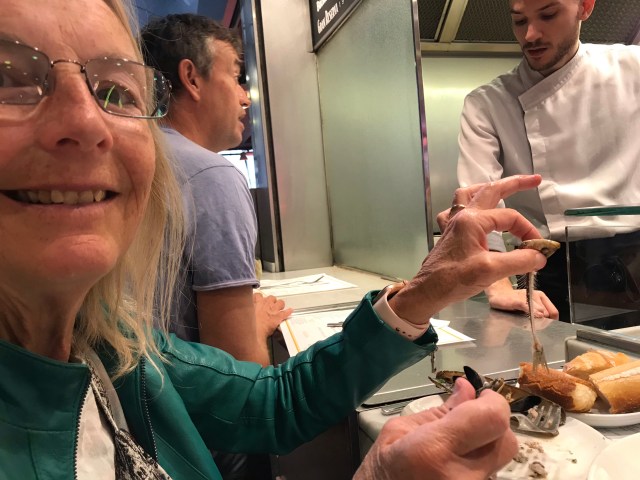
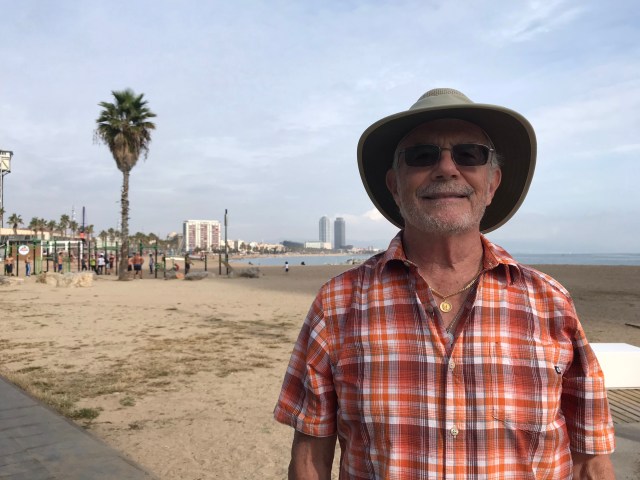 to the Gothic Quarter
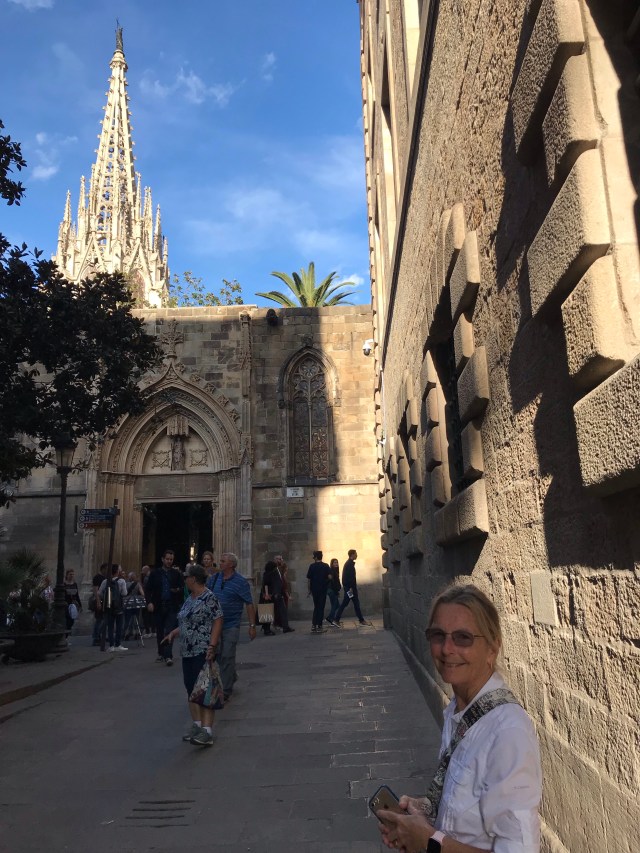 and beyond. We lucked out because there were no violent demonstrations unlike a few days before our arrival.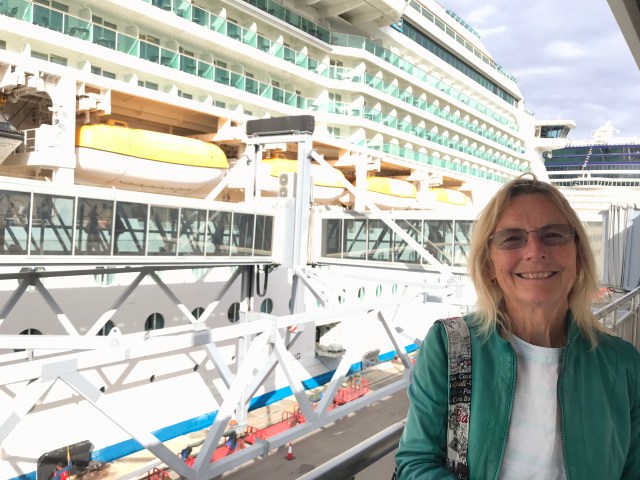
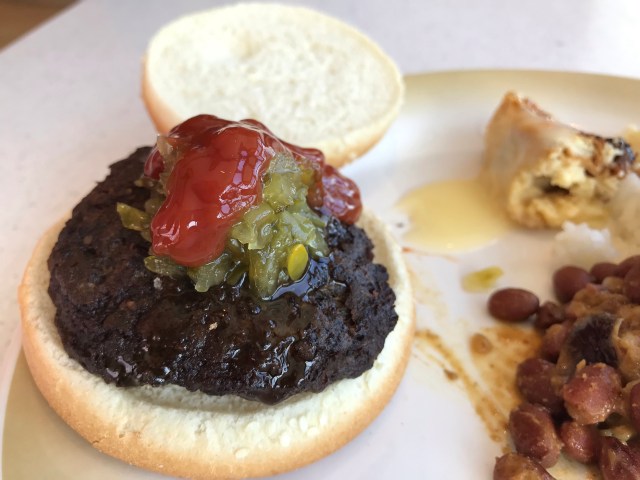
 Leslie celebrated with real ketchup on a hamburger based ketchup delivery system
 as we bid adios to Barcelona and Hola to our 2019 Atlantic crossing adventure.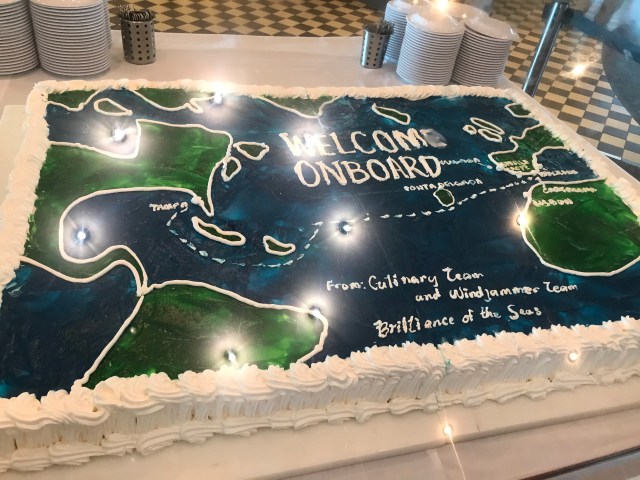
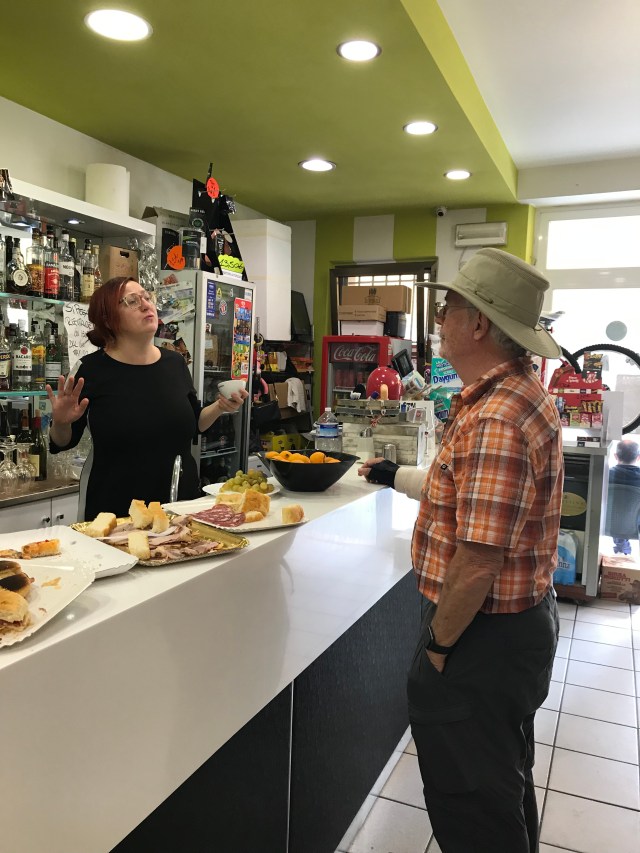 (we’d never seen one like it) and she explained that their coffee producer had designed it himself.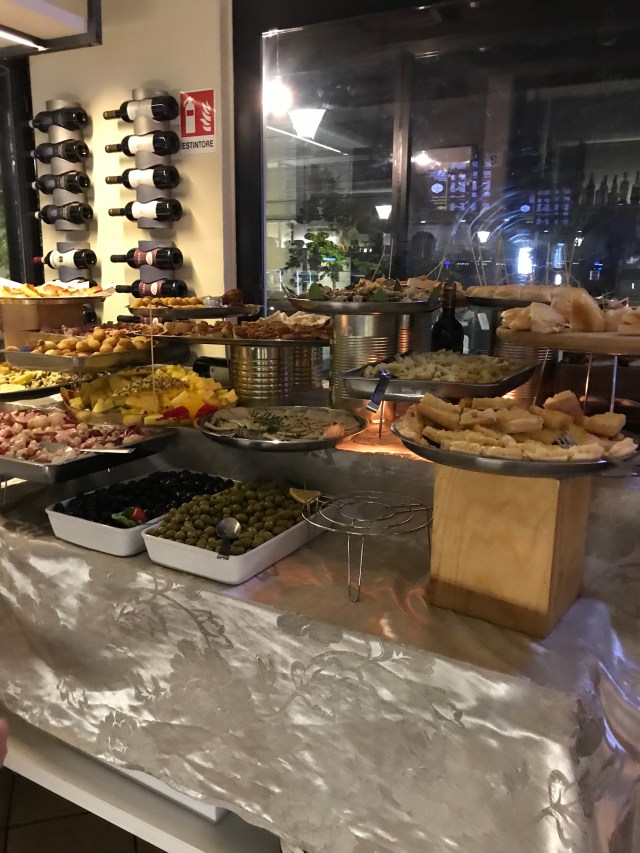
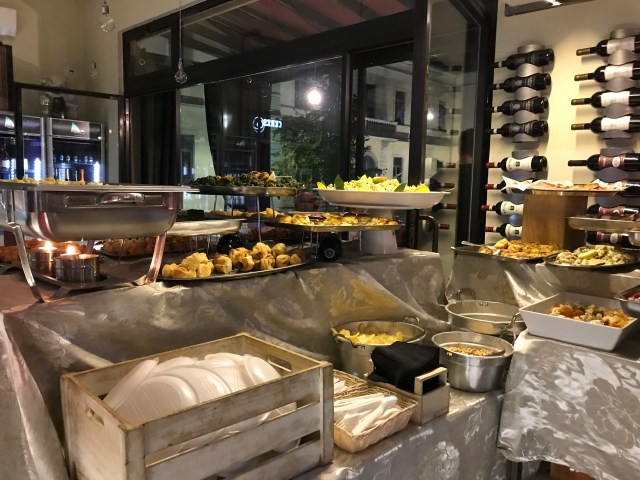 Sort of an Italian happy hour. We drank Montecarlo wine, the local white, which was excellent. We weren’t too hungry, but we nibbled at some items on the buffet.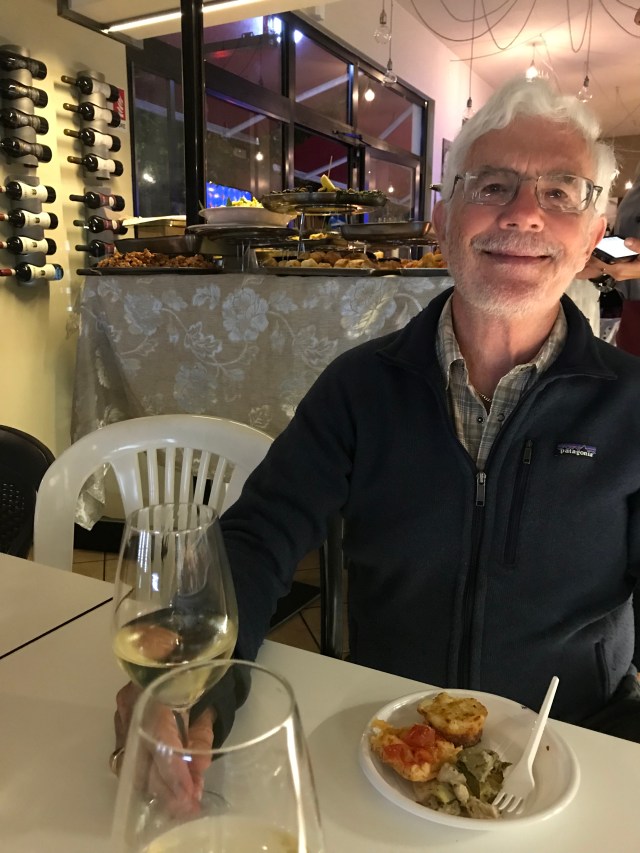
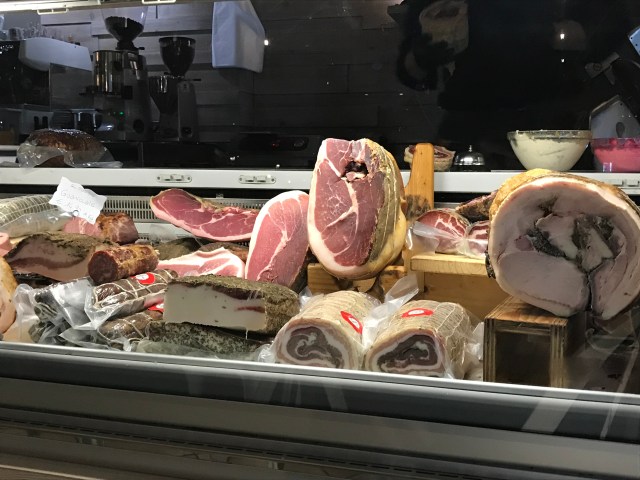 The counterman took a liking to us and gave us a small platter with some of his lardo (lard – which may not sound good but tasted wonderful)
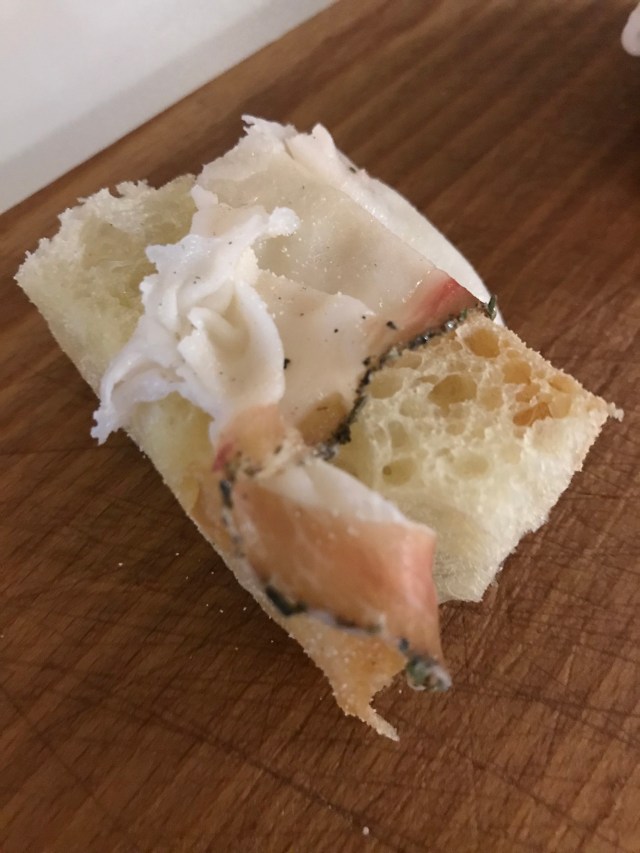 and some of his porchetta, which was up there with the best we’ve ever had.
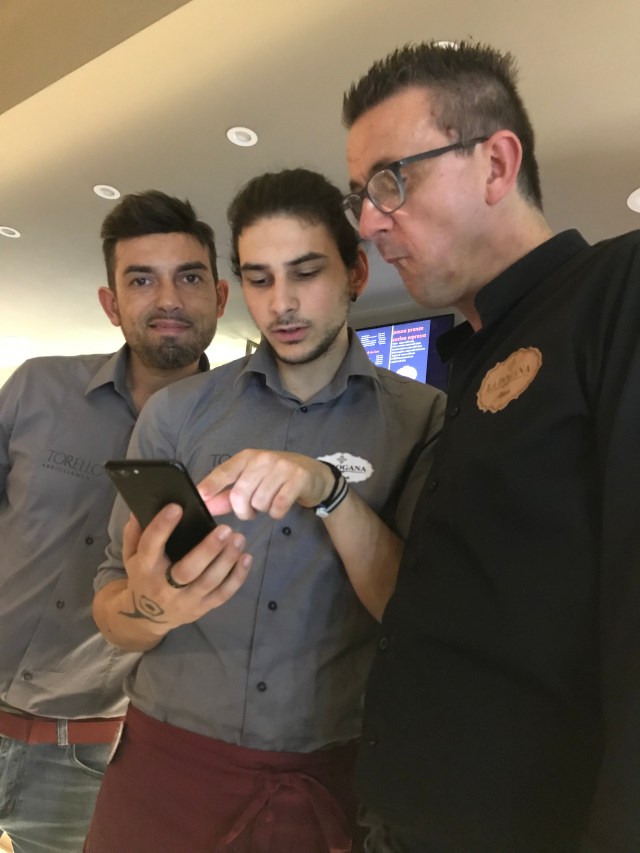 Once again, we could have stayed for hours, but tomorrow’s walk beckoned, and we made a reasonably early night of it.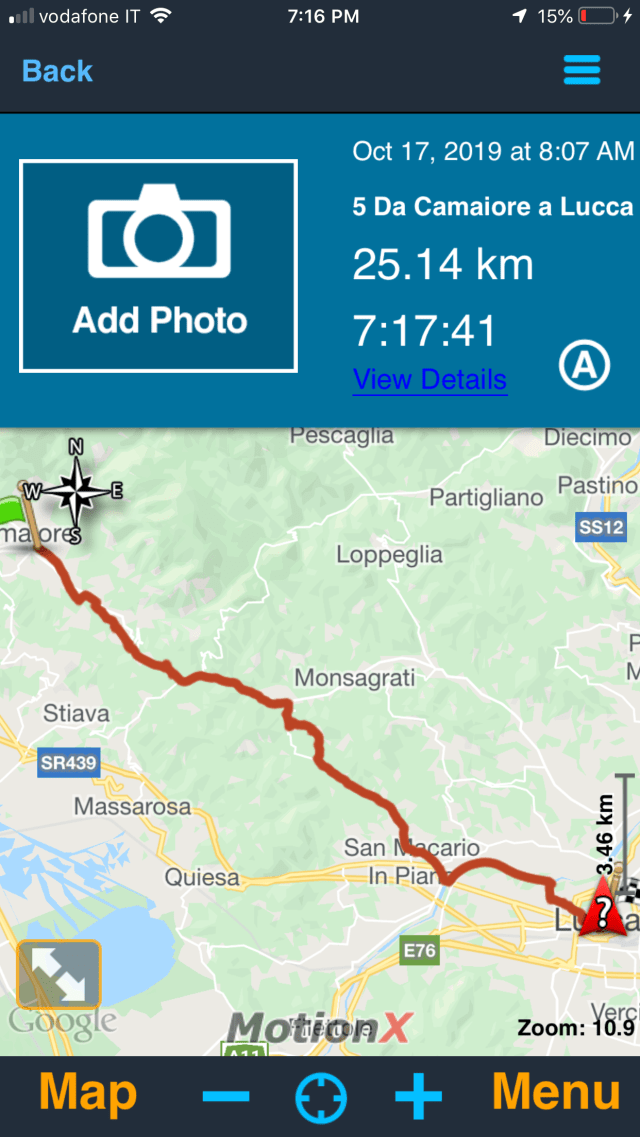
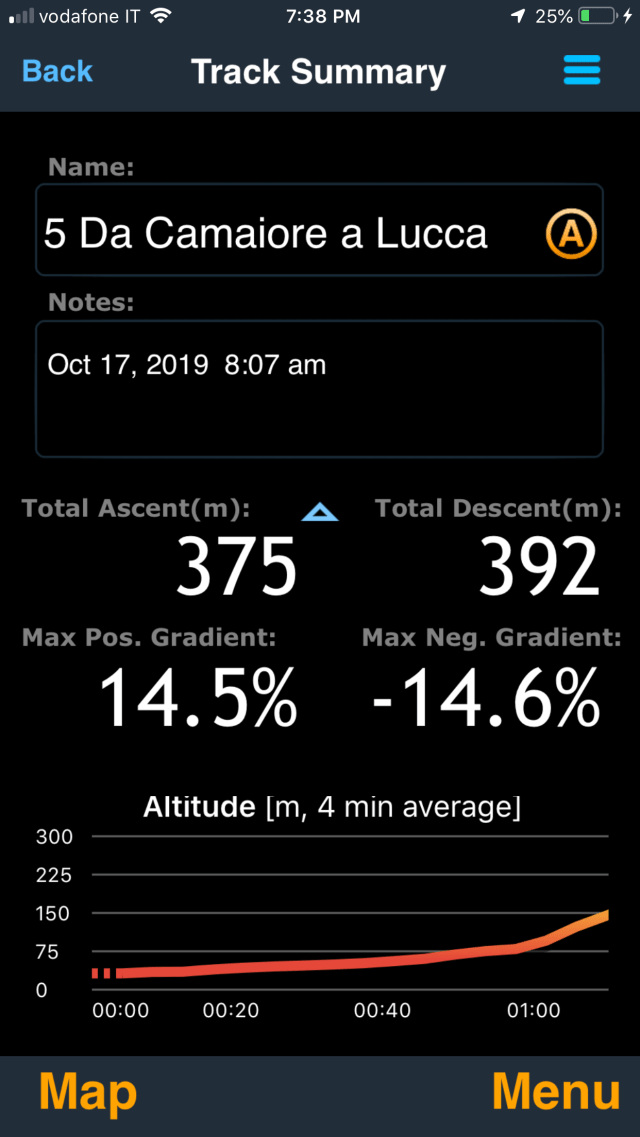 Not the furthest we’ve walked (we once did 43 kilometers on the Cammino di Francesco) or the highest climb or descent (the Grand Canyon last spring was 1,449 meters or 4,754 feet each way) but the hardest walk this trip, and it was tiring.
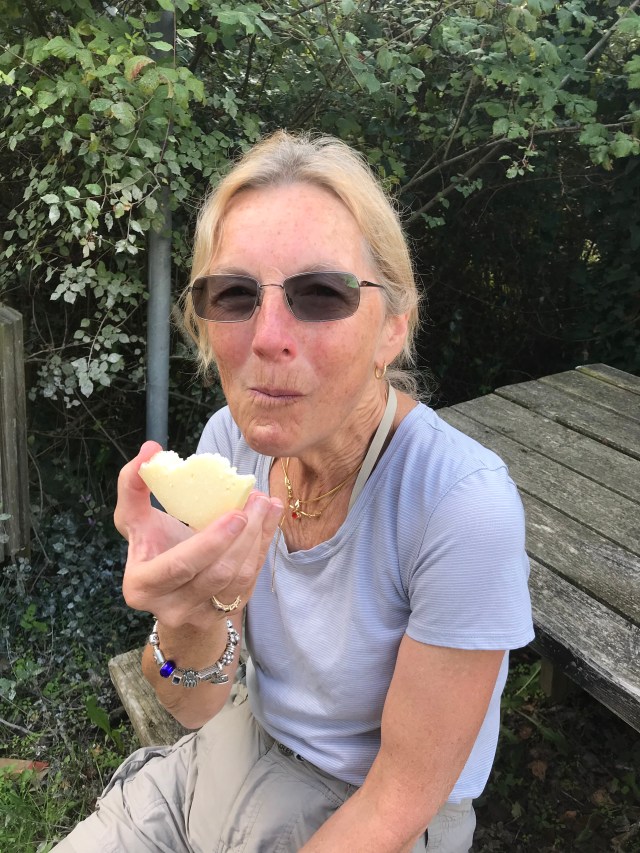 that they got us to Lucca with cheese to spare. We arrived in Lucca, a Medieval walled city proud of our walk, but ready to put our feet up. Fortunately, our hotel served drinks and snacks, so we settled in for an apericena that served as dinner.
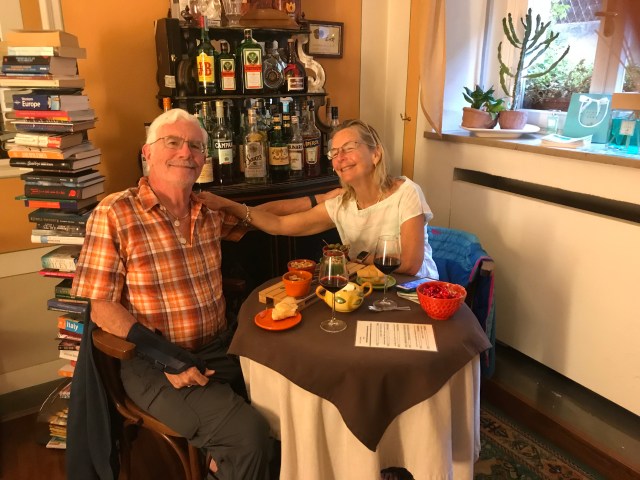 While we were at it, we finished off the remainder of the pecorino from Leslie Ruth’s sandwich.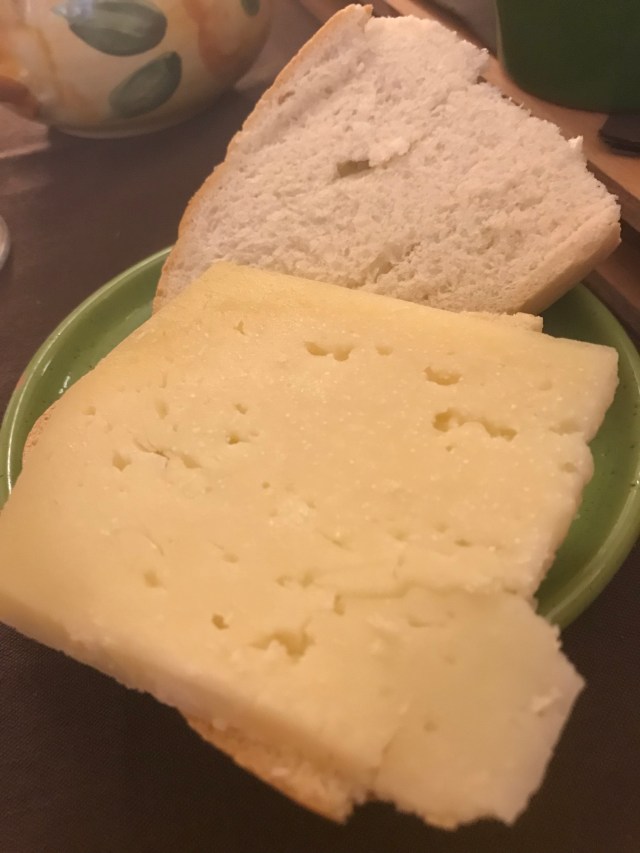
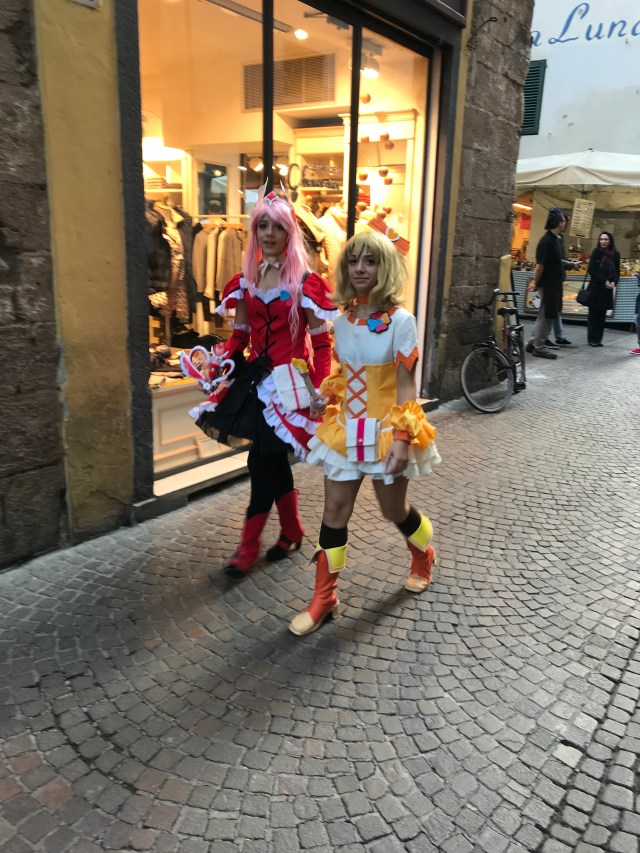
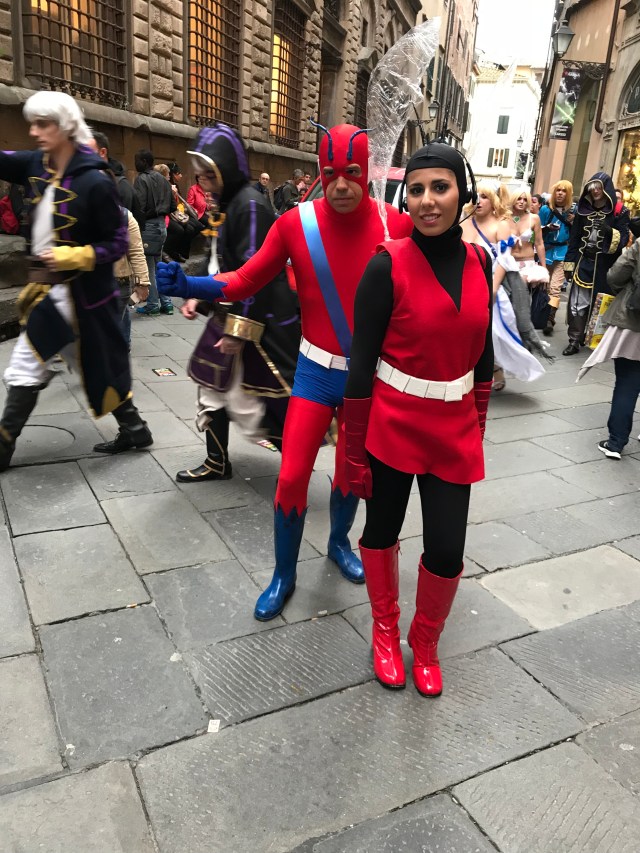
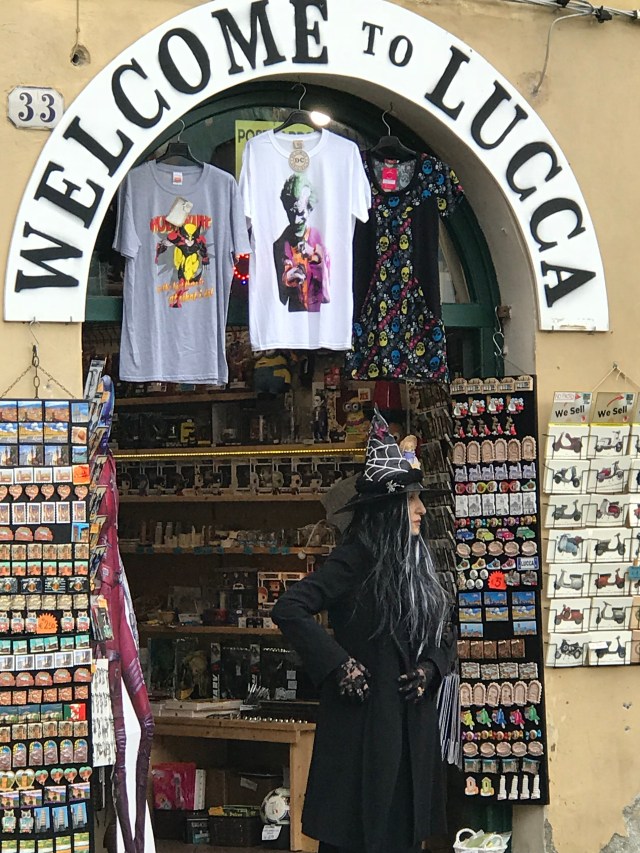
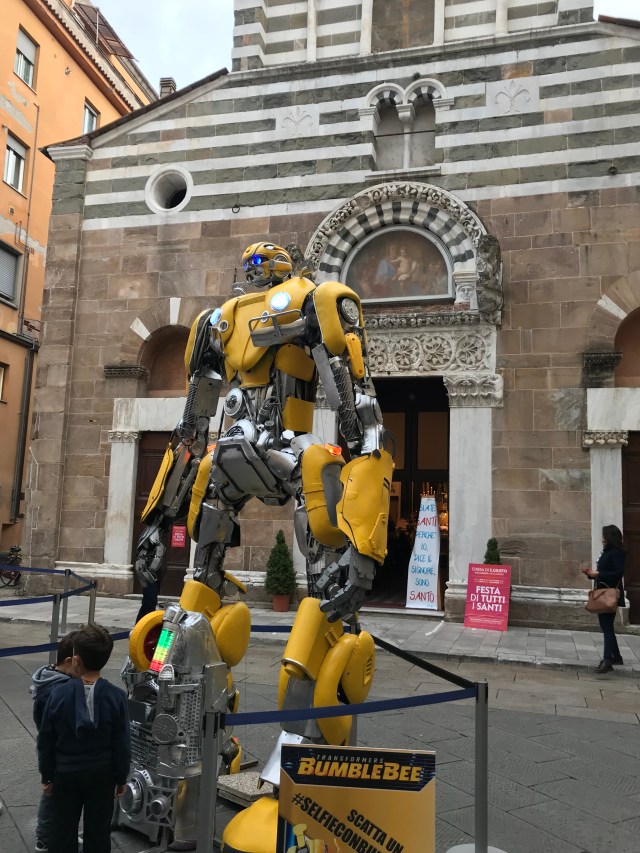 We’re hoping it will be more normal during this visit.
 seeing many marble sculptures all over the town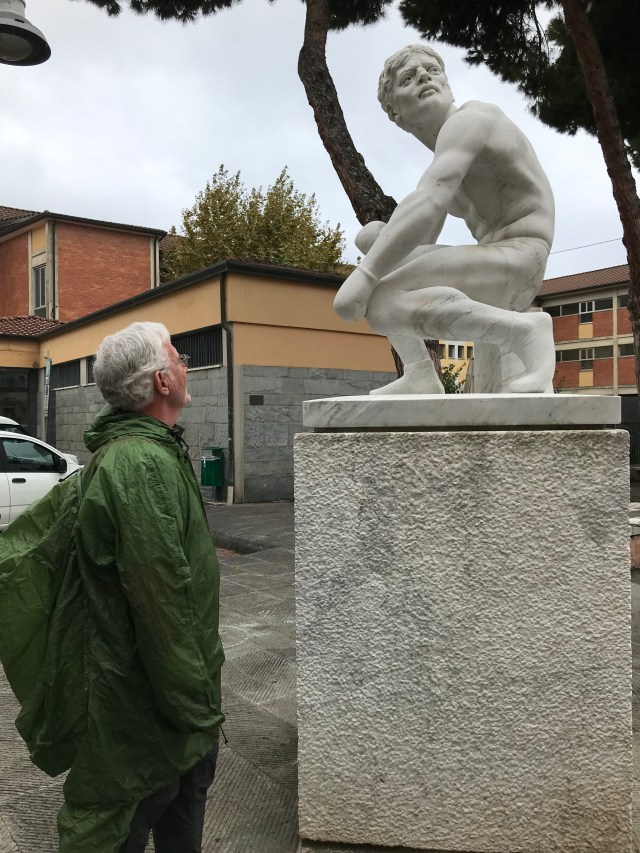
 and being reminded by a sign that Pietrasanta was where Michaelangelo found the most beautiful marble in all of Italy that Karl had a forehead slapping epiphany. Not holy Peter, holy stone! Stone, or pietra, is feminine, so it takes the feminine version of holy, or santo, which is Santa: Pietrasanta.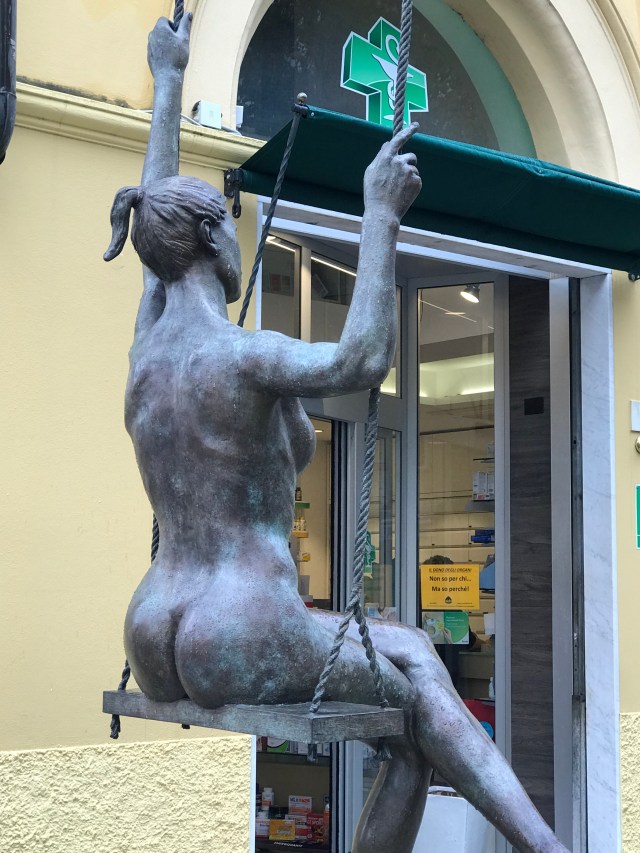
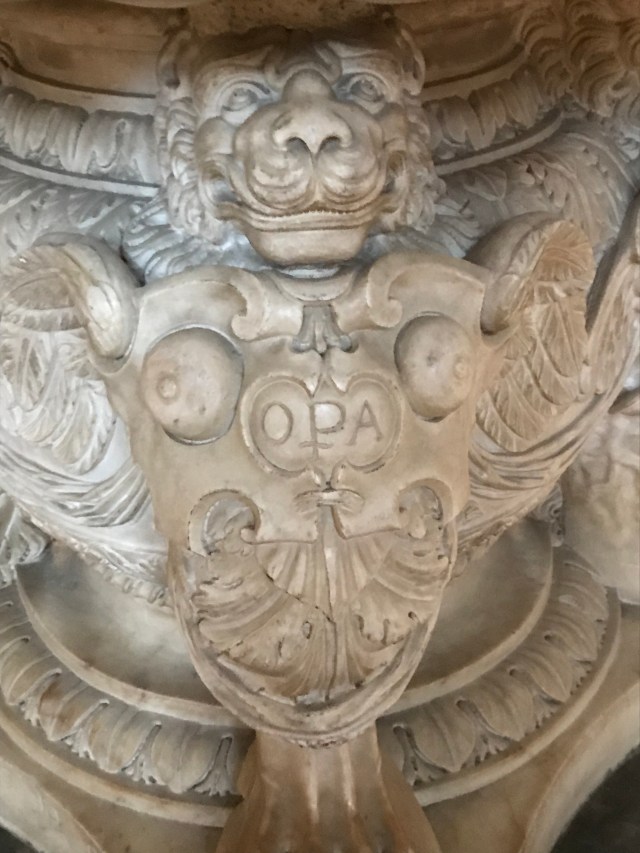
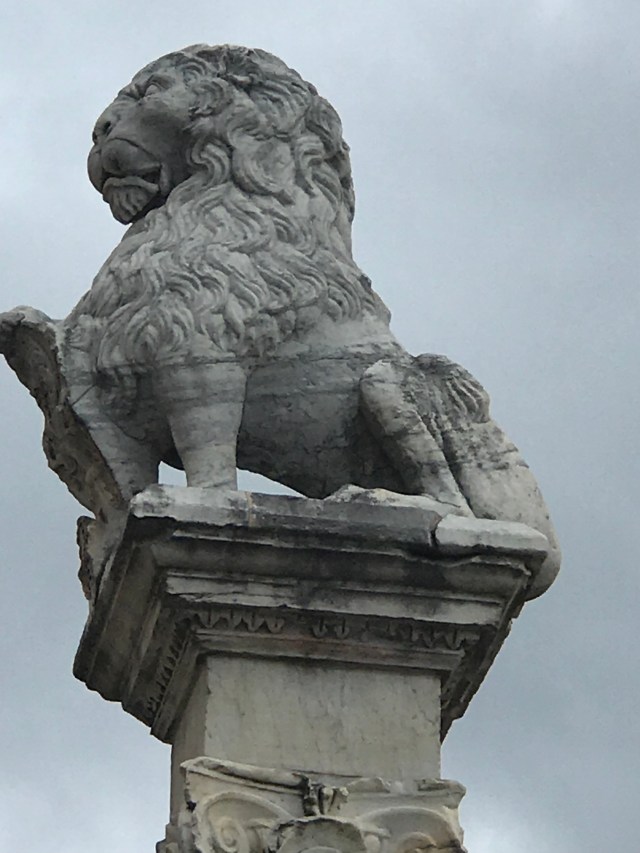
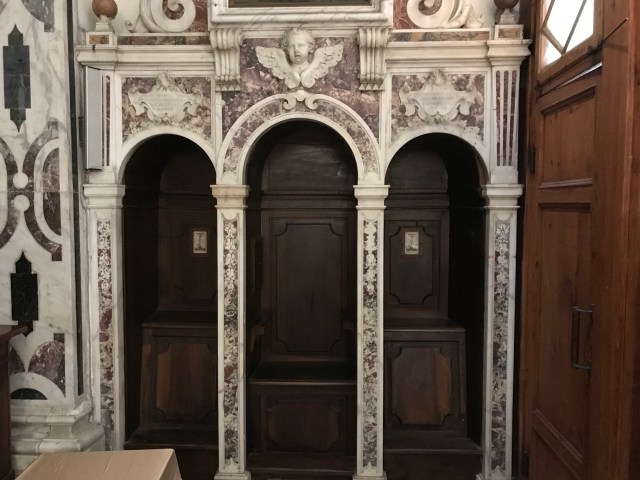 some glorify the various rulers, such as this Medici family lion.
 Some are terrifying
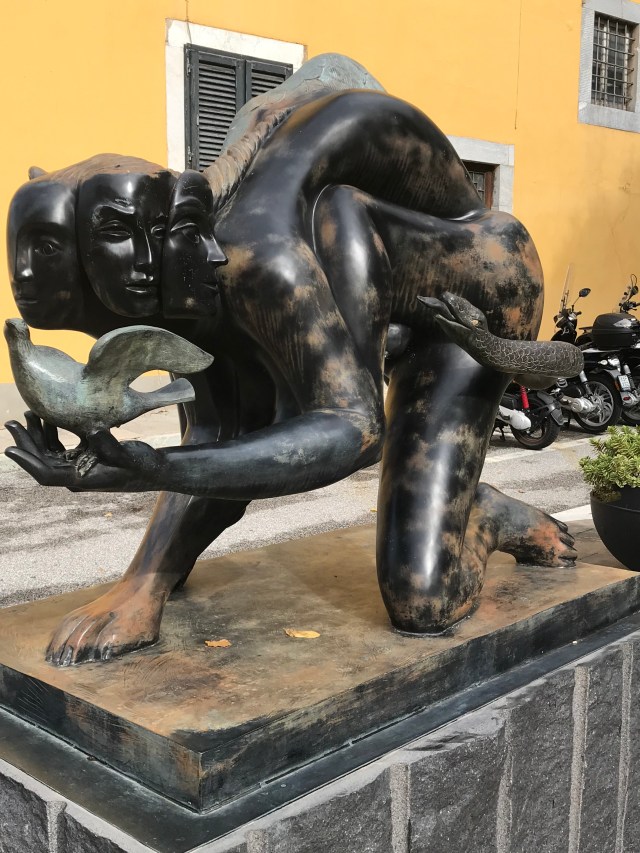 and some are whimsical.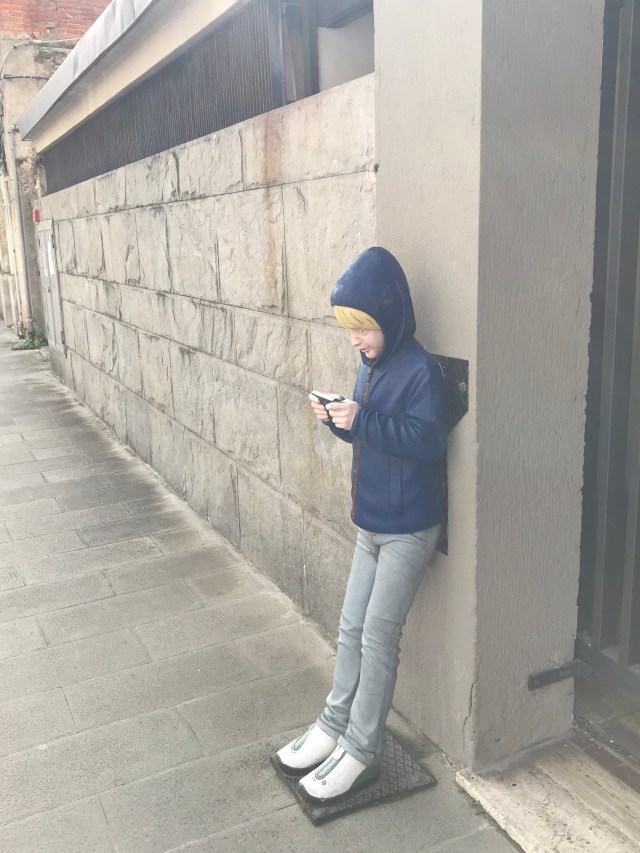
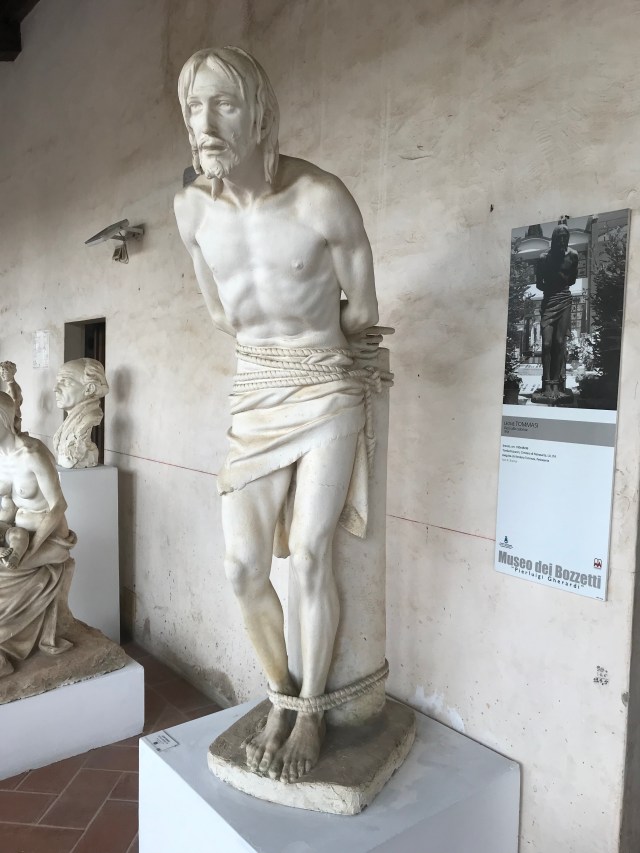
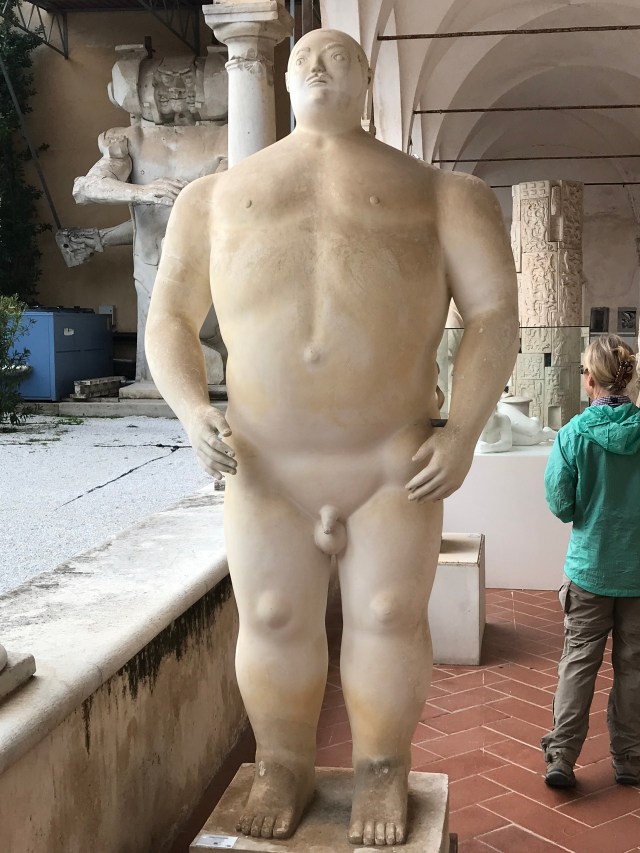
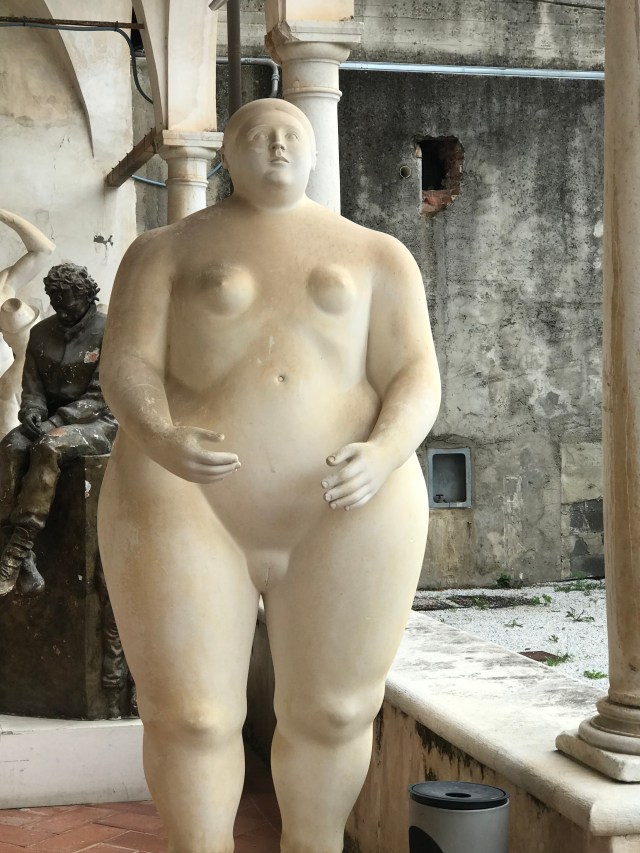 Some of the models have marks from the artist, perhaps showing changes to be made.
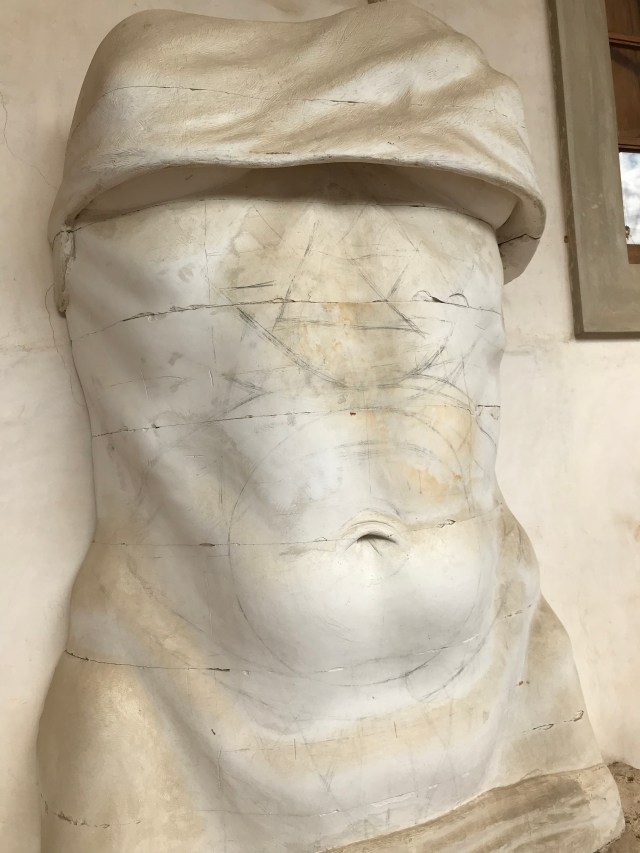 Some of the resulting sculptures are on display in the town; others are in museums all over the world. It was fascinating to see the preliminary work from which the final sculptures arose.
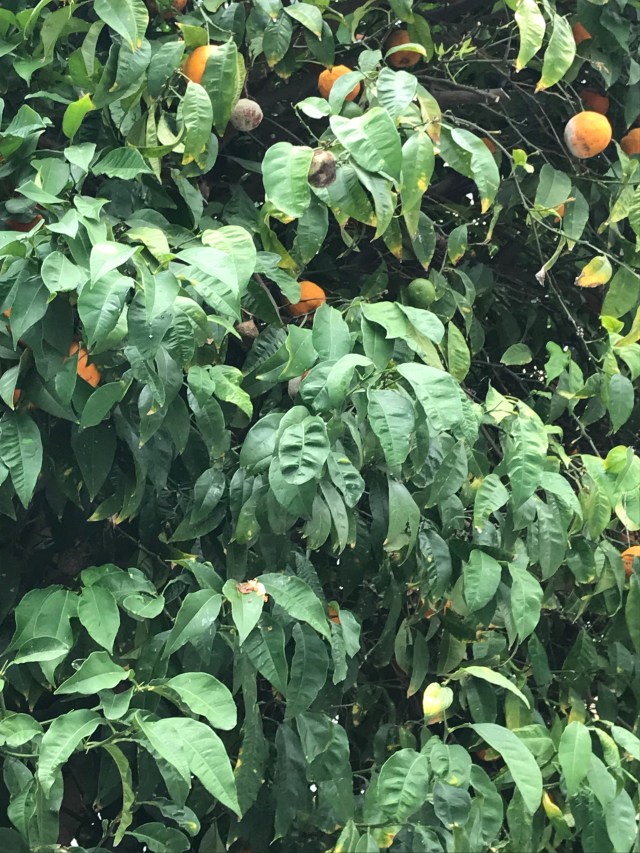 The trees lined the streets and piazzas and walkways, emitting sweet orange perfume.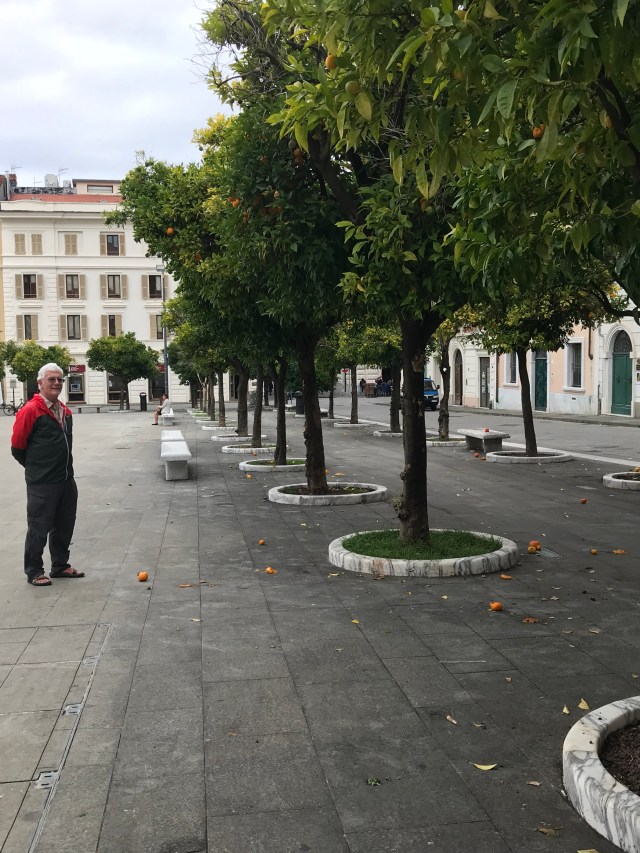
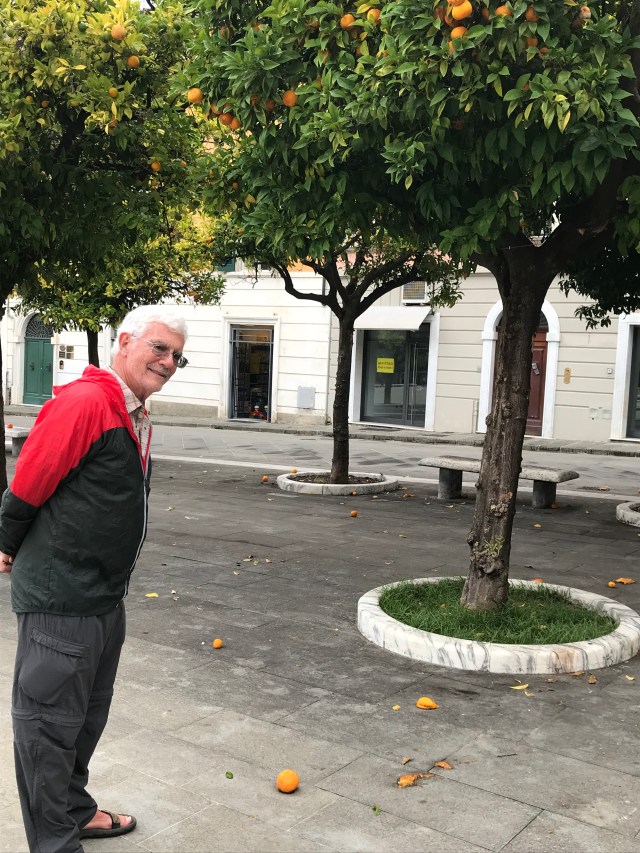 So much of a mess that the city has to send out crews to sweep the sidewalks and streets.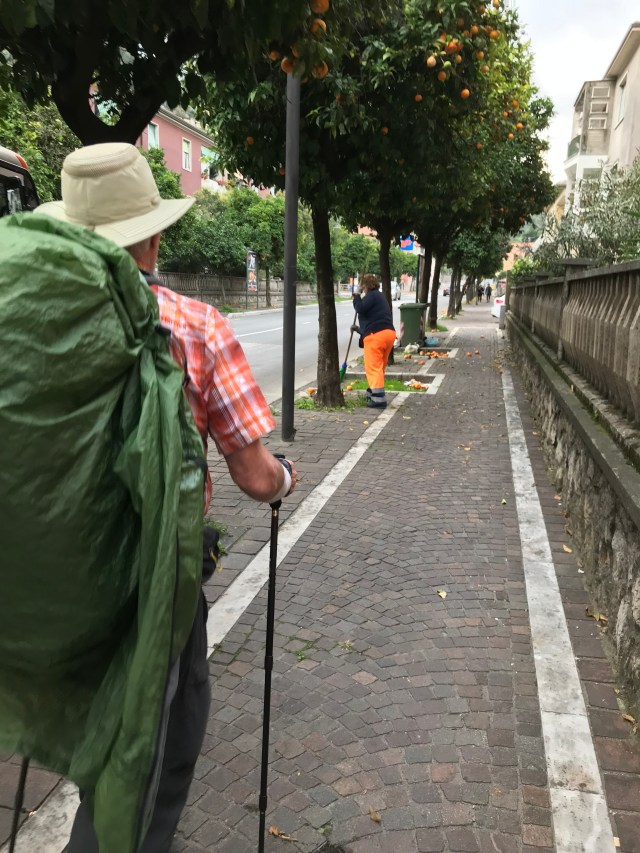
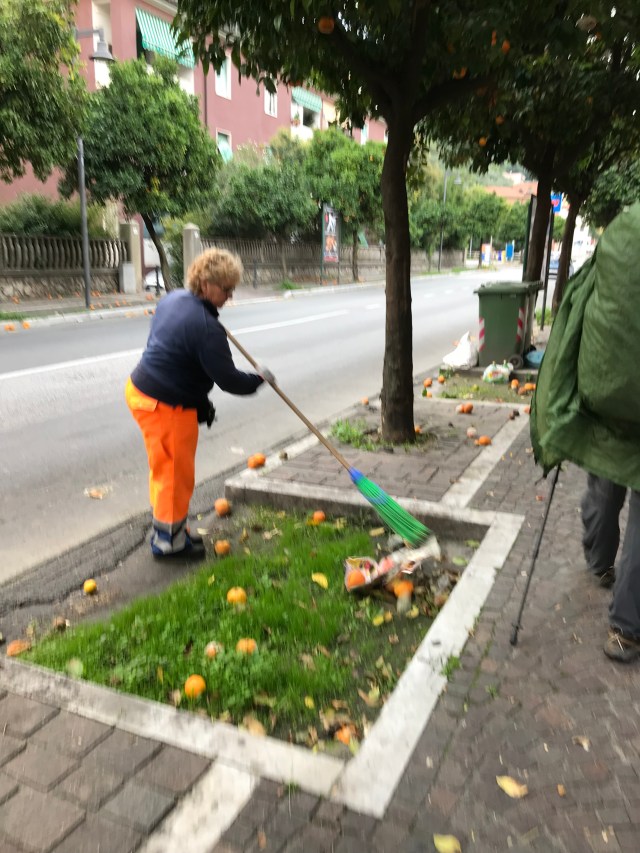 The sweet sticky goo is slippery too.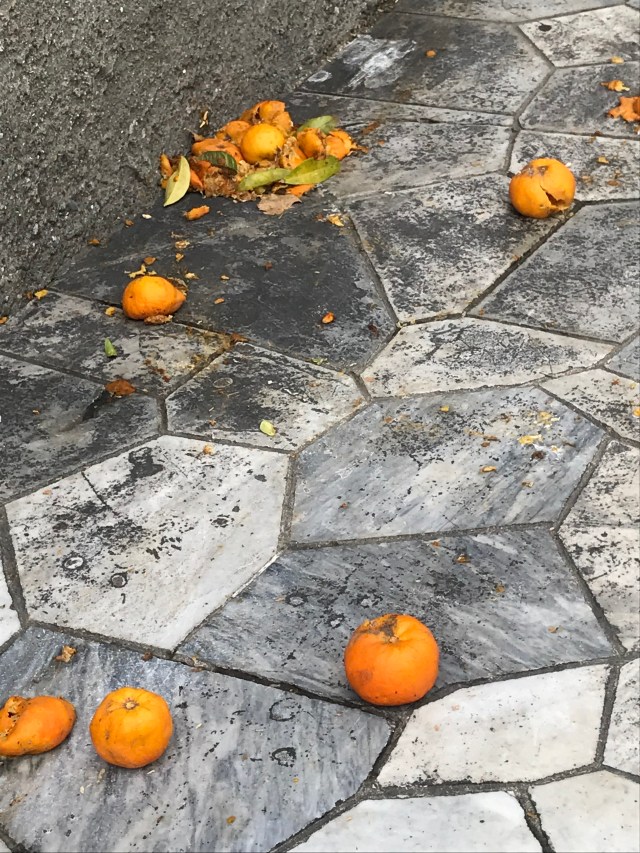
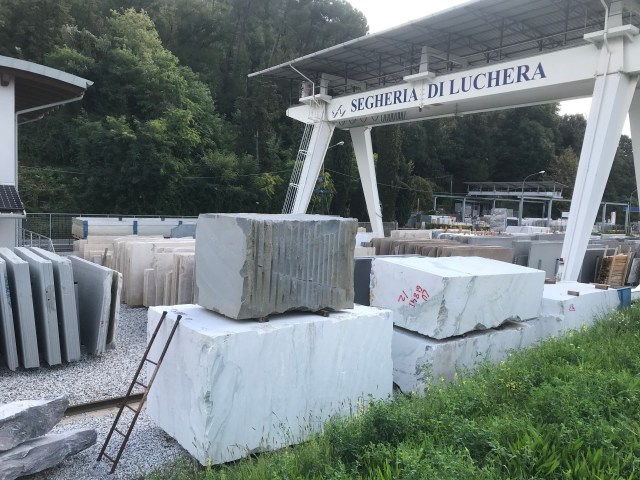
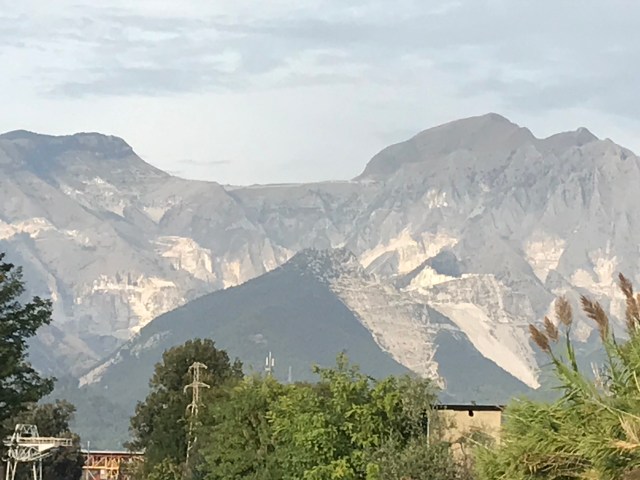 and there are dozens of marble processing plants.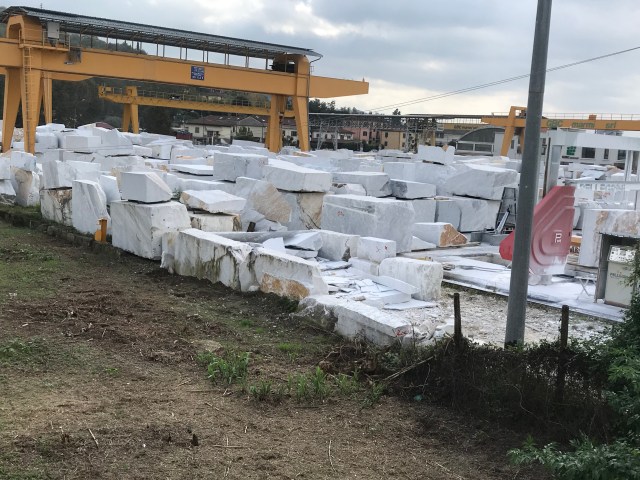
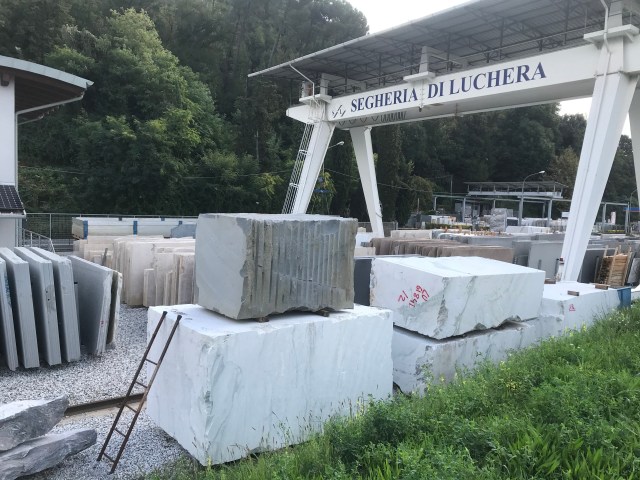 Of course, we knew marble was used for beautiful statues.
 What we weren’t expecting was to see it used for so many other things. Need a staircase for an otherwise unpretentious hotel? Use marble.
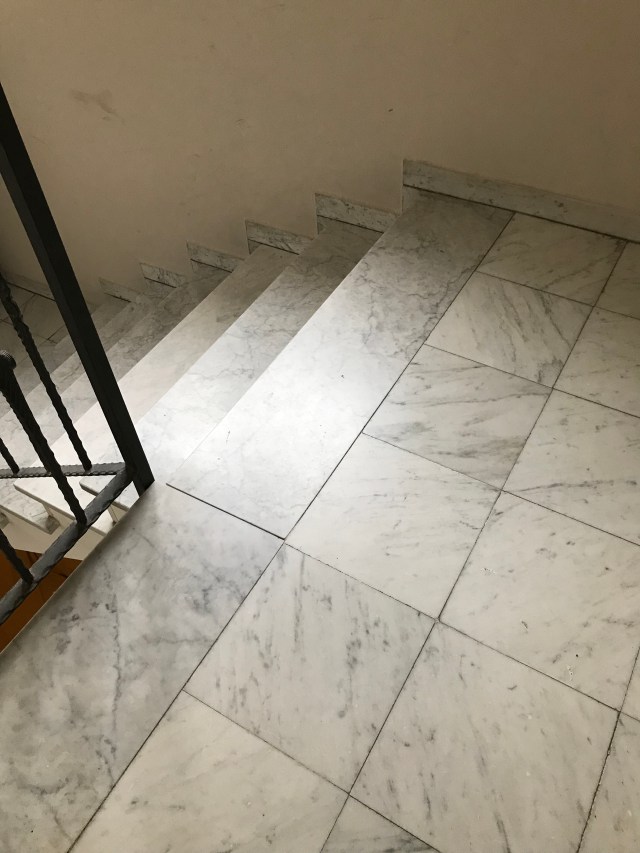 Need to build stairs to a church? Use marble.
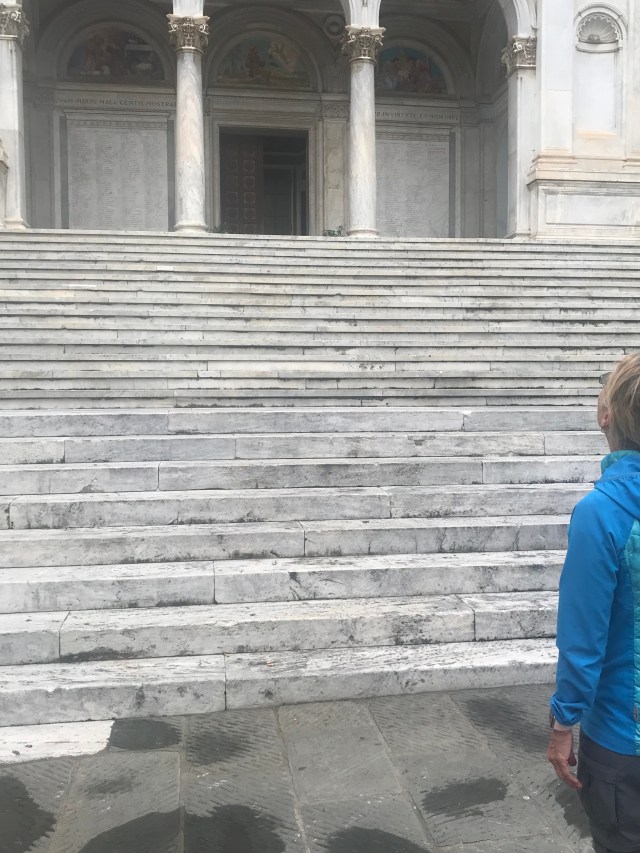 The church itself? Marble.
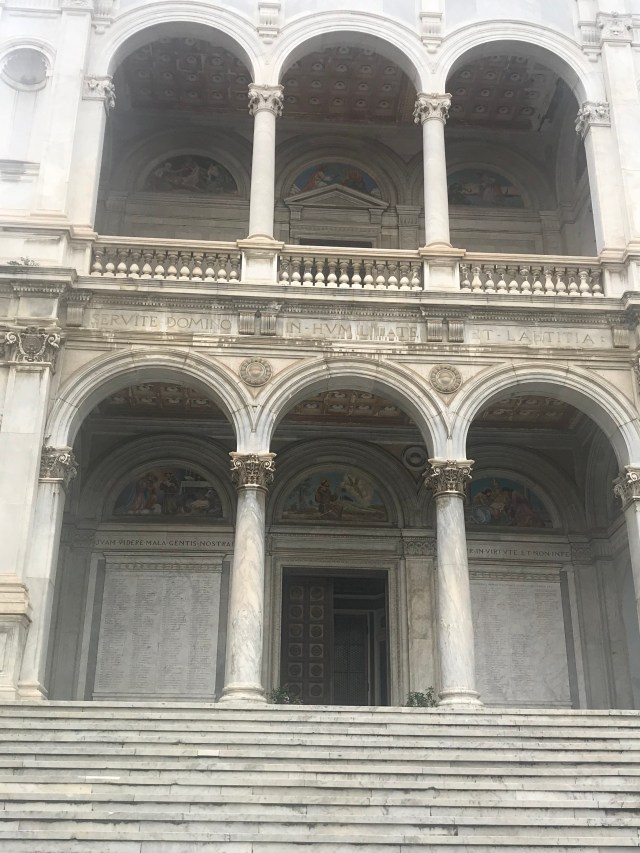 Need to prop up a retaining wall? Find some reject marble.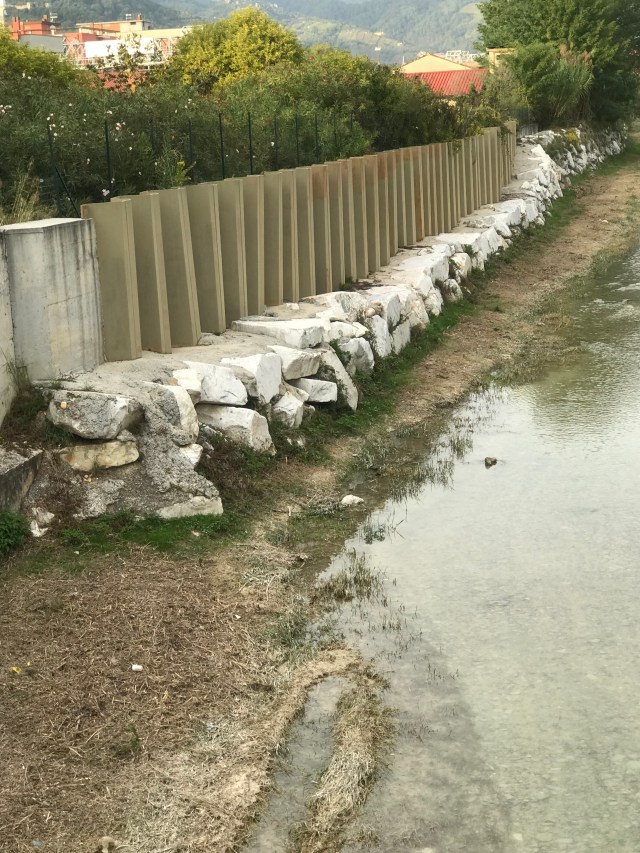
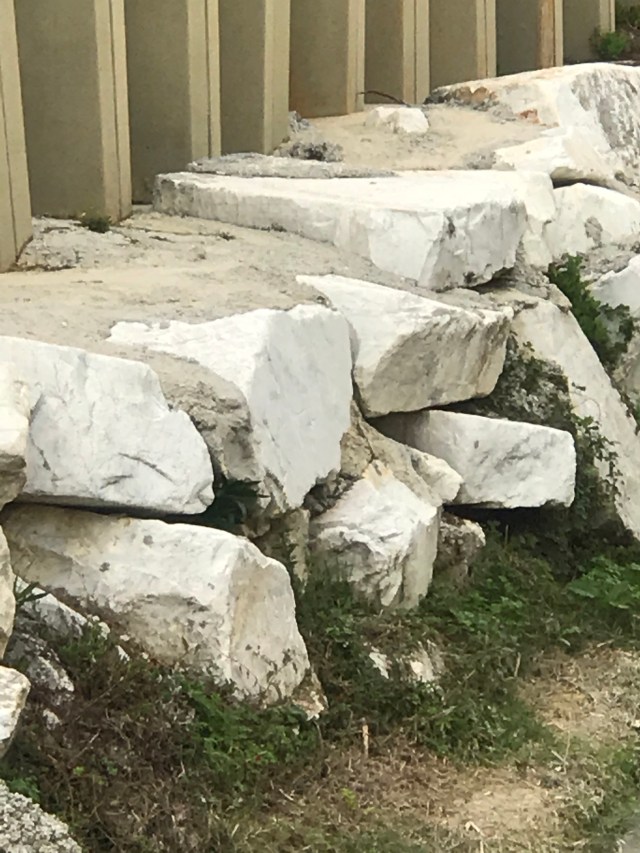 Building a foundation?
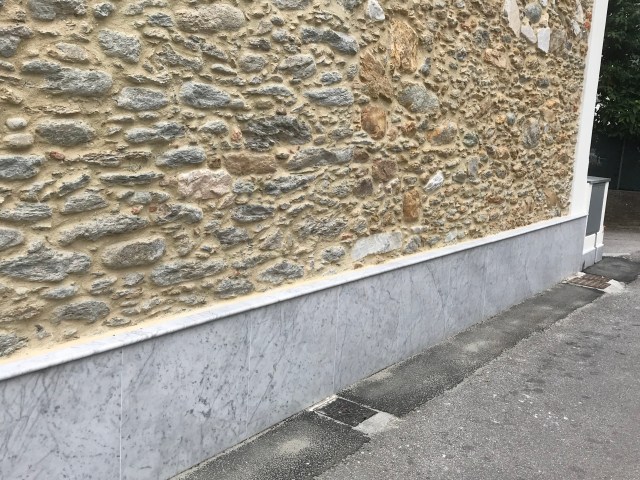 A park bench?
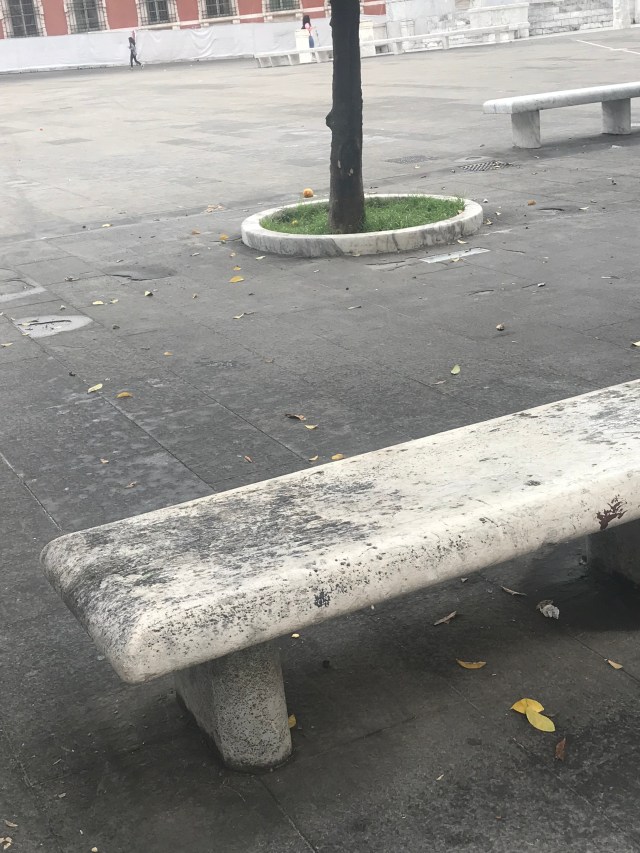 Putting in trees? Use marble.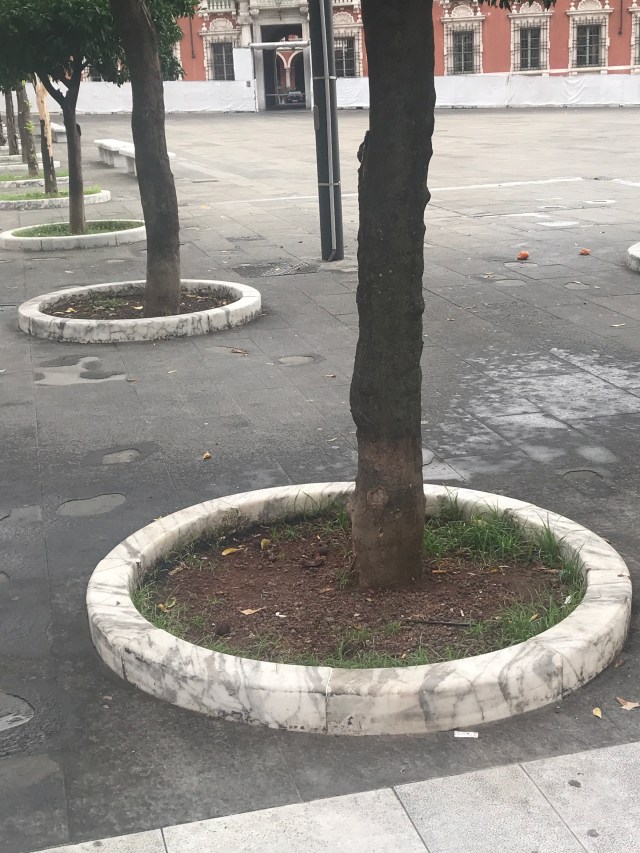
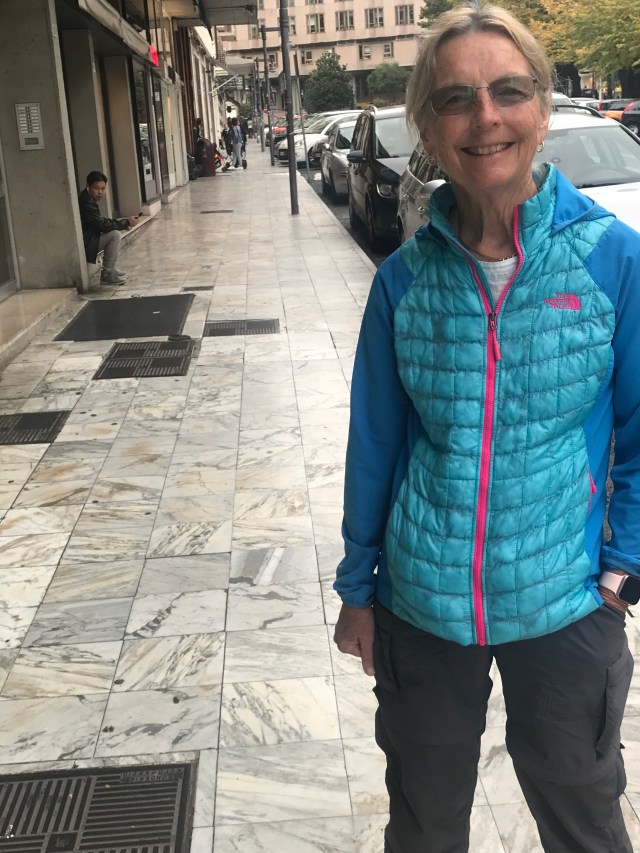 Even the curbs.
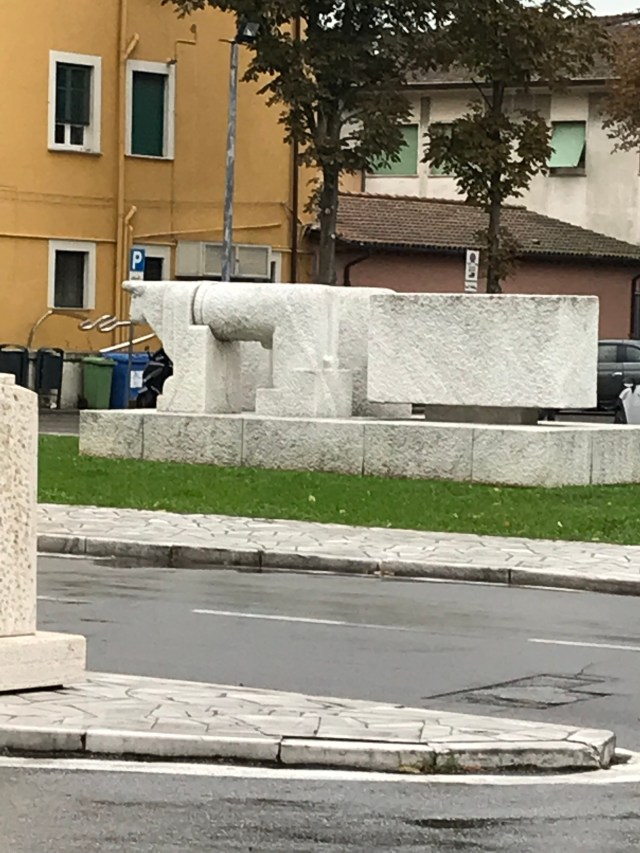
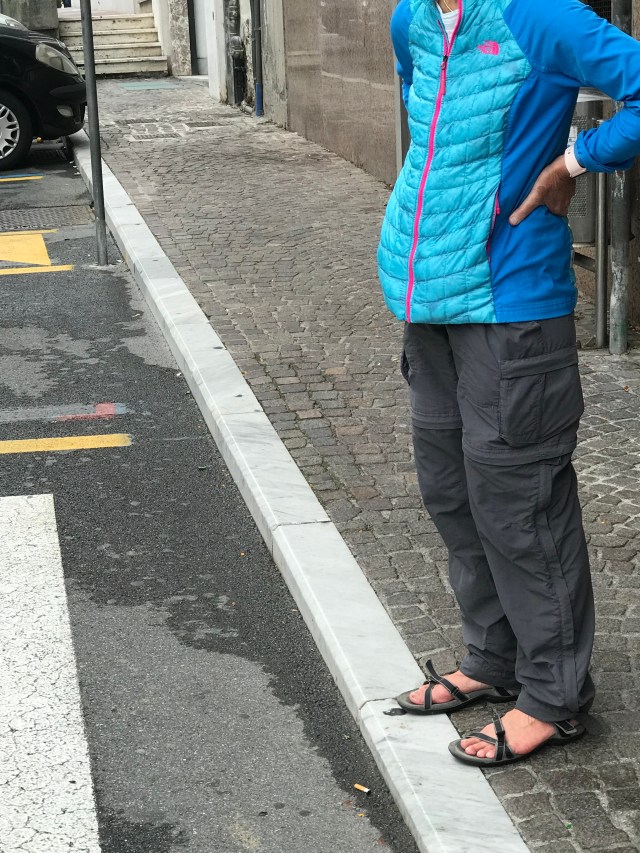 In Carrara, marble is used for everything!
 ITALY, GERMANY, AND MORE!