. . . is the only word we can think of to describe how our next winery, Azienda Agricola Villa a Tollia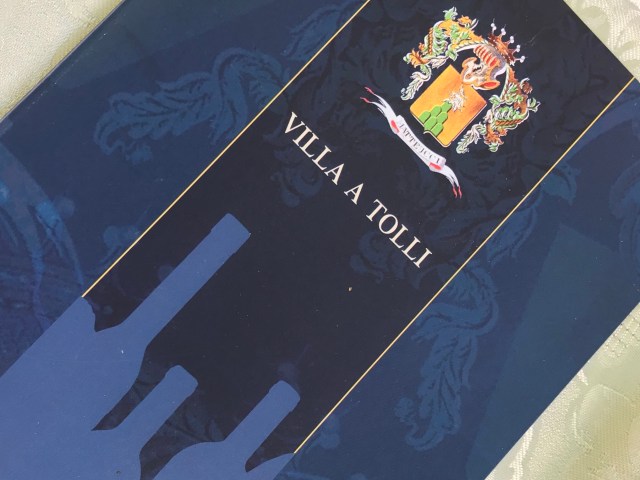 approaches wine making.
The winery is located in the ancient hamlet of Villa a Tolli which goes back to the pre Roman Etruscians. Villa a Tolli was once the commercial center of Montelcino. The winery, which has been in operation for a long time. is in some of the original buildings of the town, and they take their heritage very seriously.
Our host was, of all things, an American. His passion for wine making was about one step below completely crazy. Well, make that a good two steps; he was quite sane, but very, very, passionate.
He walked us through the hamlet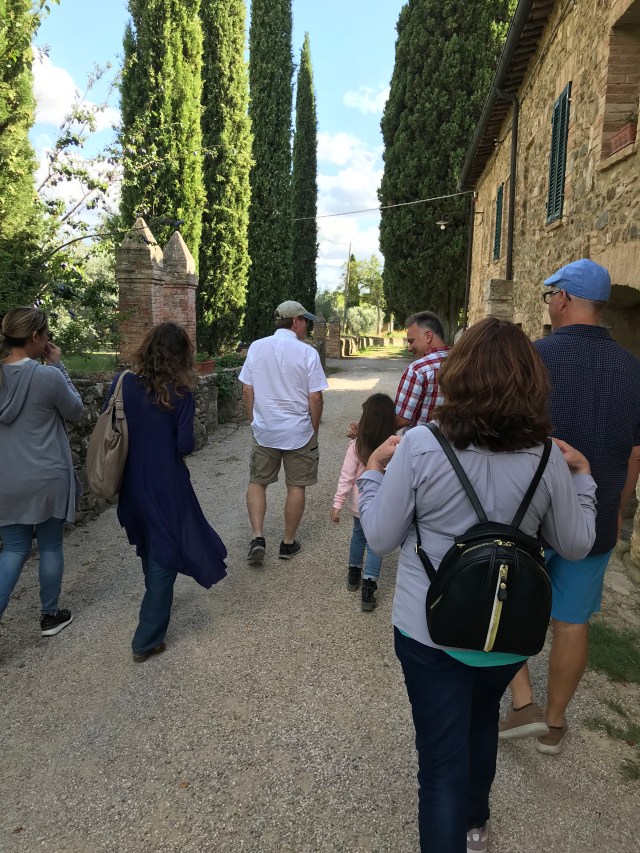 extolling its antiquity. He took us out to see the vines, explaining how they used only traditional methods.
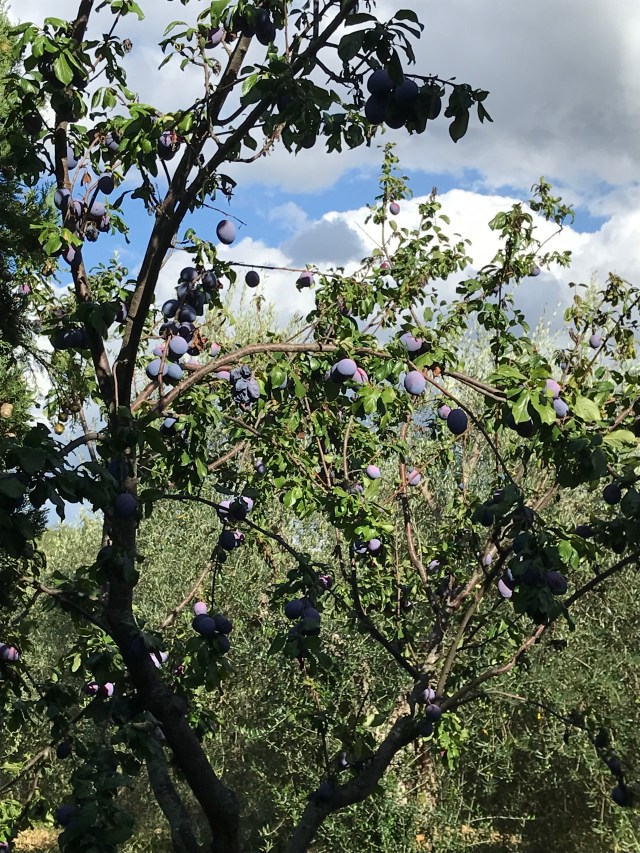
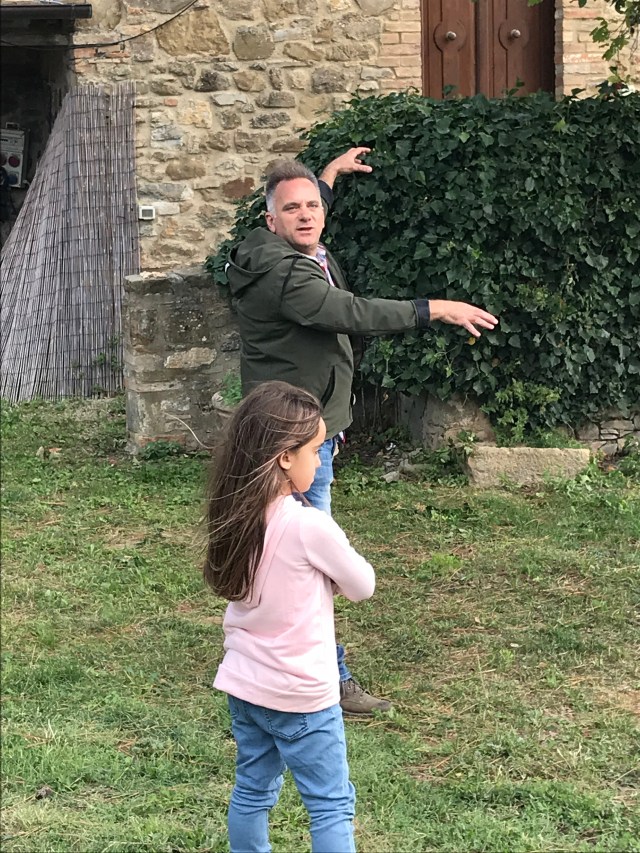 He showed us the fruit trees whose aromas we would smell in the wine
 and made us smell the herbs which were indigenous to the area.
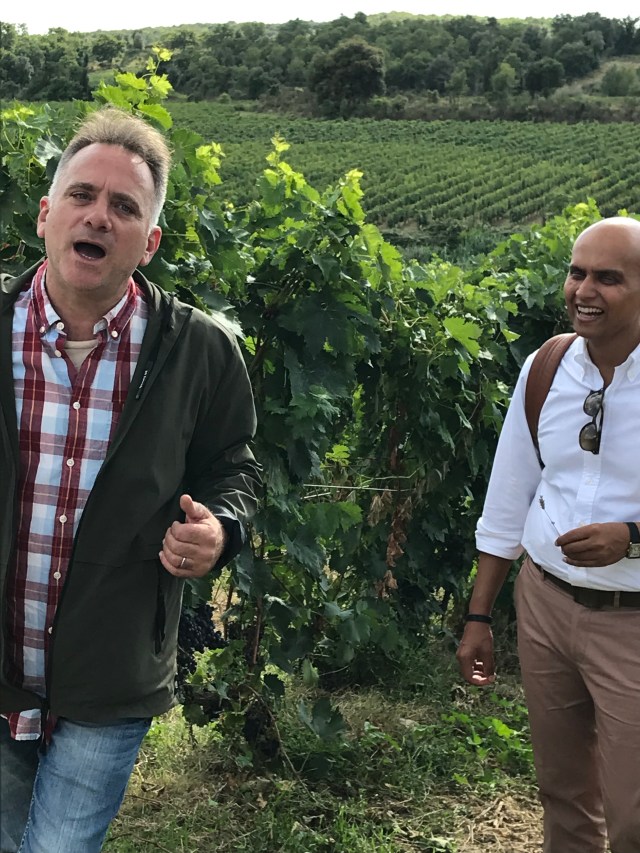 He picked grapes, showed how small they were and how thick the skins are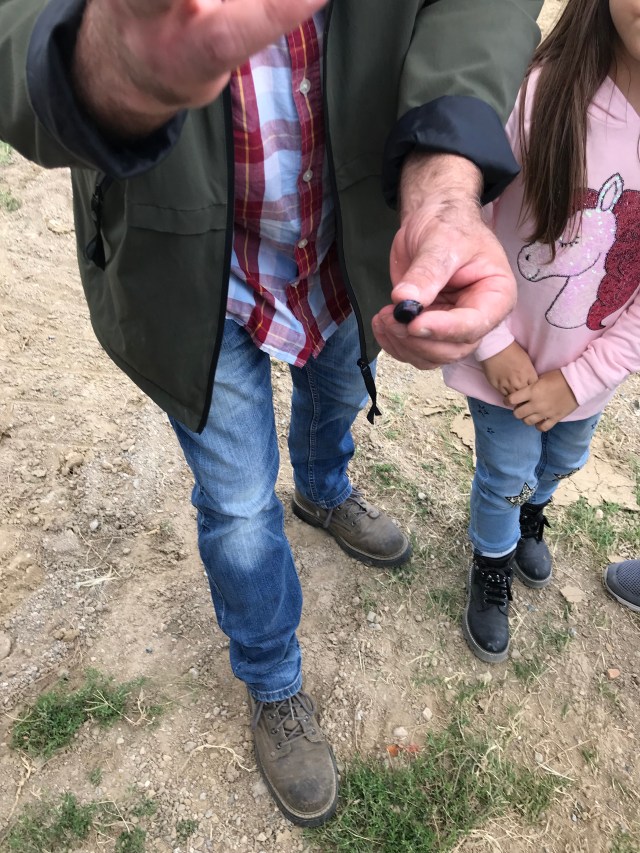
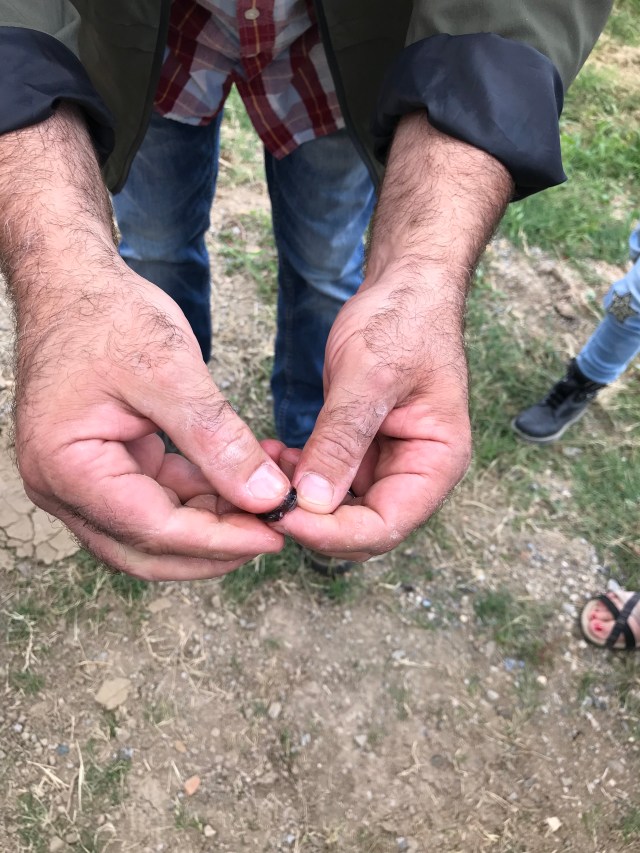 and made us taste them. He explained how their olive trees were trimmed to allow the prevailing winds to dry the dew off the vines so molds and fungi would not grow on them. He showed us the winery where the wine was made.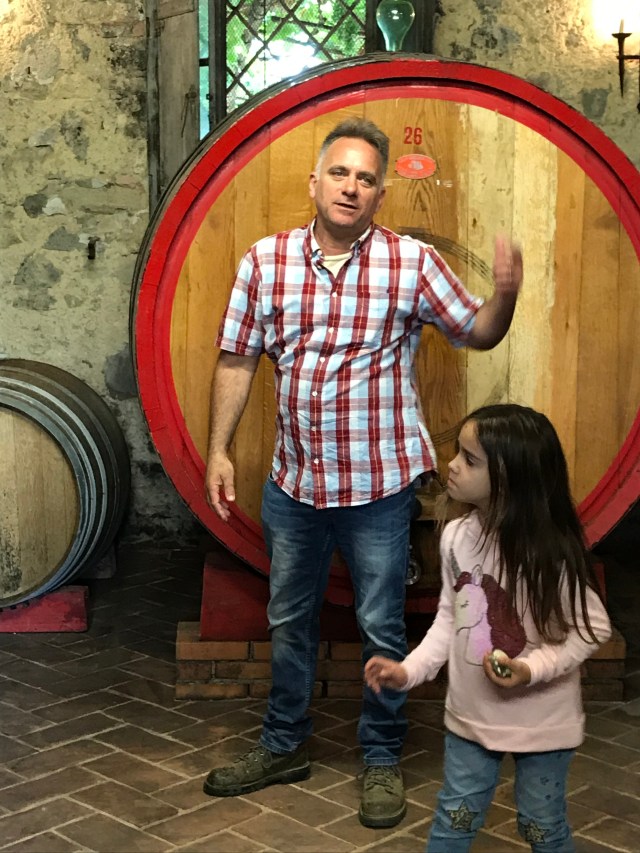
His greatest passion came out when he argued that wine should taste like the grapes and the soil, the terroir, and he condemned the recent practice of trying to produce “fruit forward” highly oaked wine. Here, he was preaching to the choir; your faithful bloggers have been very disappointed with what many American wineries have been doing, especially with Chardonnay. So many of them taste like oaky fruit (fruity oak?) and not like the grapes and the environment which produced the grapes.
When we sat down for our tasting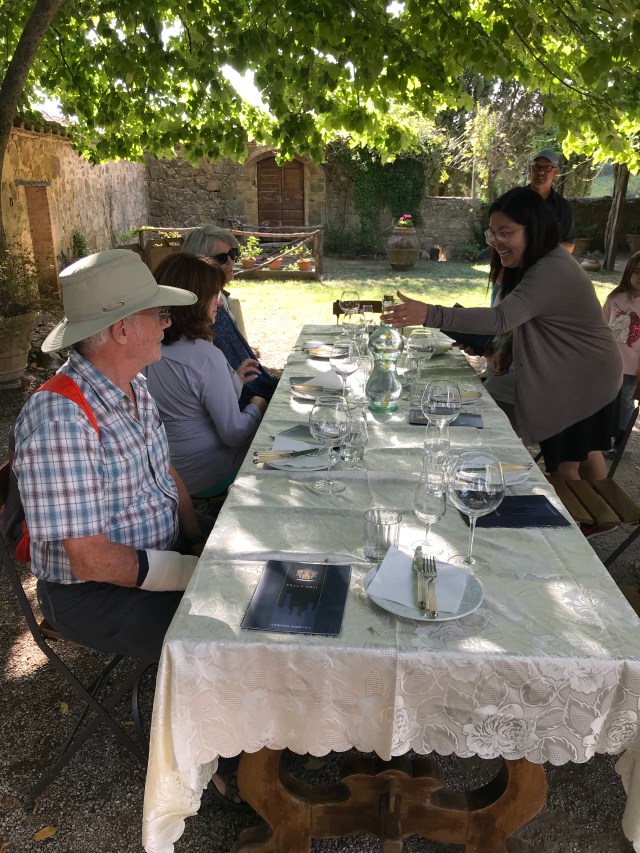 the first thing our host offered was not wine; it was a small glass of their olive oil!
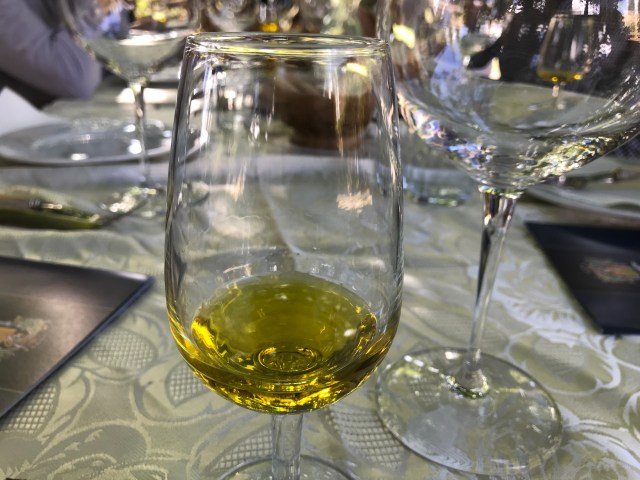 He then explained that everything he had been saying applied equally to olive oil. Olive oil labeling is misleading, even when it meets regulatory standards (“Italian Olive Oil” is not required to be entirely Italian), and often completely fraudulent. Our host insisted we taste this olive oil and evaluate it as we would wine.
This turned out to be quite remarkable. When held up to a white napkin (as you would do with a wine) the oil had a beautiful, slightly green, color. When we swirled the oil and smelled it deeply, it smelled of olives. When we tasted it, moving it around in our mouths, over and under our tongues, we could taste not just the olives, but but the hint of herbs and minerals as well. And, after we swallowed, there was a peppery sensation in our throats. What a treat!
To cleanse our palates, our host served us their rosé, which was up to the task. We then moved on to their Rosso di Montelcino and their Brunello di Montelcino. Both were outstanding. As at our earlier tastings, the Brunello was the most recent release, 2014, and really too young, but its promise was very clear. No taste of oak, just grape, tannins, and minerals. Wine!
This was our third and final winery, probably a good thing. It was a very interesting and enjoyable excursion.
 ITALY, GERMANY, AND MORE!