Perhaps concerned that Karl had not finished his dinner, and would falter on the Rennsteig, the hotel laid out a huge spread for breakfast.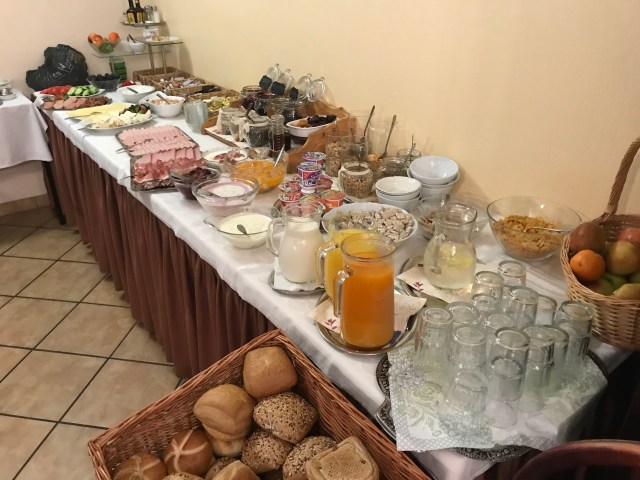
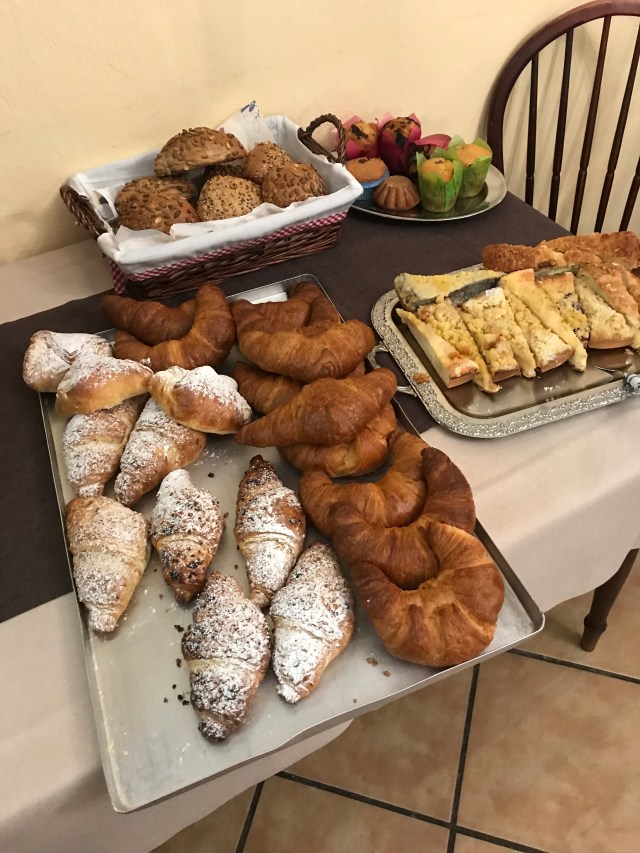
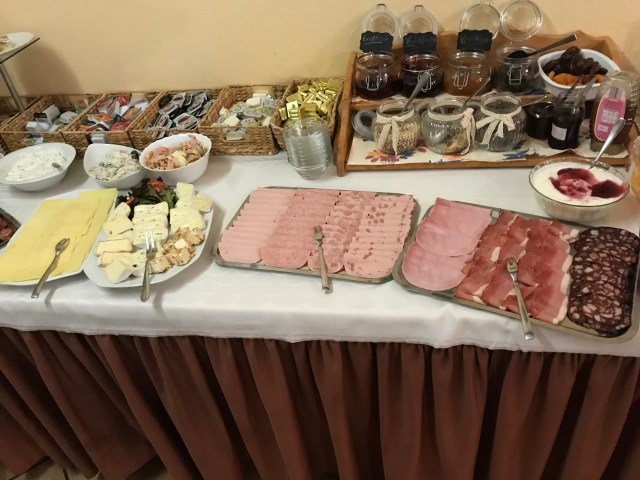 The owner of the hotel also ran the local bakery, so there were plenty of rolls and pastries.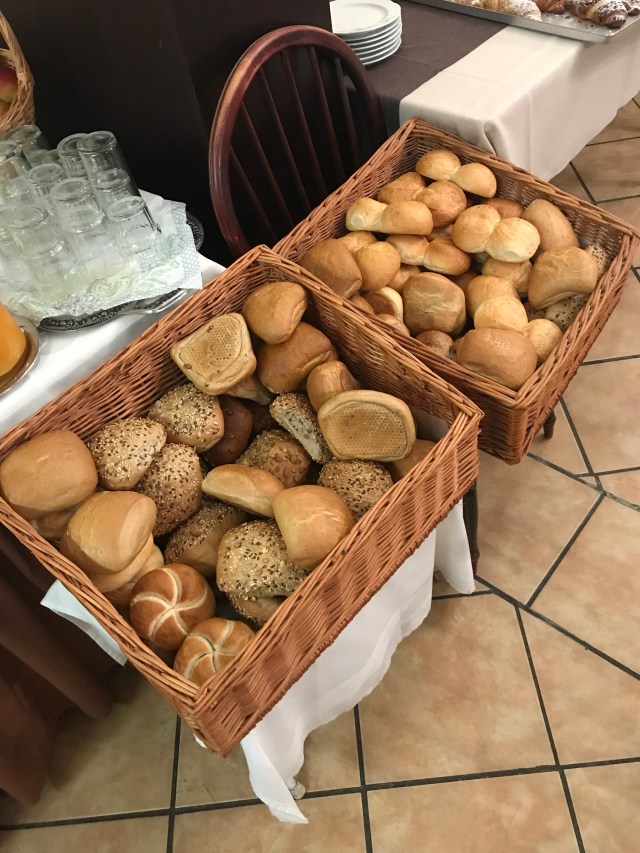
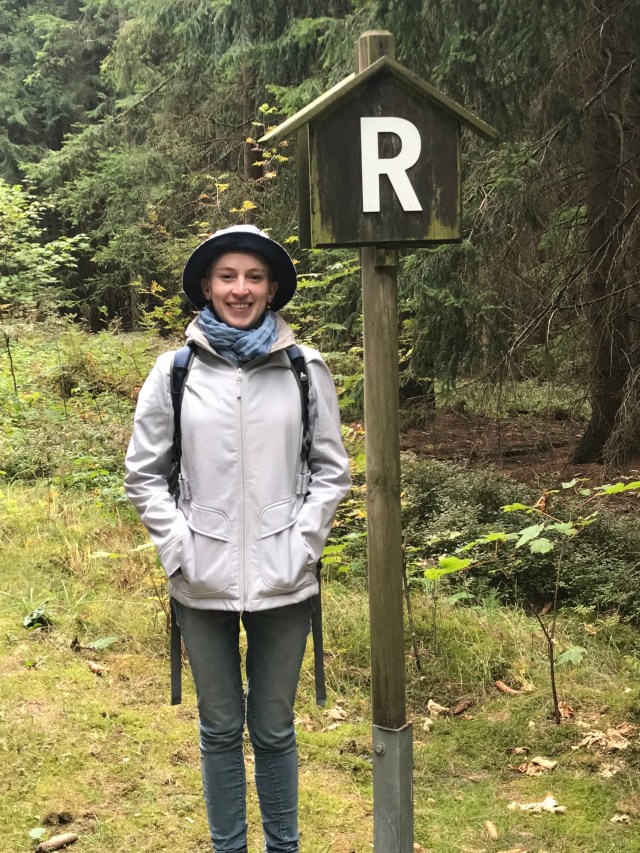
Properly fortified, we boarded our taxis and returned to Oberland am Rennsteig where we began walking.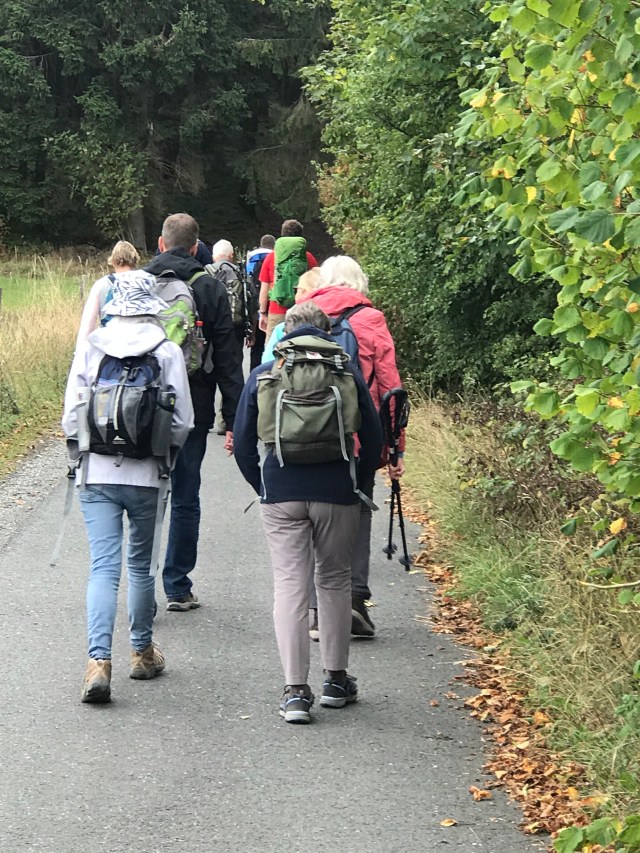 The Rennsteig is a very old trail; stone trail markers dating back to 1513 still show the way. Today, modern markers guide the trekker.
 Unfortunately, the Cold War prevented its use as it runs along a ridge which repeatedly crosses what was once the boarder between West Germany, the Federal Republic of Germany and East Germany, the German Democratic Republic. The wall and fence erected by East Germany to keep East Germans from leaving, was fortified, guarded
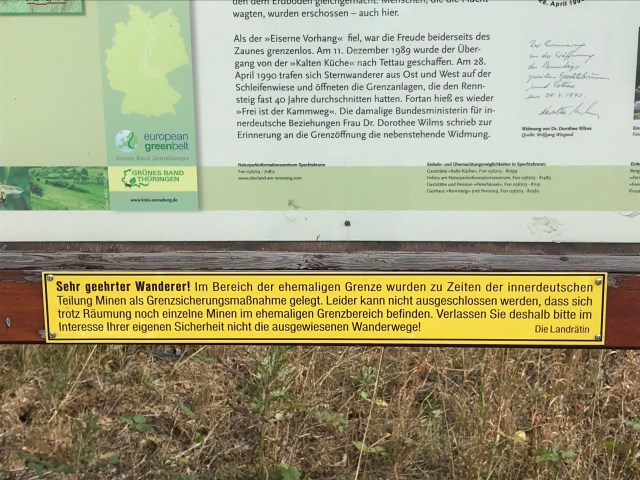
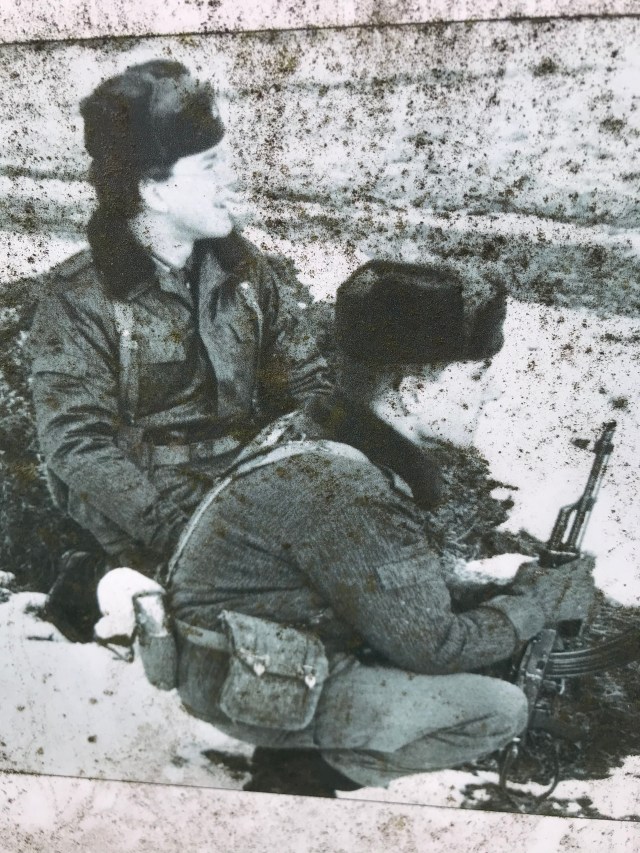 and mined, which certainly would have discouraged trekkers! Today, the Rennsteig is open again, but there are signs warning of possible land mines is some sections.
 You can still see the roadway built to allow East Germany to move troops quickly along the border.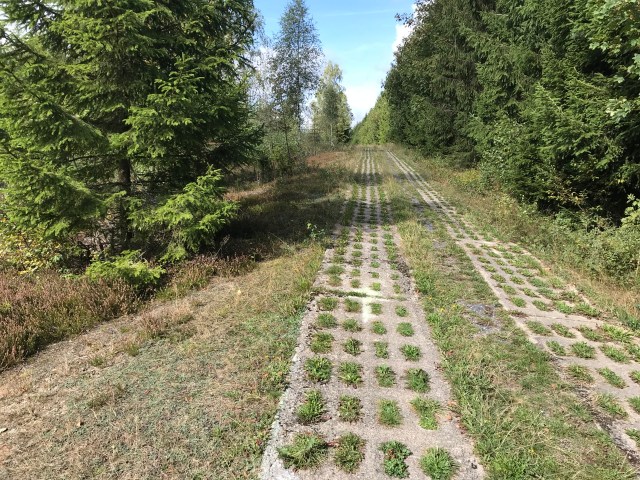
Our group ranges from 25 to 85 in age. Only Karl, Leslie Ruth and Edward are carrying full packs, which sort of acts as a handicap would in a horse race, and helps keep us together. Nonetheless, we were concerned that the walk would be hard on the senior citizens, so we hung back at the end of the group to keep an eye on them. We need not have bothered! They were all very strong and did just fine.
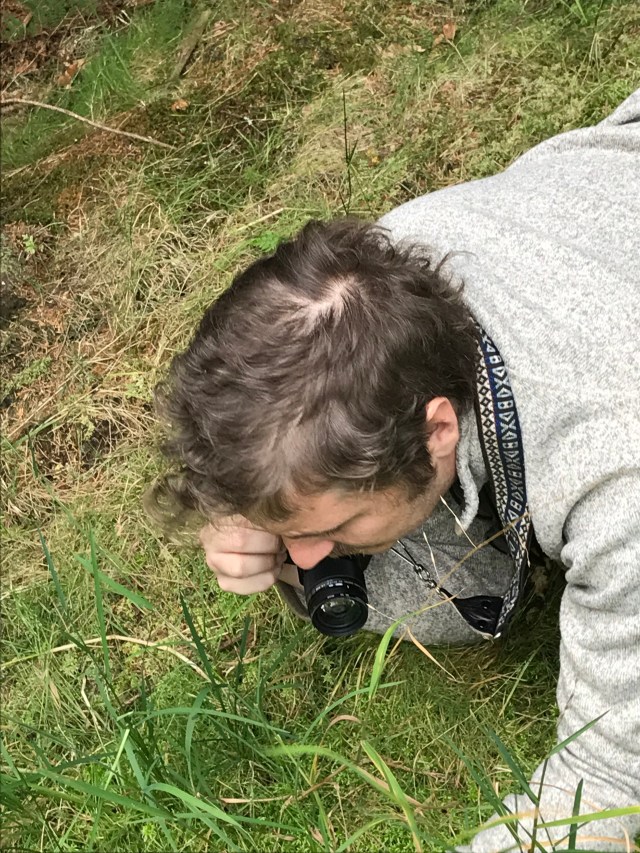
Actually, Opa (Dieter to us), would break off from the front of the pack, usually accompanied by Edward, at least for a while. Edward would have been able to keep up with Dieter except for his frequent stops to examine and photograph flora, fauna, and whatever else interests professional biologists.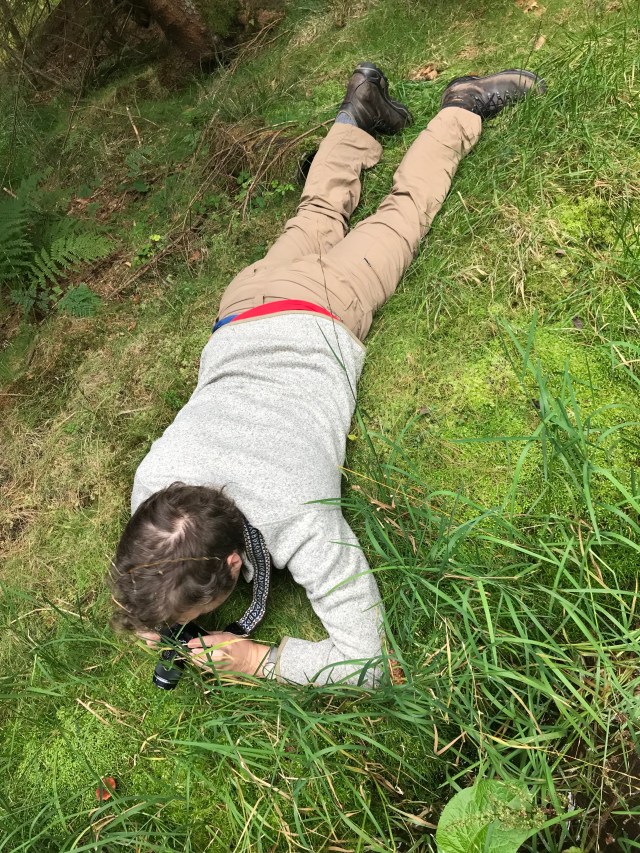

 Lilly and Max might have kept up with Dieter except for their stops to talk to any animals we came across.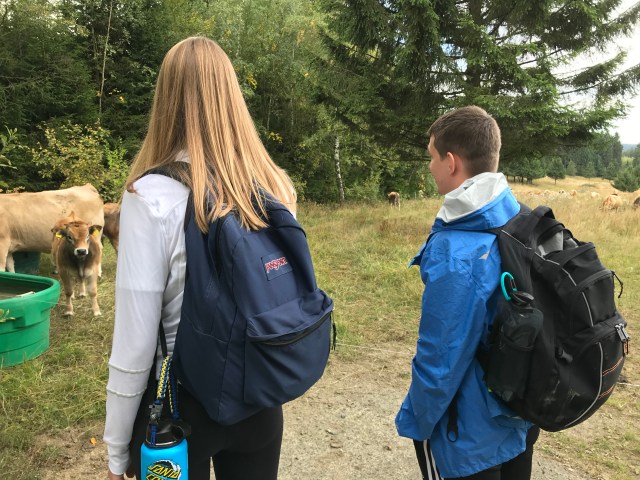
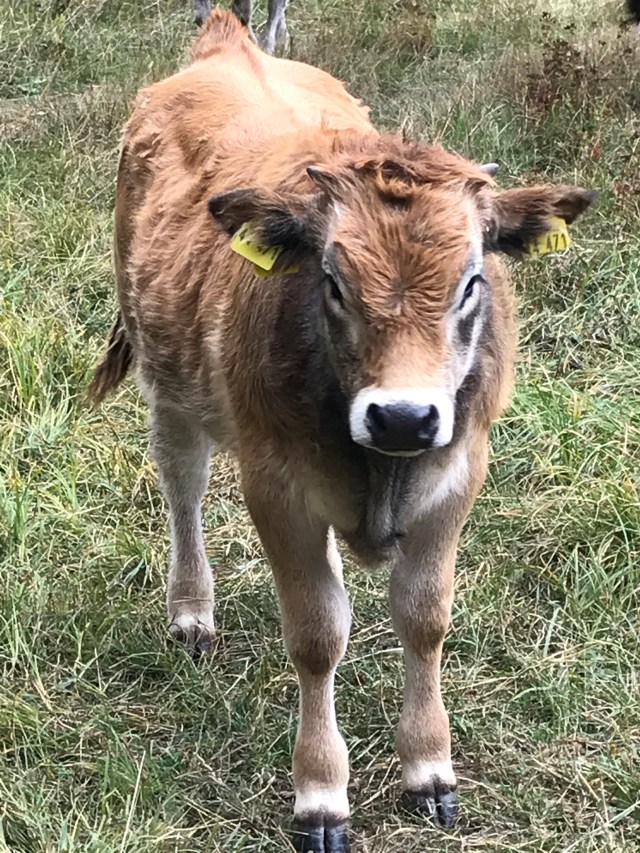 Or to climb hunting stands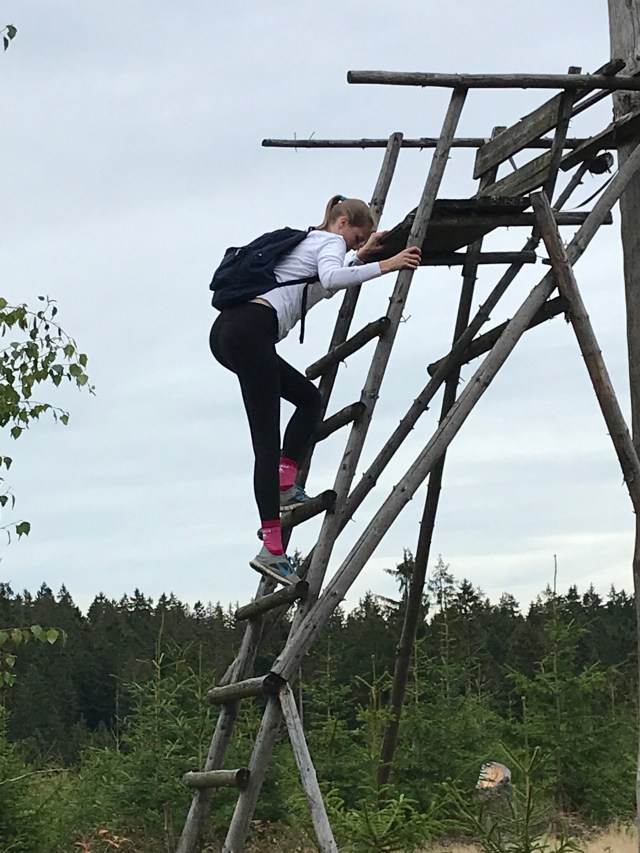
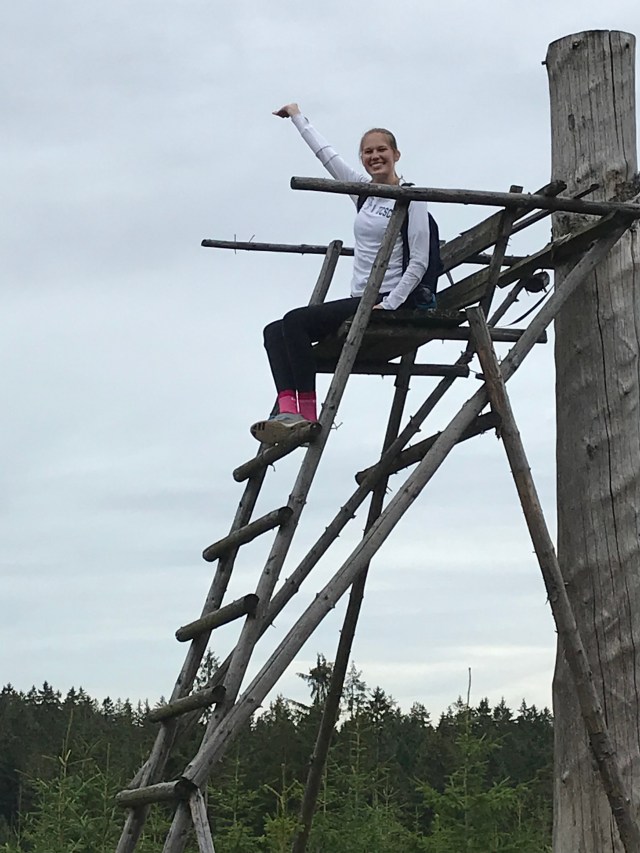
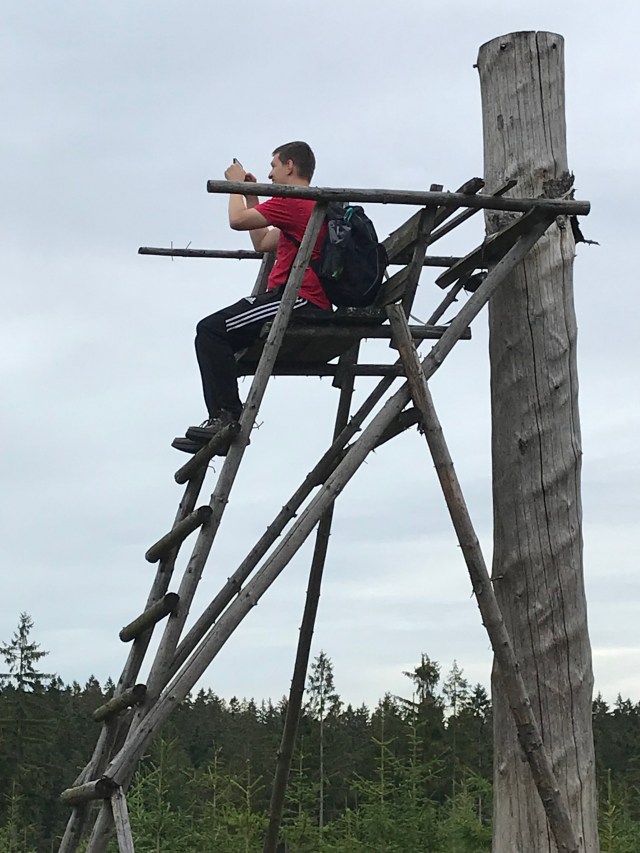 and enjoy the view.
Halfway through day two, we finally realized the seniors needed no help, so, after a rest stop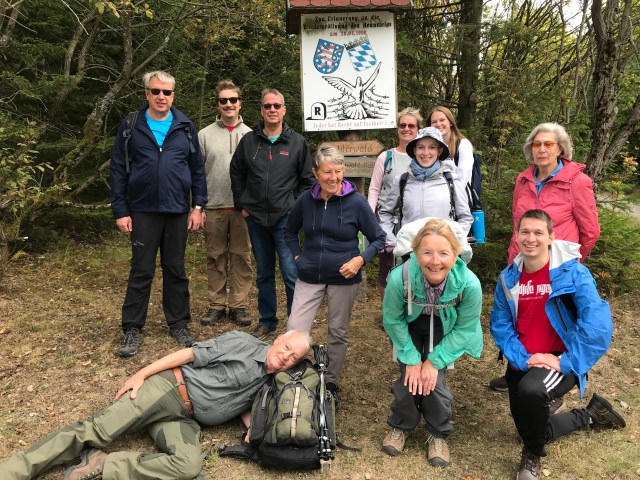 we set off with Dieter. Boy did he give us a run for our money! Not only did he maintain a pace which really tested us, he was quite comfortable conversing with us on many subjects in his very passable English. We learned a lot about him. His father was a (Lutheran?) priest whose name ended in “sky” or “ski”. Although he was German, the name was determined by Hitler (or his henchmen) to be Russian or Polish or the such, which would disqualify his children from going to University. His father managed to change the name to Wolter, which was acceptably German. (It was a little unclear to us, but Dieter may have said that his father, as the local priest, was able to make appropriate changes to baptism records to accomplish this.)
After working for Bosch for a few years, Dieter joined the Air Force and served for 40 years. After retiring from the Air Force he worked for a few years for Vodaphone and then permanently retired.
He walks almost every day, often for fairly long distances. His strength is inspiring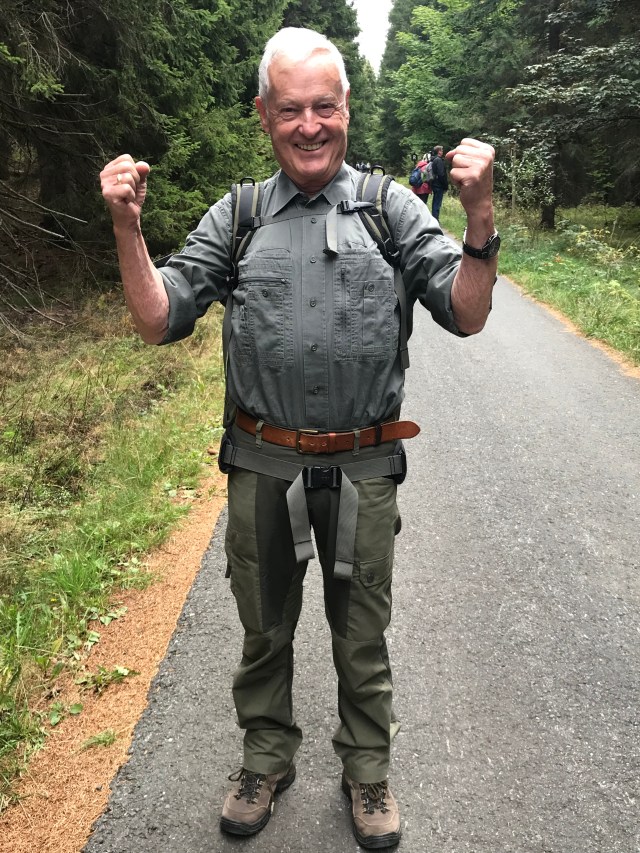 as is his ability to engage with every person he encounters and converse on many subjects.
We kept up with Dieter, barely, and arrived in Steinbach am Wald where we enjoyed another German dinner. After studying her phrase book and consulting with Uli, Leslie Ruth bravely asked, in German, for a half portion of her dinner. The waitress was delighted to help, and only brought her a half portion. Which was enormous!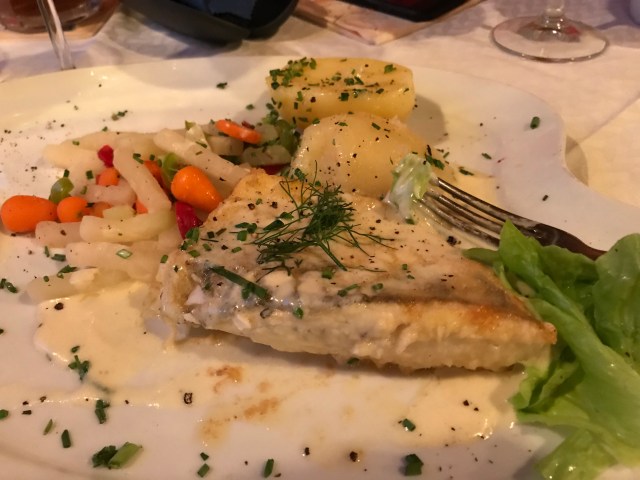 Karl’s dinner, schweineschnitzel
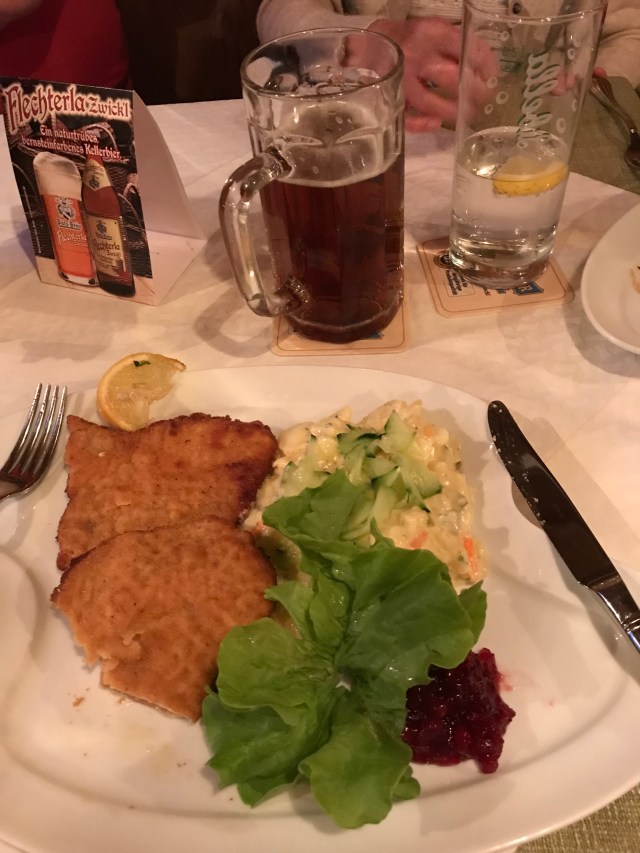 was also very large, but he finessed the dumpling issue by ordering it with potato salad!
 ITALY, GERMANY, AND MORE!