Stuck inside of Munich with them Memphis blues again

To paraphrase Bob Dylan! We’re headed to a rather remote part of Germany to begin the first hike of our trip. We caught a flight to Munich out of Florence on Lufthansa. Got to Munich, and waited at the luggage carousel. And waited. And waited. The high tech screen kept saying our flight’s luggage was in process. Then it said the luggage was arriving. Only one or two bags would come out at a time. Finally, after an hour and a quarter, the high tech display said our luggage had all been delivered. WRONG!

At this point, we split up (not something we ever do!). Leslie Ruth knows at least five times as much German as Karl (that would be about 25 words to Karl’s 5; of course one of the words they both know is Leslie Ruth’s name), so she went off in search of the lost luggage office.

Twenty minutes later she returned and reported that our packs had not left Florence! We went to the lost baggage office to make a claim.

It was like deja vu all over again. We expected a Germanic, highly organized, high tech operation. What we got made us think we were back in Italy at the Post Office. There were three Clerks, none of whom seemed to make any progress; the line did not move.

Actually, there was a little movement and we finally got to talk to the Lufthansa lady. She made us fill out a form of some length, took down more information, and entered it into her high tech computer. She then found that the computer had crashed. She went to another terminal, entered the data, and returned with a form that described our bags incorrectly. We got that straightened out and she said she would try to get our bags delivered to our hotel.

At the hotel, we explained the problem to the front desk, explaining that Lufthansa should be delivering some bags. We asked them to be sure they went to our room, and not Edward’s (who was en route from California, arriving at about midnight, and knew nothing about any of this).They entered this into their high tech computer and we went out and studied German wines at a local wine bar.

Back at the hotel, no bags, so we went to sleep.

This morning, Edward reported that he had had a weird call from Lufthansa saying his bags would be delivered. He thanked them but explained he hadn’t flown Lufthansa, and he had all his bags.

We called Lufthansa and asked why they had not called our European phone number, which we had provided, or at least asked if they were talking to one of us. They said the hotel had put them through to Edward.

They assured us that the bags would be delivered tomorrow. At this point, Leslie Ruth became, shall we say, rather firm. When the dust settled, Lufthansa said they would call Air Dolomiti and discuss sending the bags on a taxi.

They called back to report the bags would be taxi’d to us. Before we could finish celebrating, they called again to ask if we were missing both bags!

We said yes. They seemed to have Leslie Ruth’s bag but not Karl’s. They had a wrong description for Karl’s bag, which we straightened out. They said they would go “downstairs”, look for it, and call back.

As we write this, forty minutes later, we are still waiting for a call. Our train leaves in about two and a half hours. Our stereotype of Germans as highly efficient, high tech, people has been shattered! We long to be dealing with the Italian postal system where we at least understand the language!

Oh! Mama! Can this really be the end?

To be stuck in Munich with the Memphis blues again.
Passion . . .

. . . is the only word we can think of to describe how our next winery, Azienda Agricola Villa a Tolliaapproaches wine making.

The winery is located in the ancient hamlet of Villa a Tolli which goes back to the pre Roman Etruscians. Villa a Tolli was once the commercial center of Montelcino. The winery, which has been in operation for a long time. is in some of the original buildings of the town, and they take their heritage very seriously.

Our host was, of all things, an American. His passion for wine making was about one step below completely crazy. Well, make that a good two steps; he was quite sane, but very, very, passionate.

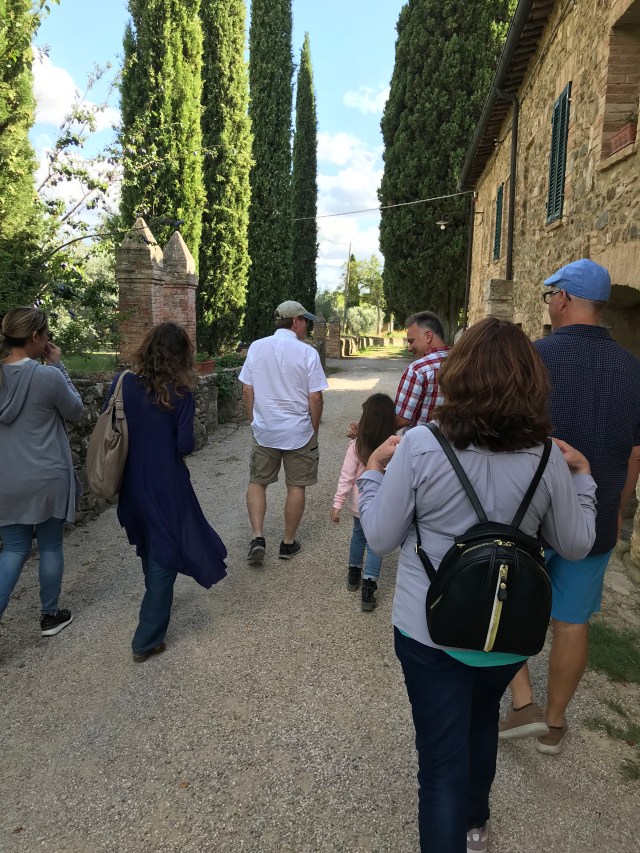
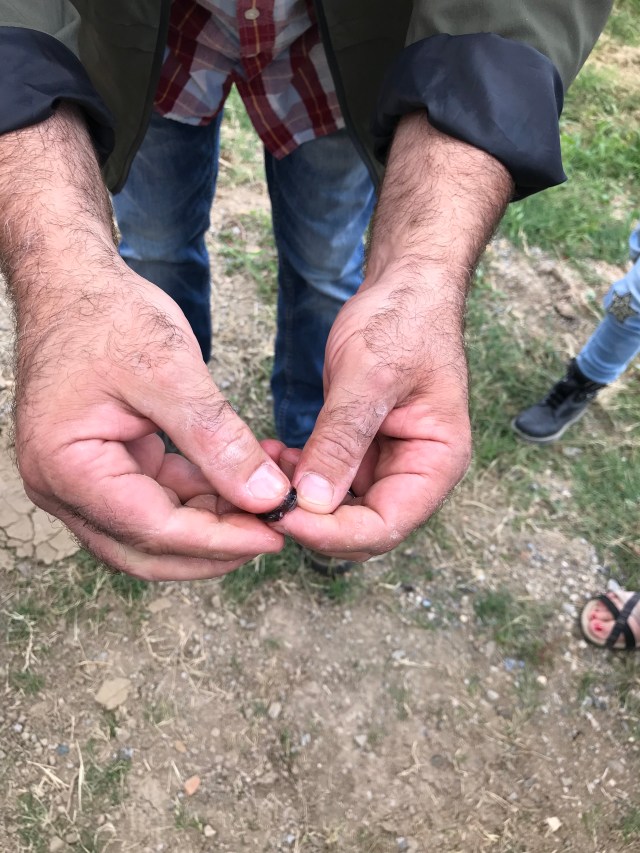
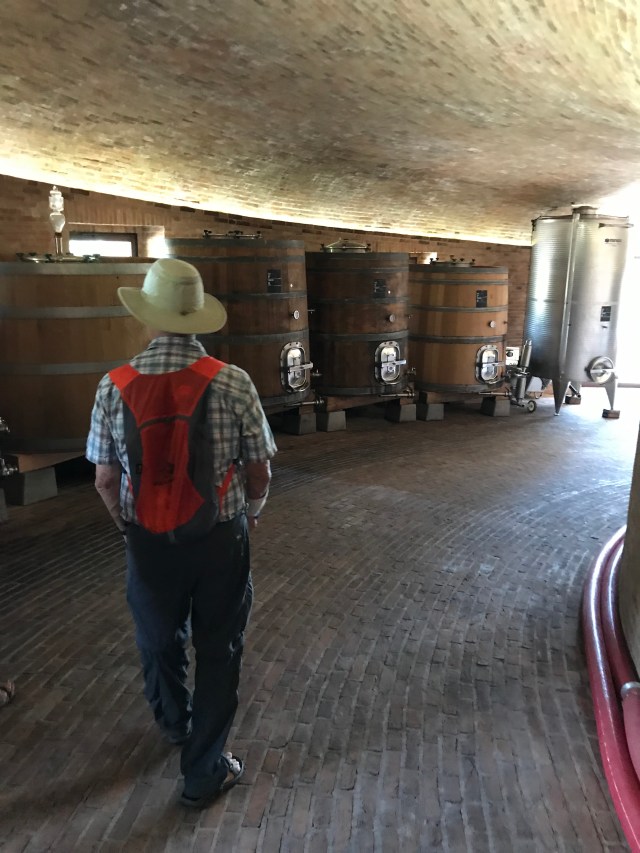
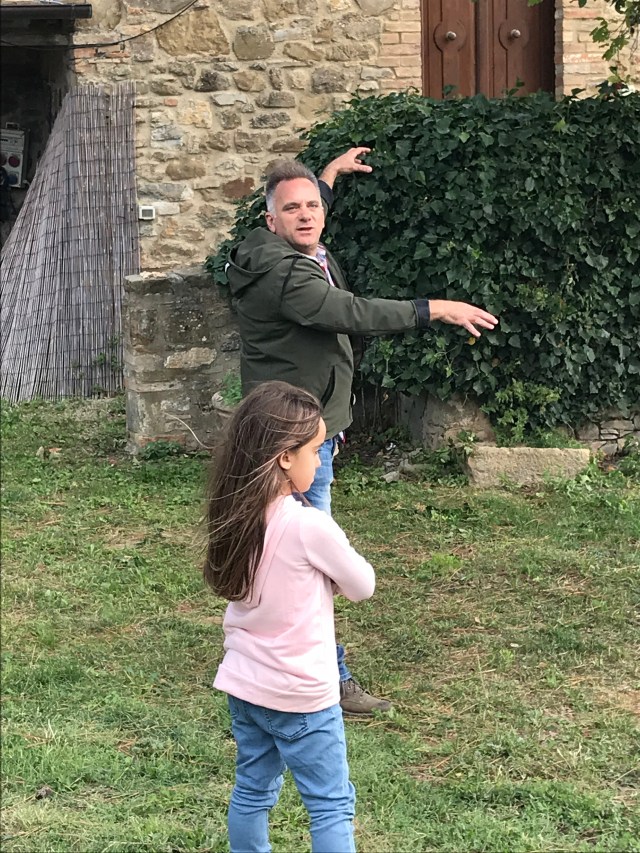
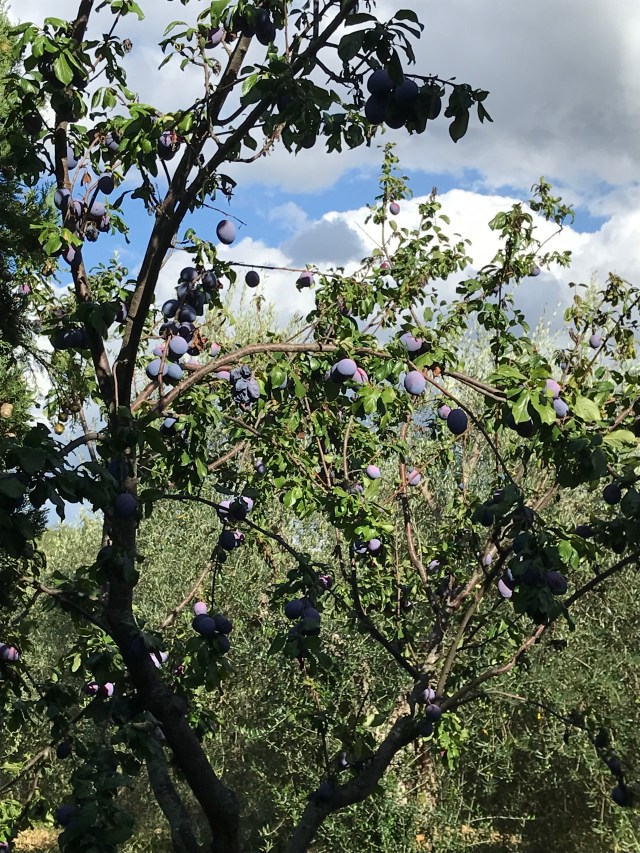
He walked us through the hamletextolling its antiquity. He took us out to see the vines, explaining how they used only traditional methods.He showed us the fruit trees whose aromas we would smell in the wineand made us smell the herbs which were indigenous to the area.He picked grapes, showed how small they were and how thick the skins areand made us taste them. He explained how their olive trees were trimmed to allow the prevailing winds to dry the dew off the vines so molds and fungi would not grow on them. He showed us the winery where the wine was made.
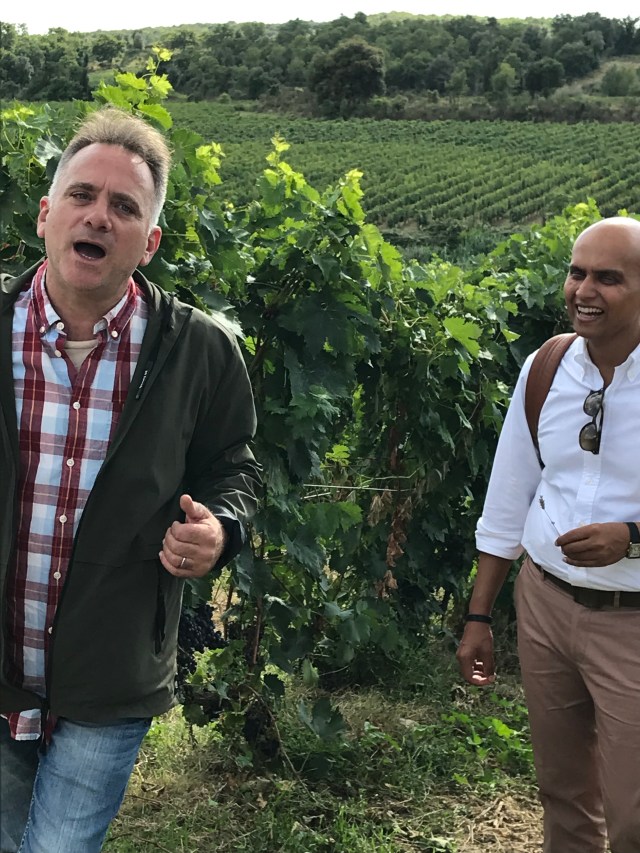
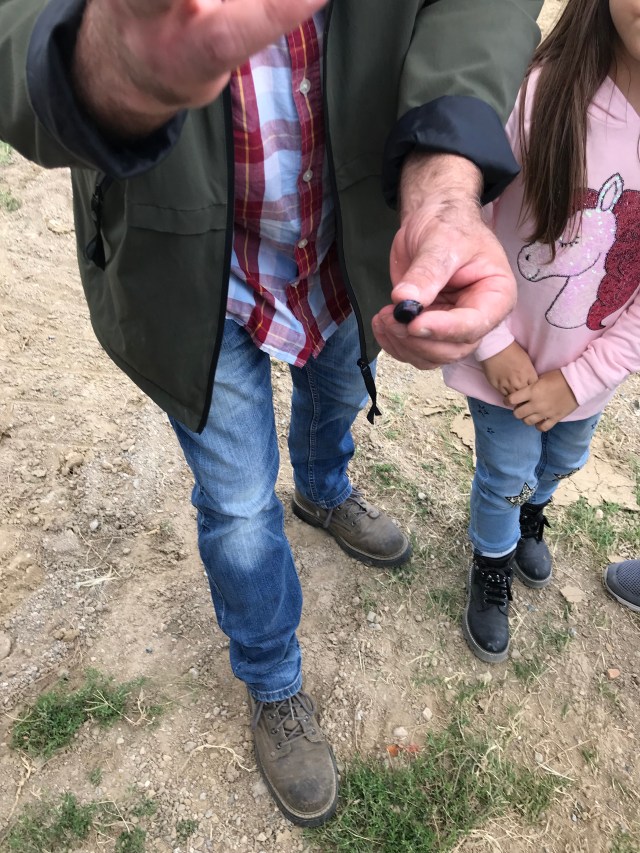
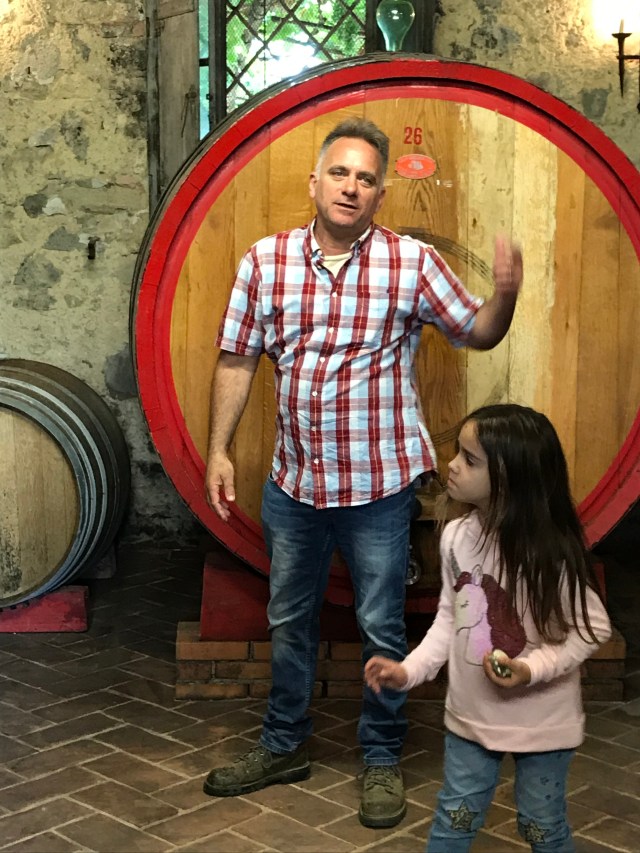
His greatest passion came out when he argued that wine should taste like the grapes and the soil, the terroir, and he condemned the recent practice of trying to produce “fruit forward” highly oaked wine. Here, he was preaching to the choir; your faithful bloggers have been very disappointed with what many American wineries have been doing, especially with Chardonnay. So many of them taste like oaky fruit (fruity oak?) and not like the grapes and the environment which produced the grapes.

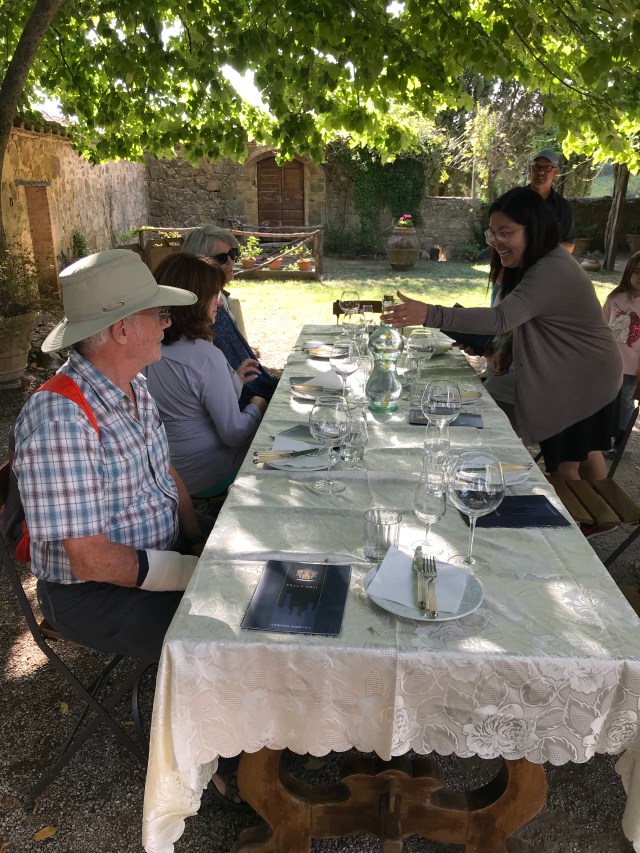
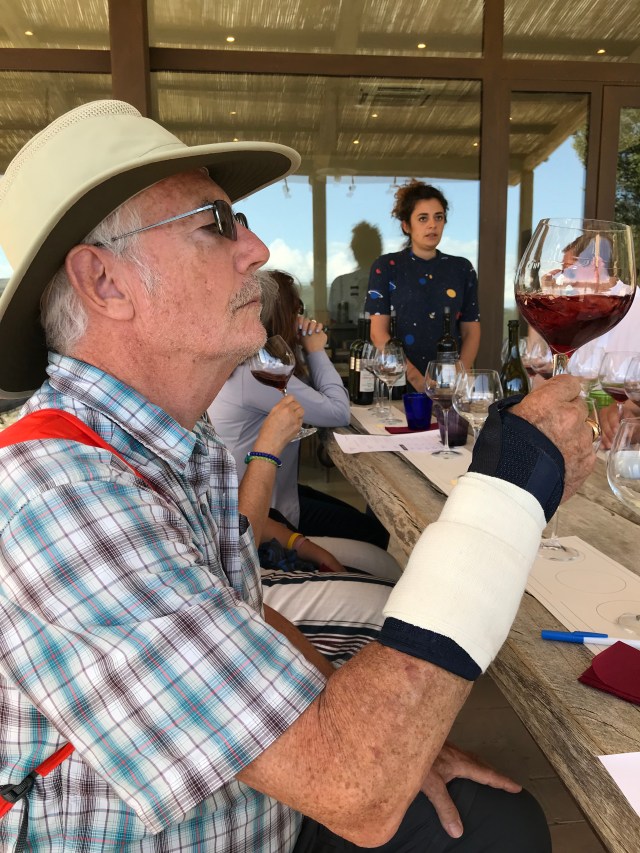
When we sat down for our tastingthe first thing our host offered was not wine; it was a small glass of their olive oil!He then explained that everything he had been saying applied equally to olive oil. Olive oil labeling is misleading, even when it meets regulatory standards (“Italian Olive Oil” is not required to be entirely Italian), and often completely fraudulent. Our host insisted we taste this olive oil and evaluate it as we would wine.
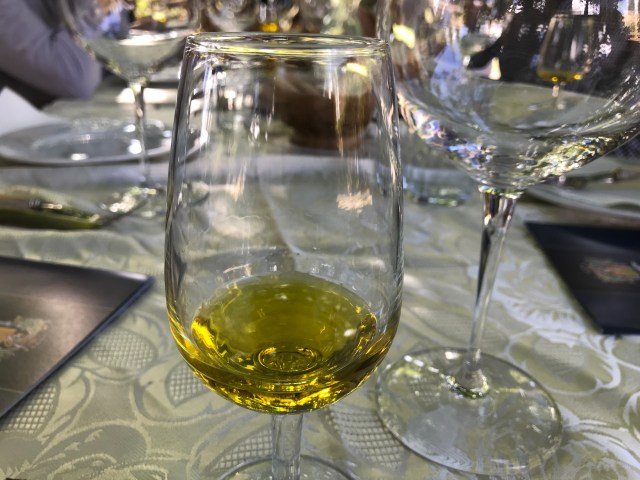
This turned out to be quite remarkable. When held up to a white napkin (as you would do with a wine) the oil had a beautiful, slightly green, color. When we swirled the oil and smelled it deeply, it smelled of olives. When we tasted it, moving it around in our mouths, over and under our tongues, we could taste not just the olives, but but the hint of herbs and minerals as well. And, after we swallowed, there was a peppery sensation in our throats. What a treat!

To cleanse our palates, our host served us their rosé, which was up to the task. We then moved on to their Rosso di Montelcino and their Brunello di Montelcino. Both were outstanding. As at our earlier tastings, the Brunello was the most recent release, 2014, and really too young, but its promise was very clear. No taste of oak, just grape, tannins, and minerals. Wine!

This was our third and final winery, probably a good thing. It was a very interesting and enjoyable excursion.

A family winery

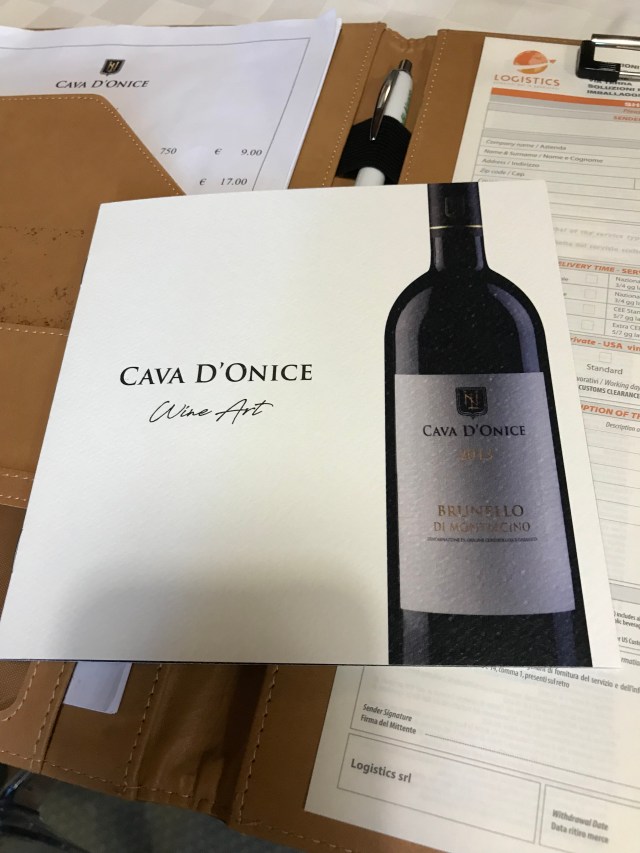
Our second winery on our Montalcino tour was to Azienda Agricola Cava d’Onicea small, family run, winerywhere we had lunch and tasted their wine.
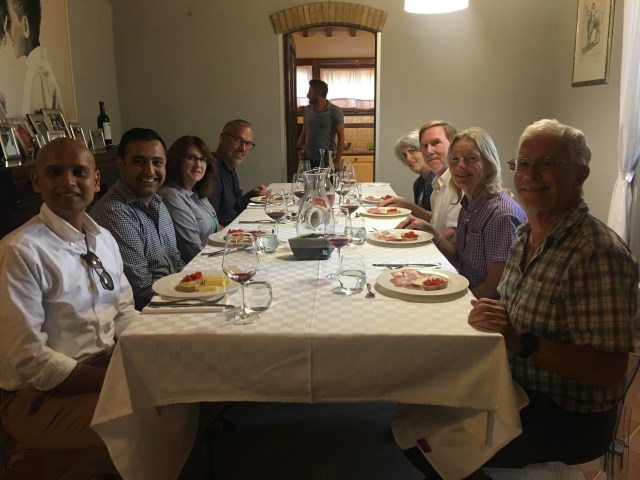
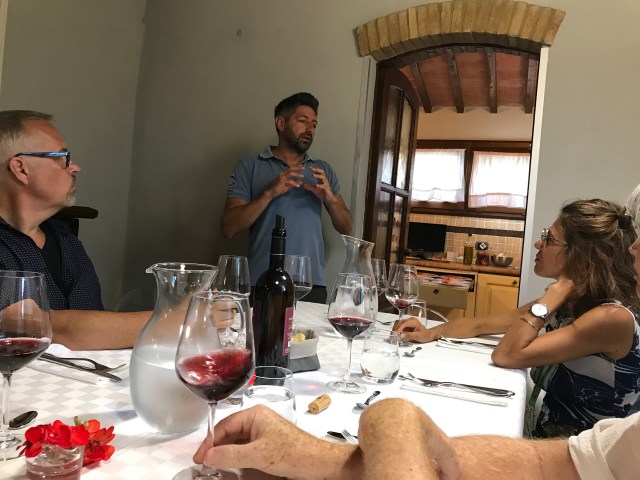
The owner’s family had been involved in wine making for years (his father was the cellar master at a winery), but he was the first to own a vineyard. They are a small operation, producing less than 20,000 bottles a year. This is not enough to support the owner’s family, so he augments his income by doing consulting work for other wineries. But, he is very proud of his wines, and gave us a very informative talk on each one.

After tasting his wines, we felt his pride was justified.

Our first wine was a Rosso di Montelcino. Like the more famous (and much more expensive) Brunello di Montelcino, this Rosso is made with only the Sangiovese grape (known locally as Brunello). Unlike certified Brunello di Montelcino, certified Rosso di Montelcino only needs to be aged one year, only six months of which must be in oak barrels. Usually, it is made with younger vines. The shorter aging, of course, means it can be produced much faster. For a smaller vineyard, it provides the quick cash flow needed to support the production of certified Brunello di Montelcino, which must be aged in oak for at least two years, and in bottle for at least four, before it can be released.

The Rosso we tried was excellent. Although very young, it was very drinkable and went very well with the meat and cheese with which they served it.

The star of any Montelcino tasting is always Brunello di Montelcino, and the one we were served at Cava d’Onice did not disappoint. Before its lengthy aging, Brunello is fermented on the skins much longer, and has far more tannins, than Rosso. We had a 2014, the most recent vintage released, and it was really too young to be at its best. But, it was wonderful, and after swirling a lot in the glass to open it up, we could see why our host was so proud of it. It went very well with pici pasta and meat sauce.

Rosé wine (“rosato” in Italian) has been growing enormously in popularity, especially in the US, so our host had decided to try making one. He served his first (and, so far, only) release with our desert of panna cotta. It was a sweet rosé and paired very well with the desert. We felt our host’s rosé was a great success. Apparently, at least one commercial buyer did as well; our host had sold every bottle he had to a Canadian distributor at a show recently, and the buyer wanted his entire production of this year’s vintage. Apparently, rosé is just starting to become popular in Canada.

After our lunch and tasting we got back in the van to visit our third winery of the day.

Bonsai! Throwing money (and innovation) at winemaking.

The first winery we visited on our tour was Podere le Ripi, which is owned by Francesco Illy, the oldest male in the third generation of the Illy coffee dynasty. I don’t know what Francesco is worth, but IllyCaffé S.p.A. grosses something like $460 million a year. At any rate, he seems to have thrown vast amounts of money at this winery, which he acquired about 20 years ago.

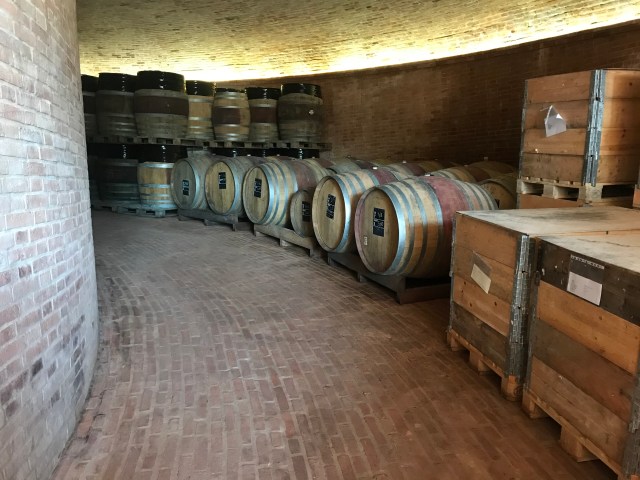
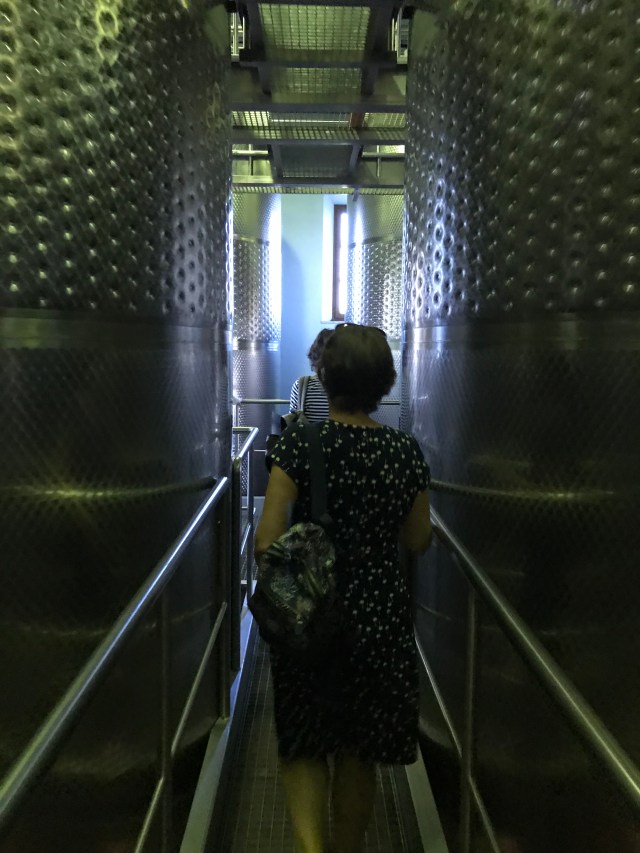
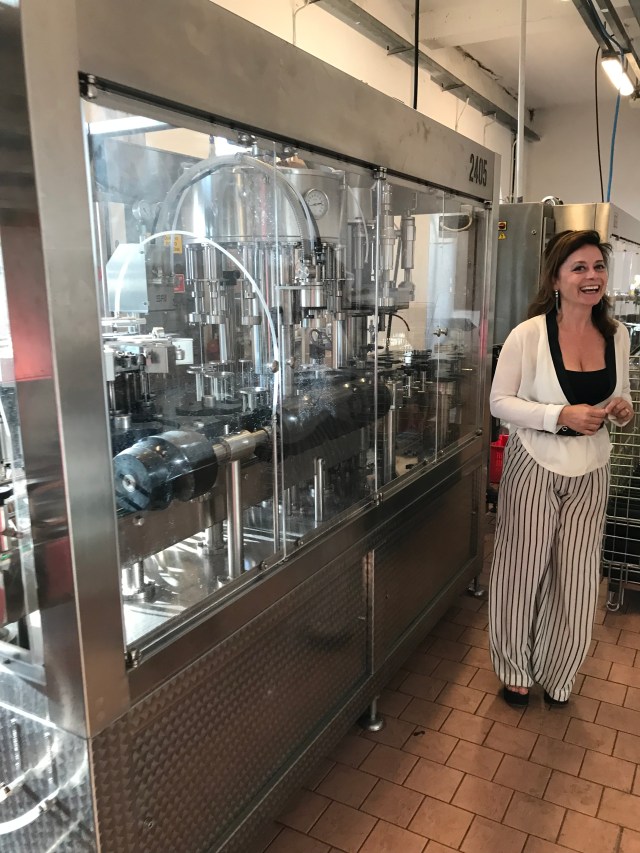
The wine making facility is amazing – a huge round structure with all of the winemaking facilities on a spiral ramp, sort of like the Guggenheim Museum in New York. The winery is very big on “Bio” (what we’d call organic) and green. The spiral ramp allows them to start the wine making processes at the top, and, as the wine moves through initial fermentation, secondary fermentation, aging in wood, aging in cement, and aging in bottles, they need very little electricity for pumping as everything flows down hill. It seems that the bottom of the facility is under ground, so they need very little, if any, air conditioning.
The other remarkable thing about this winery is its “Bonsai” vineyards. By law, certified wine in this area such as Brunello di Montalcino cannot be from irrigated vines.

In California, some vineyards are trying to reduce the need for irrigation by planting far fewer than the normal number of vines per acre; fewer vines require less water.

Illy decided to go in the completely opposite direction, experimenting with more and more vines per acre. “Normal” in the area is about 5,000 vines per hectare (something over two acres). Illy is planting as many as 62,500 vines per hectare! This is referred to as Bonsai planting, after the Japanese Bonsai trees.

The theory is that the roots want to spread out horizontally, but, when densely planted, run into other roots competing for the same area. They then go down vertically, deeper and deeper, to get the required water, as far as 20 or 25 meters (60 – 75 feet). In doing so, they also get a lot of minerals they would not find near the surface.

Interestingly, the resulting yield is far lower than the yield from normally planted vines. I think they said they get about 40 – 60% of what they normally would per hectare. Apparently, the vines, having to compete and work so hard to survive, don’t have a lot of energy to put into producing fruit.

But, the grapes they do produce are very small, and have very thick skins, both of which are considered to be ideal for Brunello based wines. We tasted some grapes, and they tasted really rich.

Anyway, Illy can afford a very expensive winery and a very small yield. They had trouble selling their first release in 2004, but deep pockets helped them survive, and they are now producing about 35,000 bottle a year of very successful wine.

Of course, we tasted some of their wine, applying all the things we have been learning in our studies.We felt that the wines, especially the Brunello di Montalcino, were outstanding. Throwing money at some things pays off, especially when you innovate successfully.
Advanced studies: Montalcino Reds

Wanting to continue our studies of Tuscan culture, we booked a tour of the Montalcino district, which included three wineries. We’ll cover the town of Montalcino and each winery in a separate post.

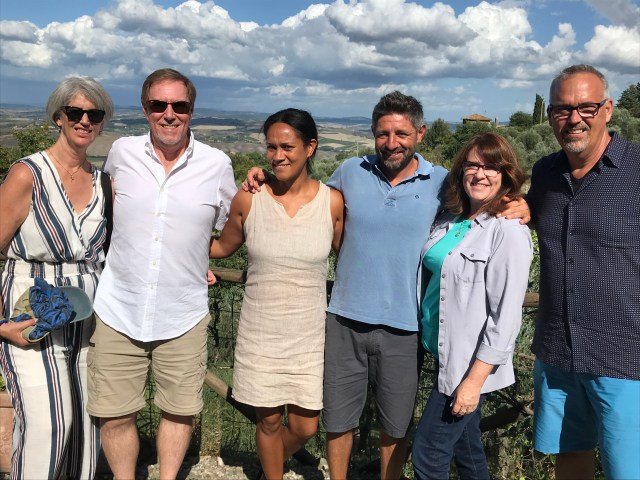
There were eight of us in the van, four Californians and two New Yorkers, one a native of India and the other of Pakistan. It was a very convivial group.

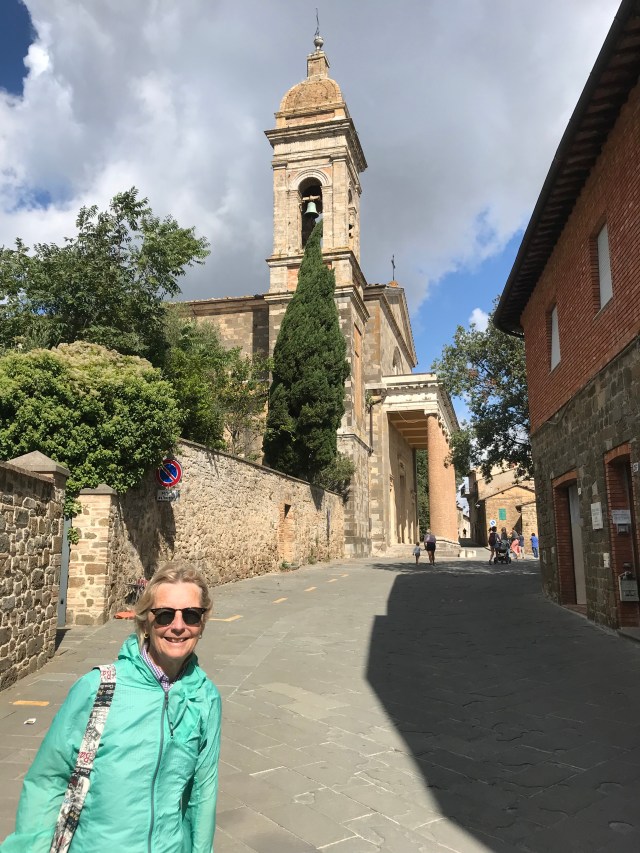
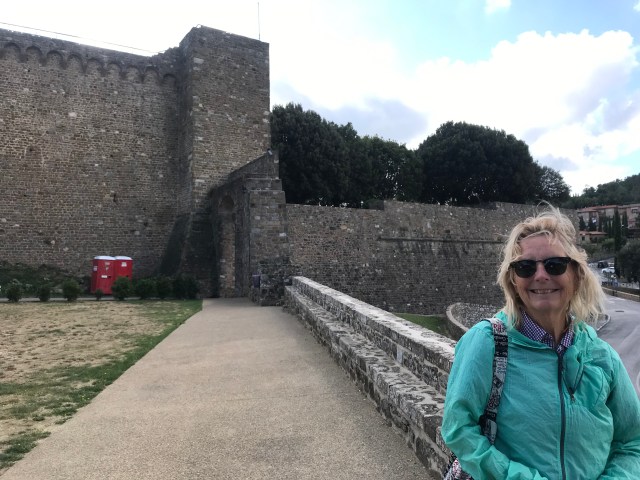
The first stop was in Montalcino, a rather typical Tuscan hill town. It has an important place in the history of Siena: when the bad guys (i.e. the guys from Florence) conquered Siena in 1555, the good guys (I.e., the leading families of Siena) escaped to Montalcino, about 60 miles away, where they holed up in the fortress.They held out for several years, but Montalcino was finally captured by Florence in about 1559. As a gesture of Siena’s gratitude, a delegation from Montalcino marches at the head of the Palio festivities each year.
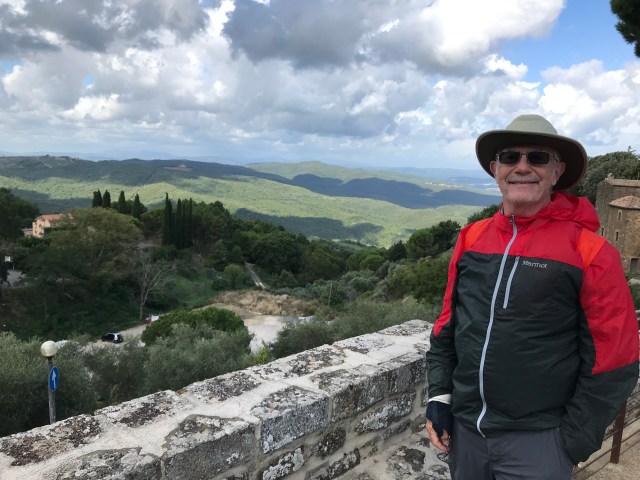
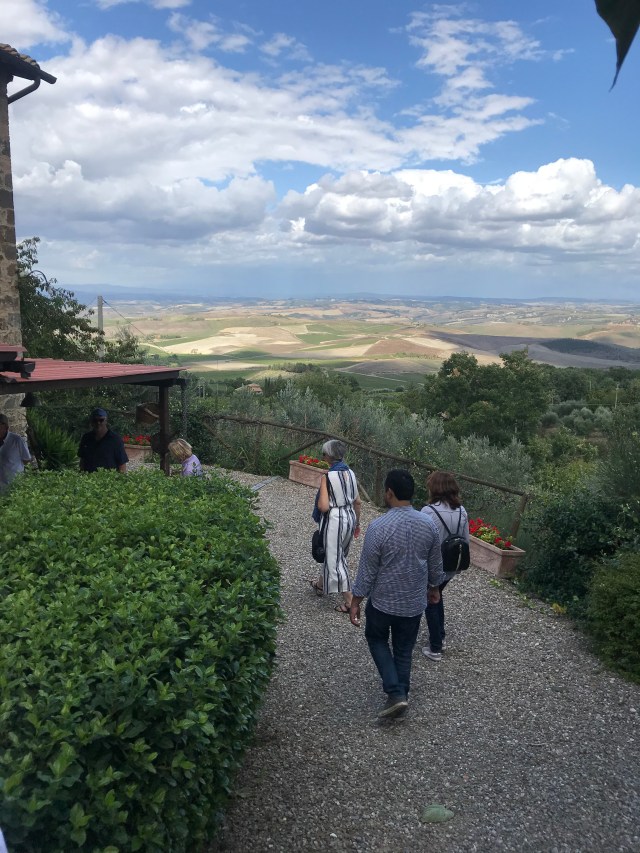
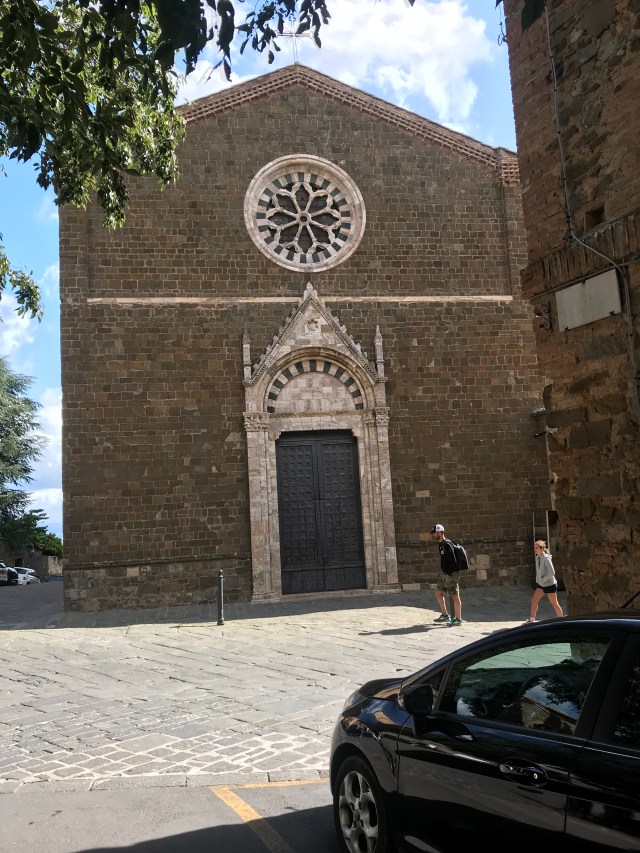
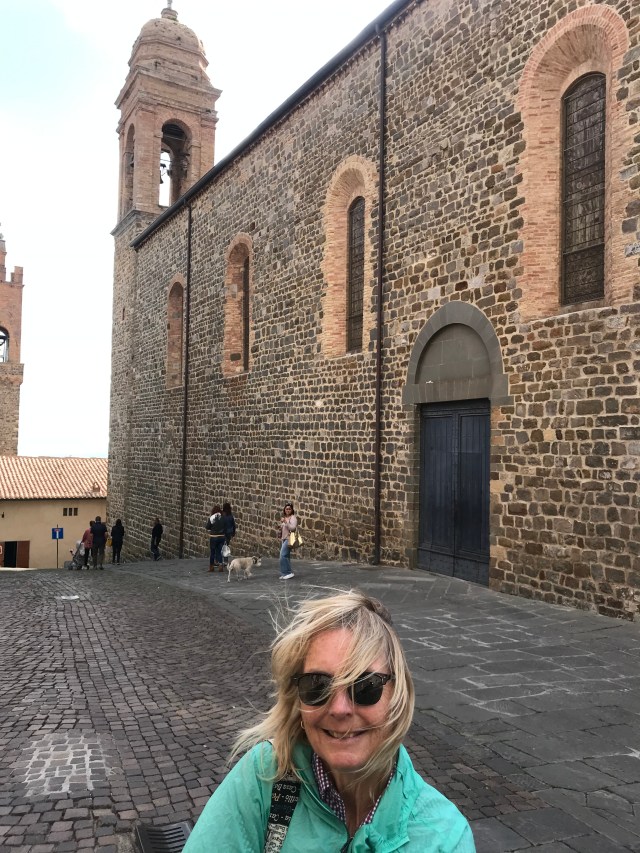
Although your devoted bloggers have seen a lot of hill towns, mostly on foot, we found Montalcino to be very pretty, with outstanding views.After walking around the townwe boarded our van and headed to our first winery of the day. We were ready to get to work!
An ode to ”THE”

Consider the virtues of the definite article in English, “the.” What a wonderful word!

We never appreciated this until we started studying Italian.

“The” is, of course, beautiful all by itself: a sturdy, little one syllable, three letter, word made up of two staunch vertical letters, T and E, joined by a vertical and horizontal letter, H. (Don’t get me started on H in Italian, which, for some reason they don’t explain, is not pronounced “H”, or anything like it, but, rather, “Acca”, and which is always completely silent, for very good reason: Italians are incapable of pronouncing it!)

But the incredible strength of this little word is its greatest virtue. Take, for example, its counterpart, the definite article in Italian. There are at least SEVEN of them splitting the work “the” does all by itself : “il”, “lo”, “l’”, “i”, “gli”, “la”, and “le”! (Who knows, there may be more that I haven’t learned!) You have no idea which one to use until you first look at the word it is referring to. Once you do that, you have to decide whether that word is masculine or feminine (NOT an easy task; in Italian beard is feminine, for example and bra is masculine), and singular or plural. Having figured all this out, you then have to examine that word and see if it begins with a vowel (which sometimes matters, and sometimes doesn’t), or an s or a z followed by a consonant, which also matters only sometimes. Having done this, you are ready to say something, unless the conversation has moved on to another subject, which it probably has.

So, next time you use our English “the” do so with appropriate respect. This little word does it all, again and again, all by itself, without asking you to think about anything.

Thank you, “the”.

we apologize to our gentle readers

Forgive us for being off line for a week. Not to make excuses, but the school work has been nearly killing us!

Faithful readers will recall that, in addition to having to study the intricacies of Italian grammar, with its prepositions, pronouns, verbs, SEVEN versions of the definite article (all of which just mean “the”, after all) and a vocabulary filled with “false friends” which do not mean what they should (it would be a lot easier if you could just look at “parenti” and figure it meant “parents”, but, no such luck), not only do we have to do ALL THAT, we have to study Italian culture after class!

Normally, this means one Tuesday visit to Bar Manganelli on the Piazza del Campo where we study aperitivo and apericena. We worked hard at this last week, even doing some extra credit work on Wednesday. Either the school didn’t think we had worked hard enough, or maybe they thought we showed a lot of promise, but, anyway, this week they sent us to Bar Manganelli on both Monday AND Tuesday for further studies!

We felt we had mastered Prosecco Manganelli last week (and the weather has cooled off) so we moved on to more advanced study of Tuscan reds. Since we had planned a visit to Montalcino on the weekend, we studied Bar Manganelli’s curriculum on the most famous wine of that region, Brunello di Montalcino. It was hard work, but after the two evenings of diligent study, we felt we had mastered the fundamentals. It is a great wine; we looked forward to further study!

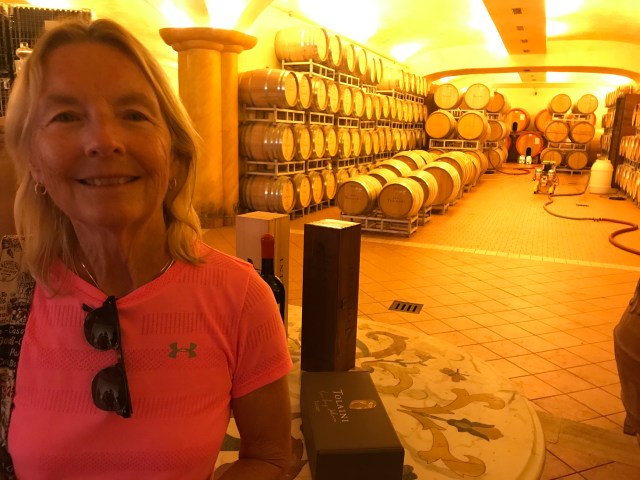
But then, they announced that the Wednesday field trip would include a visit to a Tuscan Vineyard! To study ANOTHER Tuscan wine, Chianti! Tired as we were, we gamely marched on and studied how the wines were madeand the wines themselves. Fortunately, they only made us study five wines, and, with our earlier diligent study, we felt we did well!
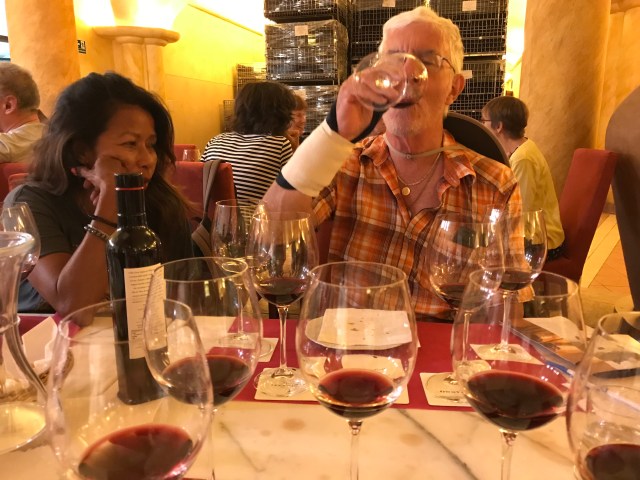
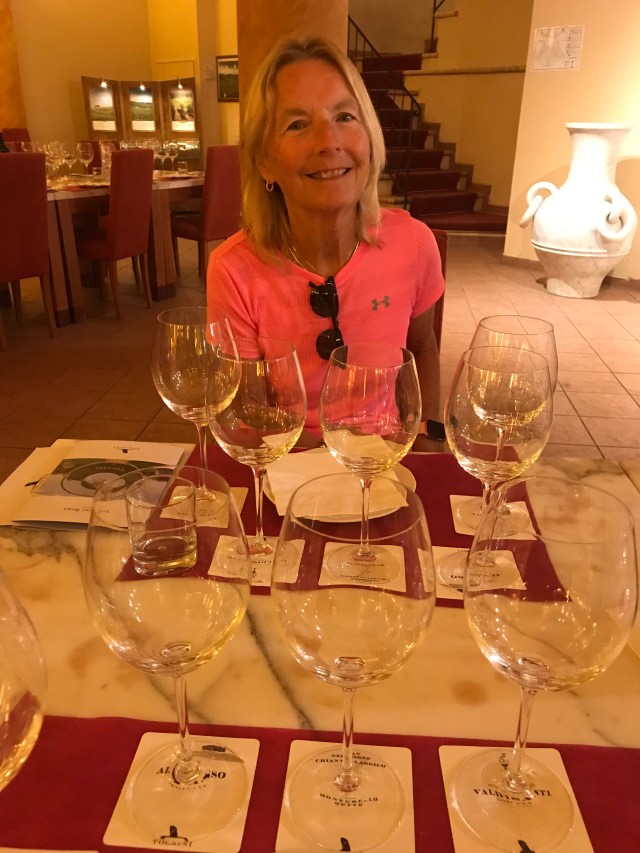
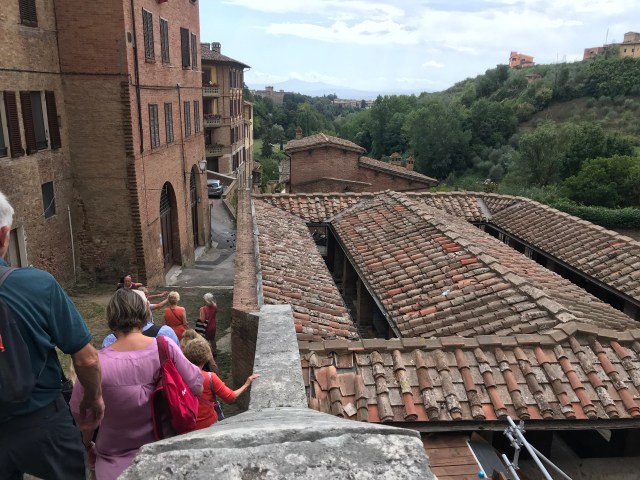
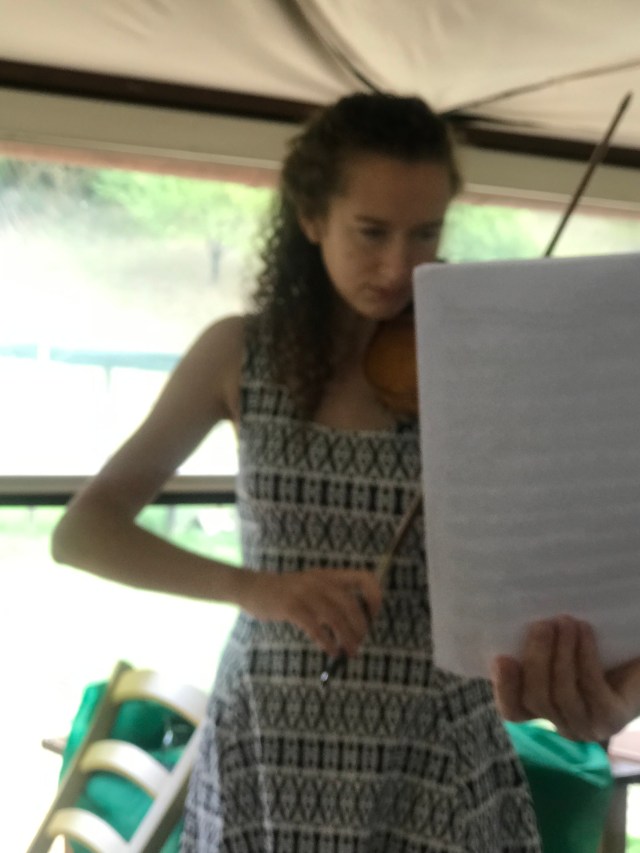
But, they weren’t finished with us! On Friday, instead of the usual luncheon at the school, they marched us down the hillto a restaurant outside the walls of Siena, where we studied Italian cuisine as well as Italian wine. The lesson was capped by an excellent violin performance by a young lady with considerable promise.
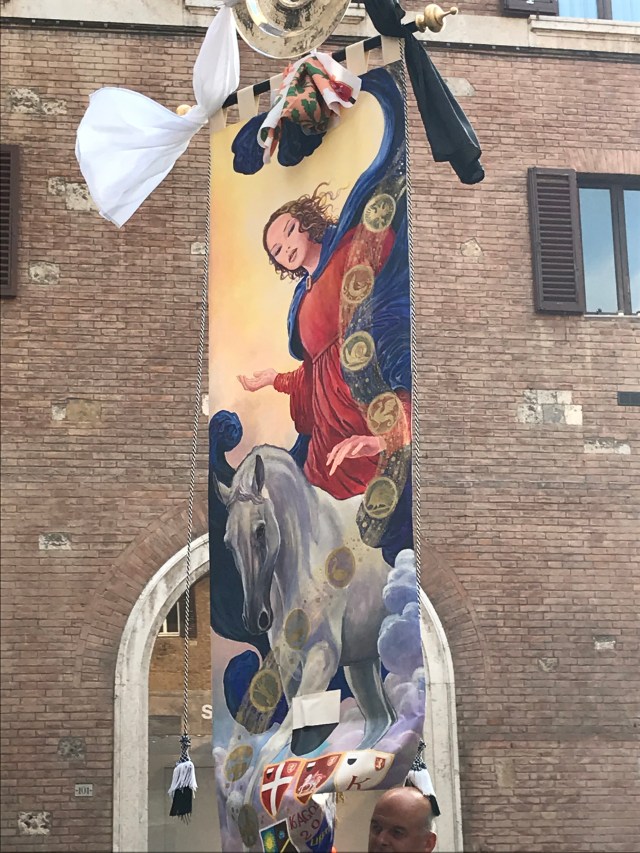
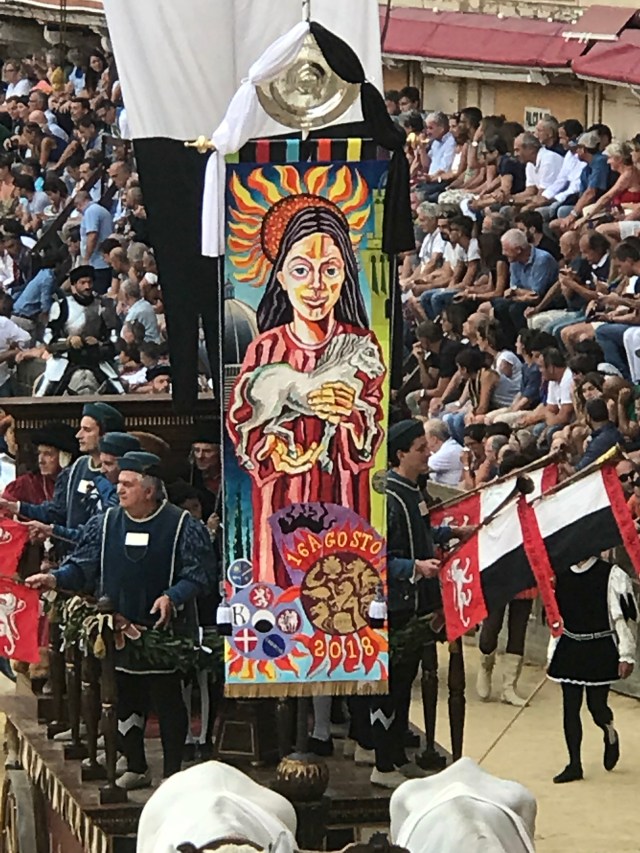
It was been a tough week, but we worked very hard and felt we were ready for the extracurricular studies of Brunello di Montalcino we had planned for the weekend.

More Palio Madness

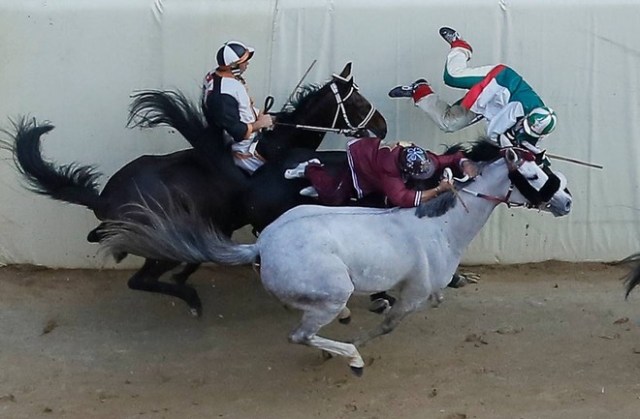
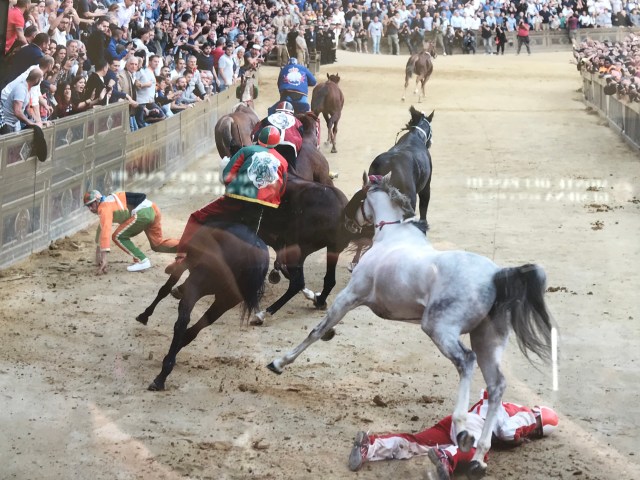
The Palio is the wildest horse race in the world. Held twice (occasionally three times) a year, the Palio has ten horses, each representing a Siena contrada (neighborhood), racing around the Piaza del Campo with the jockeys, in medieval regalia, riding bareback (at least for as long as they can stay on their horses). There are only two rules: no grabbing another horse’s reins, and the first horse across the finish line wins. With or without a jockey. The whole city goes crazy for weeks!

The only prize is a banner of the Virgin Mary; there is a new banner each year.

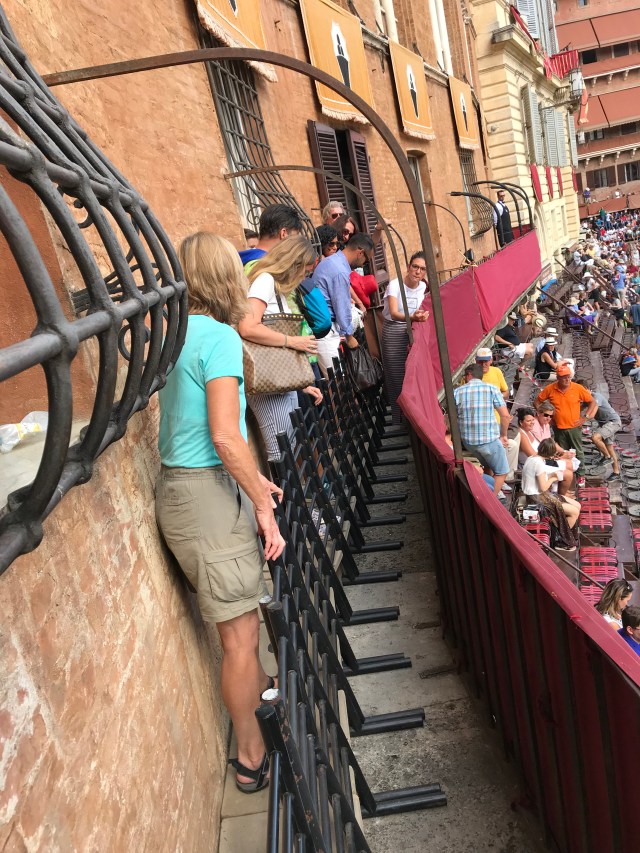
We plunged right into it all last summer, renting space on a balcony,soaking in the pagentryand cheering for the horse riding for our beloved contrada, Tartuca.(He lost.)
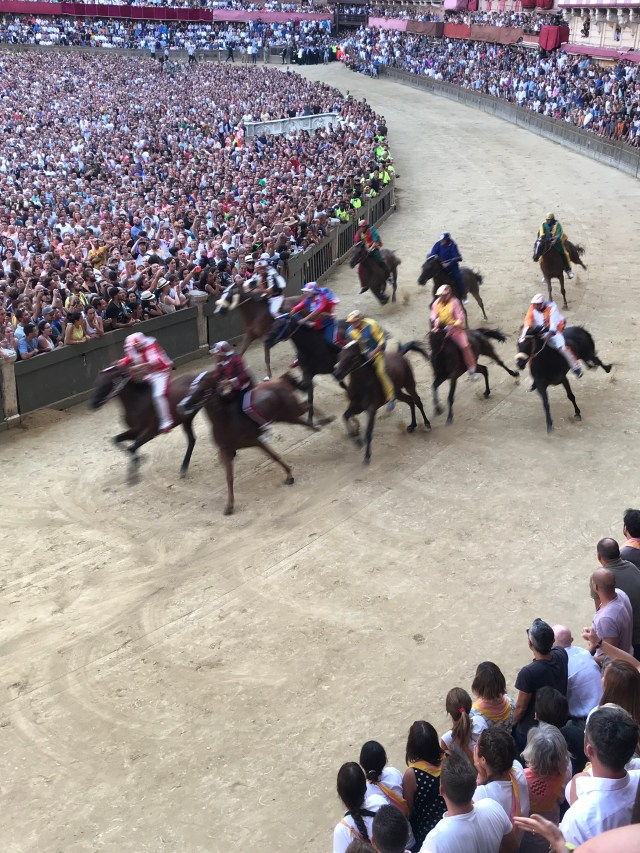
Although we were in Tuscany at the time, we avoided the November “Extraordinary” Palio last year; we felt one Palio was enough! However, we were thrilled to watch it on TV from Florence and cheered when the Tartuca horse, Remorex, won.

That was one of the wildest Palios ever! As usual, the jockeys rode each other into the walls, with the results you would expectOnly one jockey made it to the finish line, and Tartuca’s Remorex won all by himself.
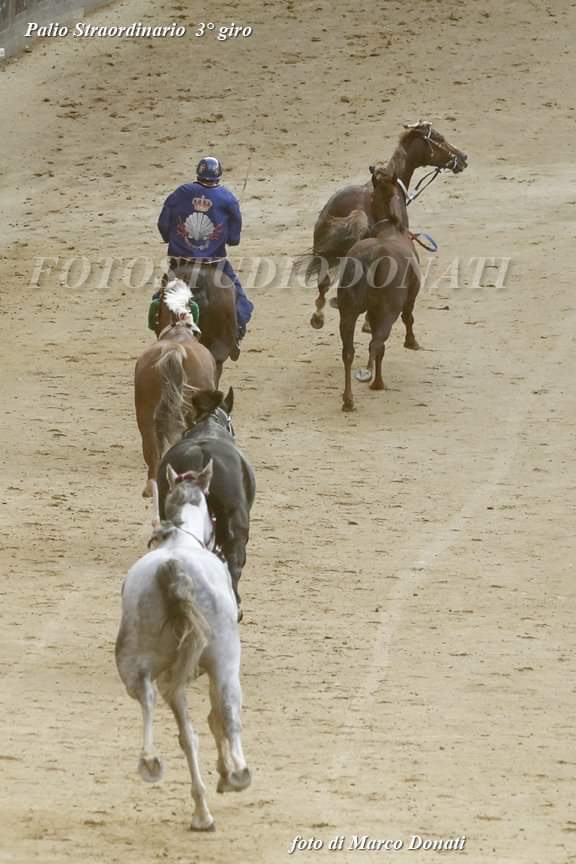
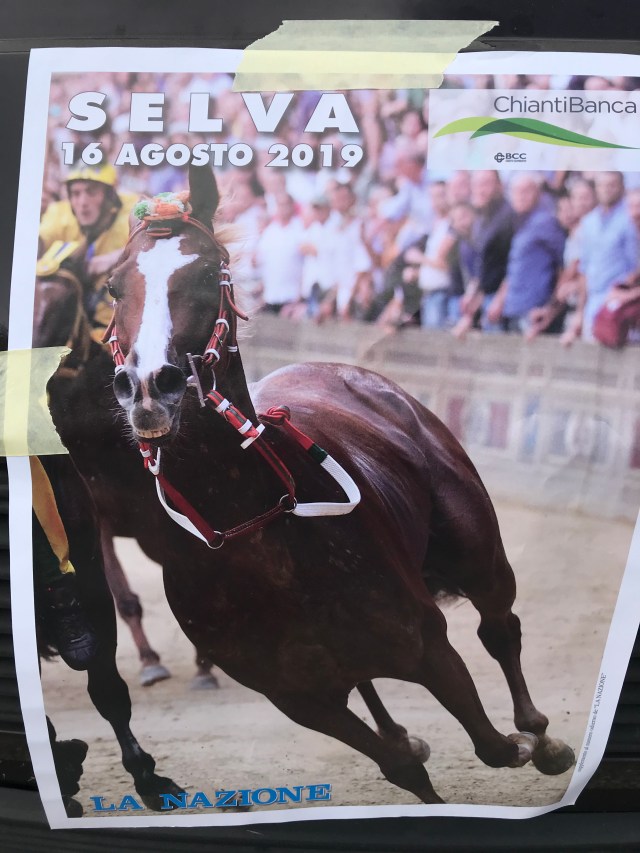
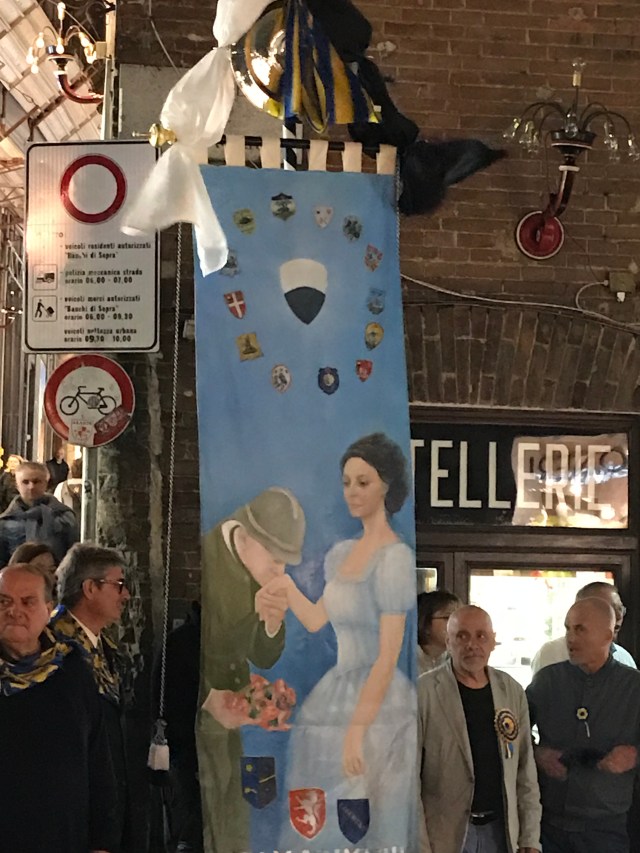
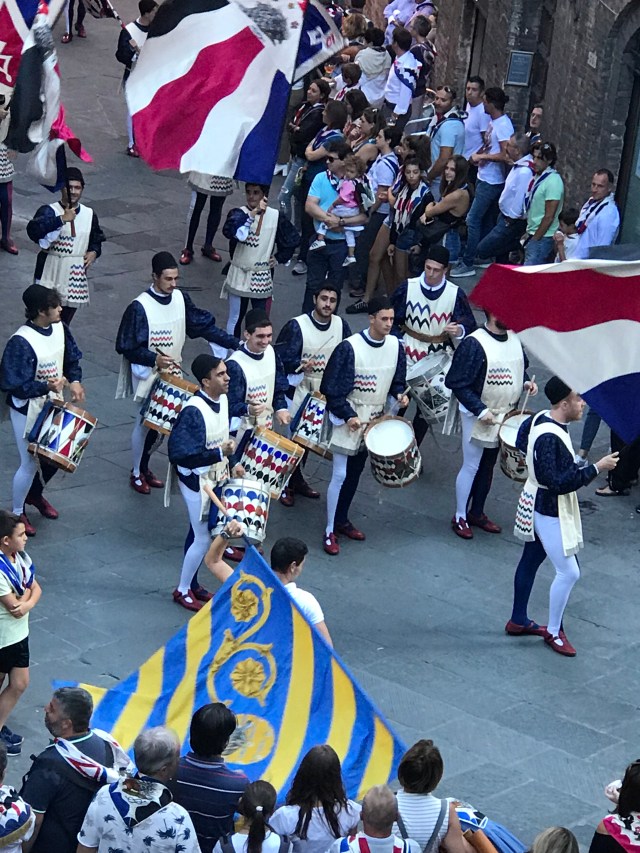
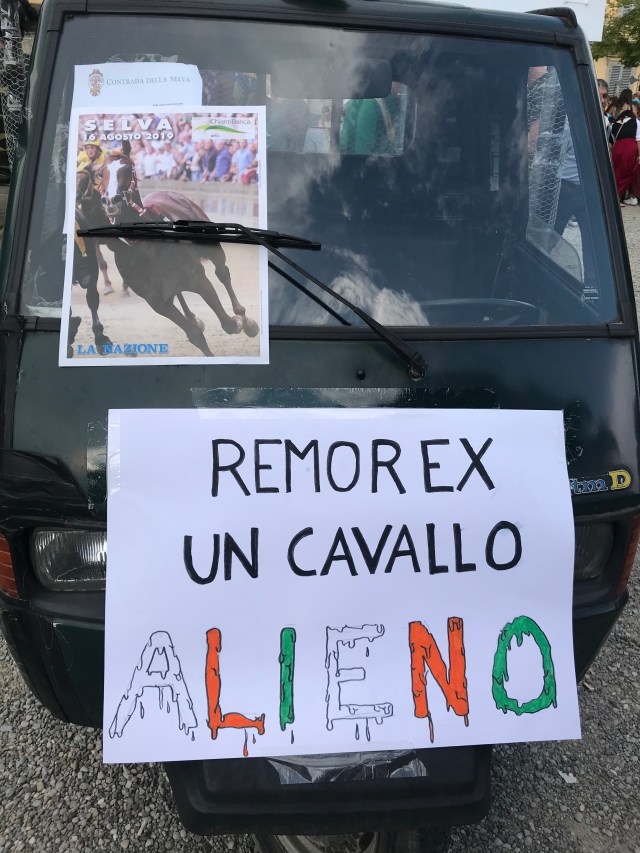
This August we again missed the race (we were in Corsica) but the craziness goes on for weeks, so we didn’t miss everything. Once again, Remorex won (this time for the Selva contrada; the horses have no loyalty). And, also once again, he ditched his jockey before he got to the finish line!Yesterday was the great victory parade, which winds through the city and ends at the Piazza del Campo. It’s kind of like Mardi Gras, only crazier! Only the winning team participates.
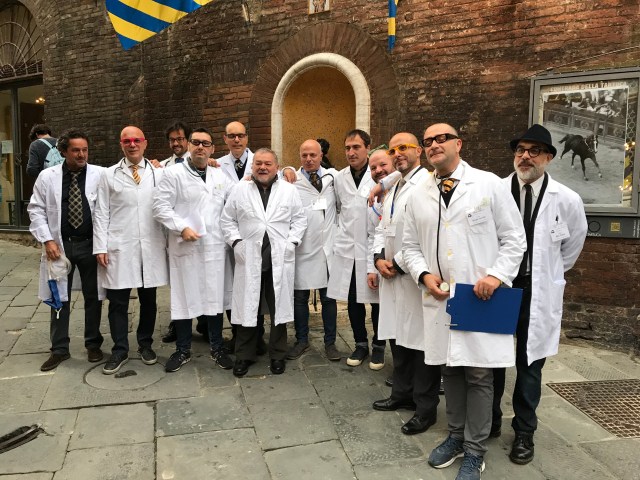
Last November’s parade included Tortuca men dressed up as doctors, handing out slightly lewd “prescriptions.”

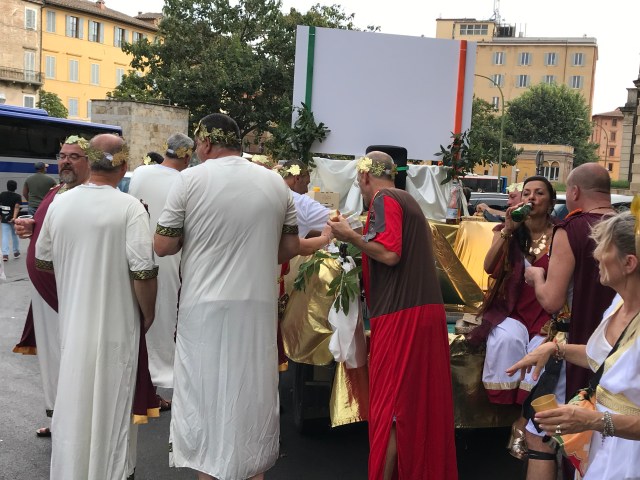
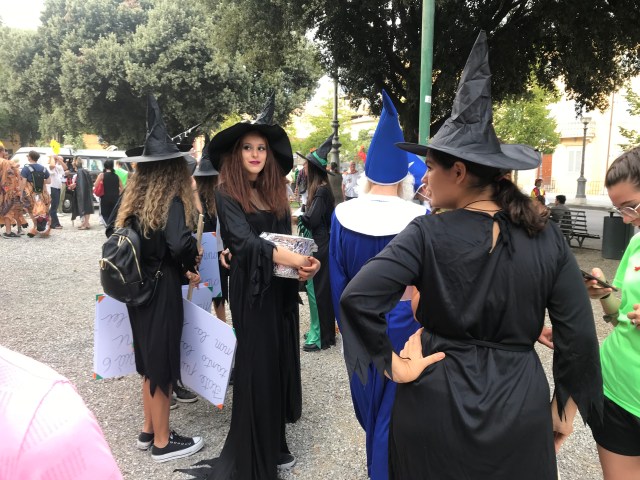
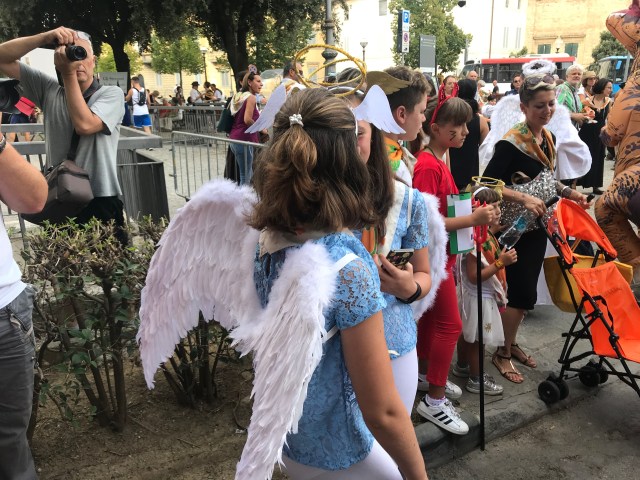
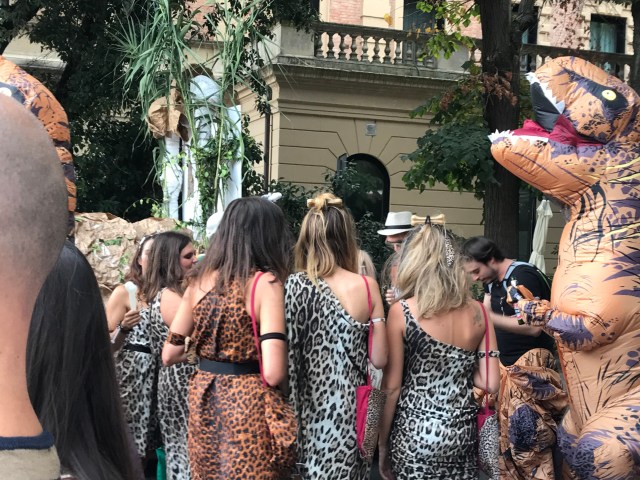
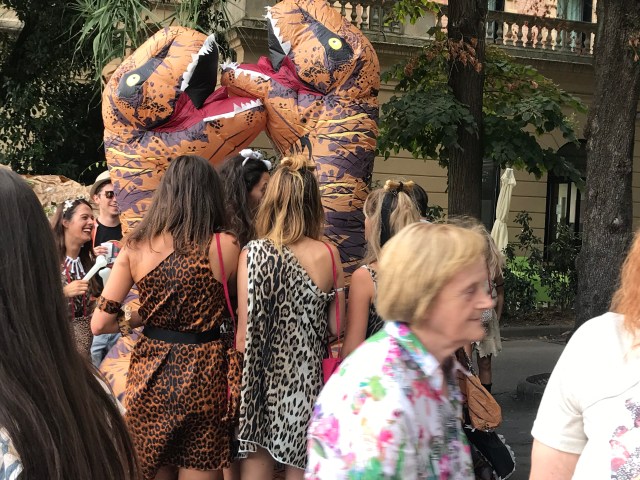
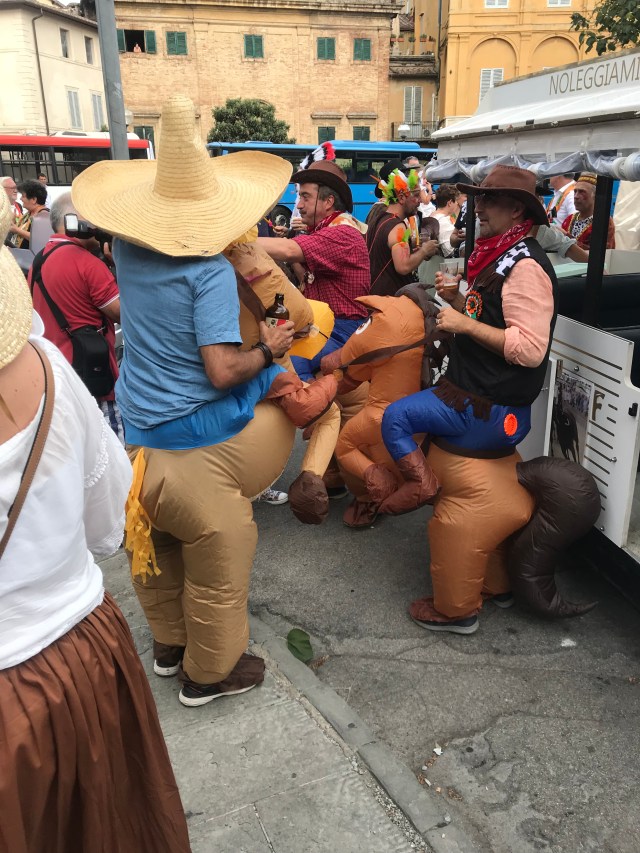
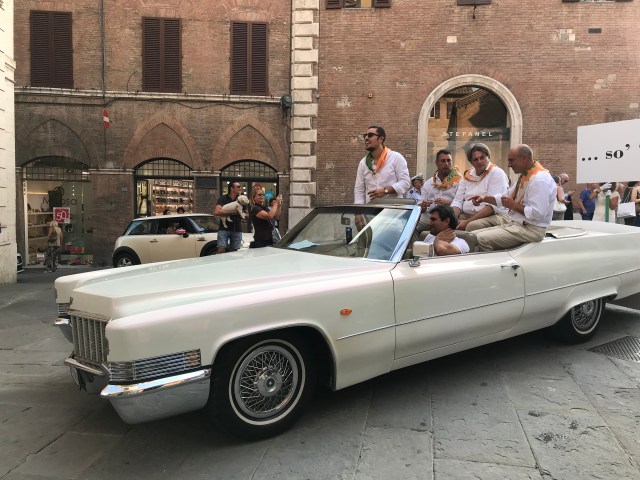
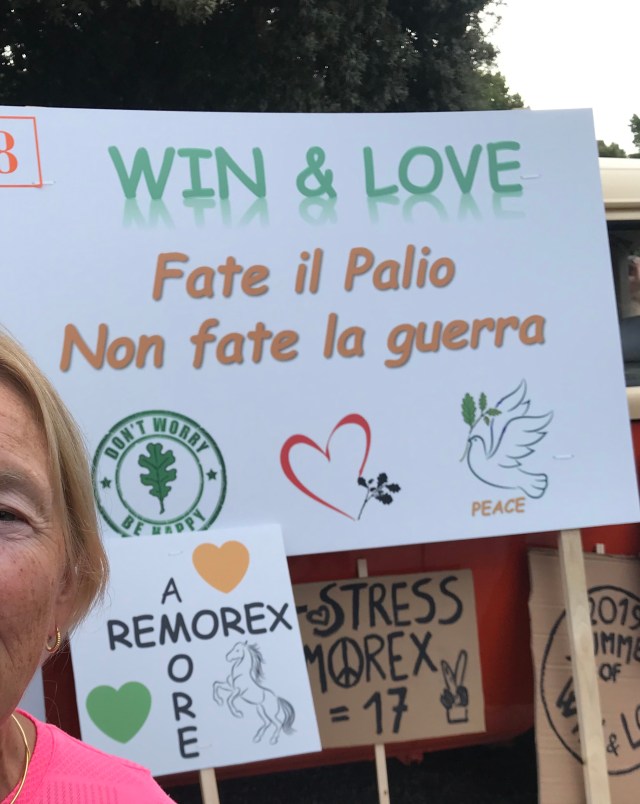
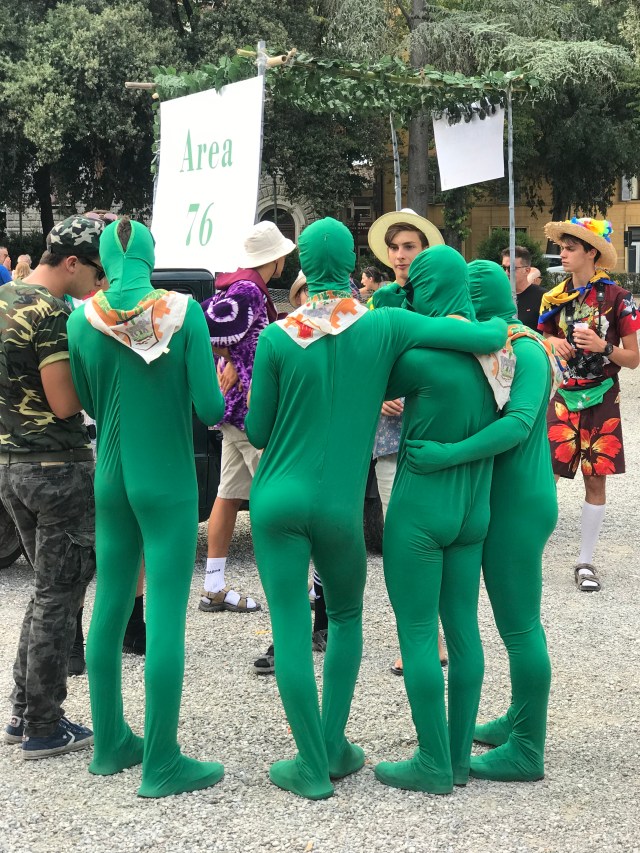
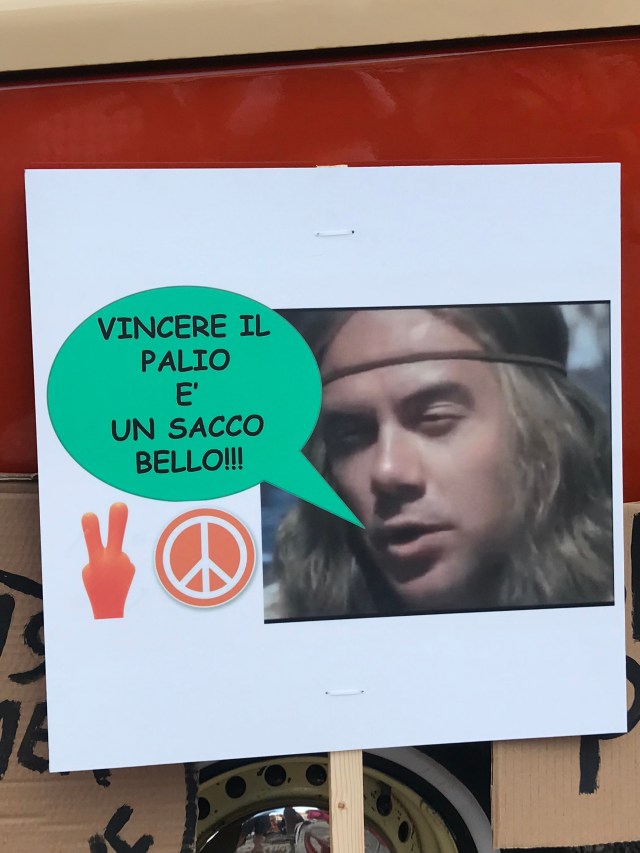
The Selva contrada’s parade themes included aliens,on the theory that Remorex must be oneRoman senatorswitchesangelscave womendinosaurscowboysthe longest Cadillac I’ve ever seenand, especially dear to our hearts, hippies galore.(Make Palio, not war)This morning, we awoke to loud drumming under our bedroom window as a parade of Tartucas marched by. The Palio was on August 16th, but the celebrations are still going strong on September 1st!
Karl and Leslie Ruth continue to learn

As if studying Italian, with its prepositions and pronouns and the such weren’t enough to tax their brains, Karl and Leslie Ruth are diligently studying Italian culture as well. Each Tuesday evening, at 6:30, the students and instructors meet at Bar Manganelli for a course of study entitled “The Aperitivo In Its Many Forms, Including Apericena.”

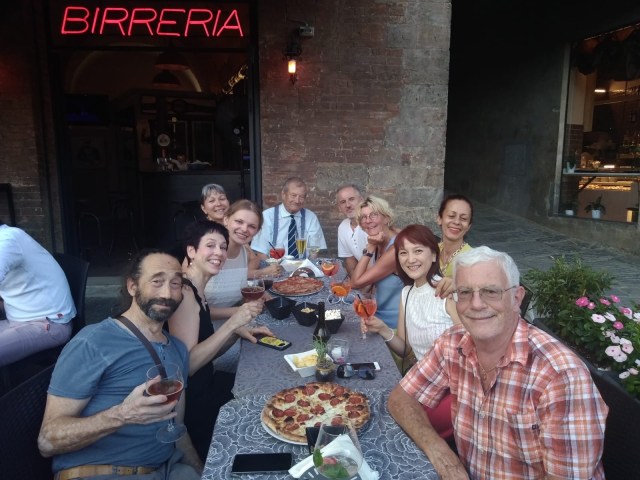
We studied this last year, mastering Tuscan wine (red, white, and sparkling) and were ready to move to a more advanced level. So, this week, we studied Prosecco Manganelli, a wonderful drink made with Prosecco, a sparkling white wine, strawberries, and fresh mint leaves, served over small ice cubes in a large wine glass. We did well, and felt we had made great progress on this aperitivo.

Aperitivo, at Bar Manganelli, is really “Apericena,” offering a buffet with enough food to make a dinner (“cena”) out of it. Increasingly, Italian bars are beginning to call this “Happy Hour” (actually, “’Appy ‘Our” since the Italians really don’t do well with the letter H).

To make sure we had mastered this important part of the curriculum, we returned on Wednesday evening for Independent Study. This being Leslie Ruth’s birthday, we studied really hard, which we regretted a bit the next morning. But, we feel we have really mastered the aperitivo.

School days, school daze!

We’re back in school again, at Scuola Saena Iulia. It works this way:

Everyone starts on a Monday. Monday mornings at 9:00, all students, new and old, report to school for coffee and a meet and greet. The new students are interviewed by instructors to see how far along they are in Italian (we range from complete beginners to quite advanced speakers), and then, at 10:00, the new and returning students are shuffled into classes by Mauro, the head of the school. Students in each class have roughly the same level of Italian.

We were placed in a class with Sarah, a young German college student working on a double major in theoretical math and Latin. She had decided she would like to study something a little more practical!

Our first class began really well. Franco, our very talented instructor, asked each of us to tell a bit about ourselves, especially why we are in Italy. Since each first Monday class begins this way (this was the 7th Monday class for us after six weeks of study last year), and since we talk about this pretty much wherever we go in Italy, we did REALLY REALLY WELL!

Our euphoria was not to last. Franco announced we would begin by studying the dreaded pronouns!

Italian pronouns are tricky. For one thing, there are a lot of them. For another, they come in masculine and feminine varieties. For another, they come in direct and indirect flavors. As if that weren’t bad enough, sometimes two of them, when they are together, change (e.g., a “mi” followed by a “li” always goes rogue and insists that it wants to become a “me” followed by “li”). And, from time to time, two pronouns are combined, sometimes in a more or less logical fashion, as when “gli” followed by “li” becomes “glieli” and sometimes with no logic discernible to English speakers at all, as when “le” followed by “li” also becomes “glieli.” (Americans like us and other English speakers beginning to learn Italian are famous for constructing laborious sentences to avoid using any pronouns at all. Asked, “did Karl give you those earrings ” Leslie Ruth would respond, “yes, Karl gave me these earrings” when any Italian would respond, “yes, Karl me them gave.”

At the end of our class on Tuesday, Leslie Ruth and Karl were still struggling, but making progress. Sarah, being a bit of genius, had mastered pronouns and was ready for new challenges, so they bumped her up to a more advanced class, while we continued to study pronouns.

Wednesday, Leslie Ruth and Karl joined Sarah and her new class to watch a thoroughly depressing movie, The Consequences of Love, by a famous (and perhaps thoroughly depressed) Italian director, Paolo Sorrentino, with discussion led by Franco. The actors all seemed adept at using pronouns.

By the end of class on Thursday, we had a (pretty) firm grip on the rules of pronouns, and were able to use them in conversation. (Unlike beginners, students at our level are famous for constructing sentences whose only purpose is to force in a pronoun or two.) We were ready for a break!

No break was forthcoming. On Friday, Franco launched us into the study of the dreaded prepositions! We started by learning to chant, as all Italian elementary school students do, “di, a, da, in, con, su, per, tra, fra.” We now chant this as we walk around Siena, much to the amusement of the locals.

There are nine prepositions; we started with “di” and its seven (as Karl counted them – he may have missed one or two) uses. We mastered “a,” which only has four uses. We covered two uses of “da” by the end of the class, leaving us six more prepositions (and, no doubt, more uses for “da”) to cover when we begin class next week.

We’ve made a lot of progress, but our awareness of how much we have yet to learn grows!

Design a site like this with WordPress.com
Get started