When the record breaking heat of August in Italy this year made serious trekking imprudent (impossible? Potentially life threatening? Definitely marriage threatening!) we were able to score the last cabin on Jewel of the Seas, a Royal Caribbean ship sailing out of Civitavecchia, the Rome port.
The first thing we noticed after boarding was that the air conditioning was doing a great job! We decided that this cruise had been a GOOD IDEA! The next thing we noticed was that unlike other cruises we have taken, most passengers were European – there were more Italians, and more Brits, than Americans. Our table companions were Brits and Americans and we enjoyed their company.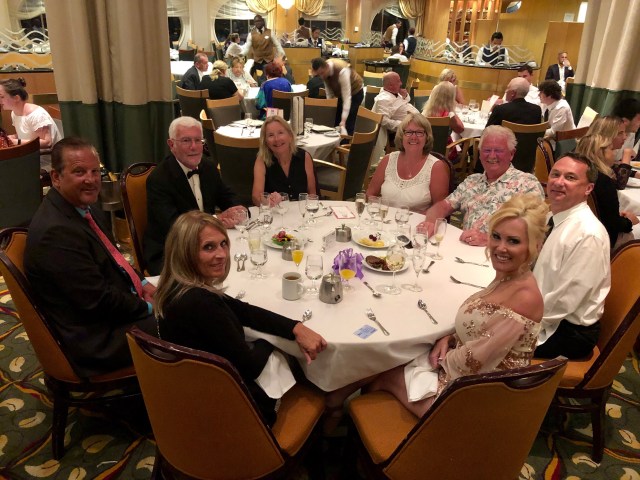
The ship went Cartagena, Spain, first. Karl’s mom had been there in 1990 or so and said it was great. She didn’t say anything about the Roman theater there, though; it was pretty much buried under layers and layers of neighborhoods, Christian, Moorish, and others, until it was excavated starting in the 1990s. The results are spectacular.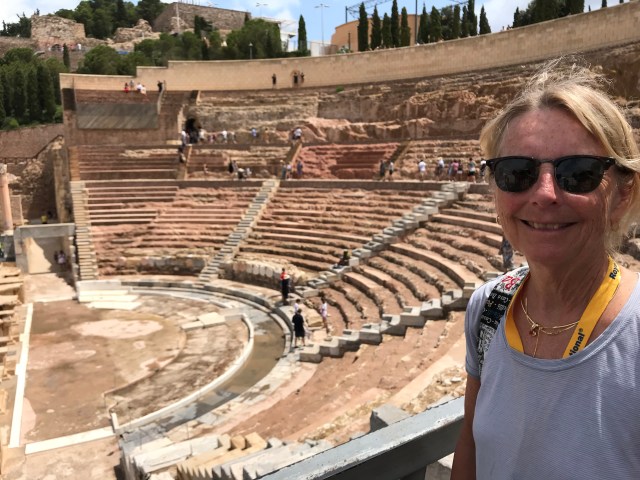 We clambered up and down
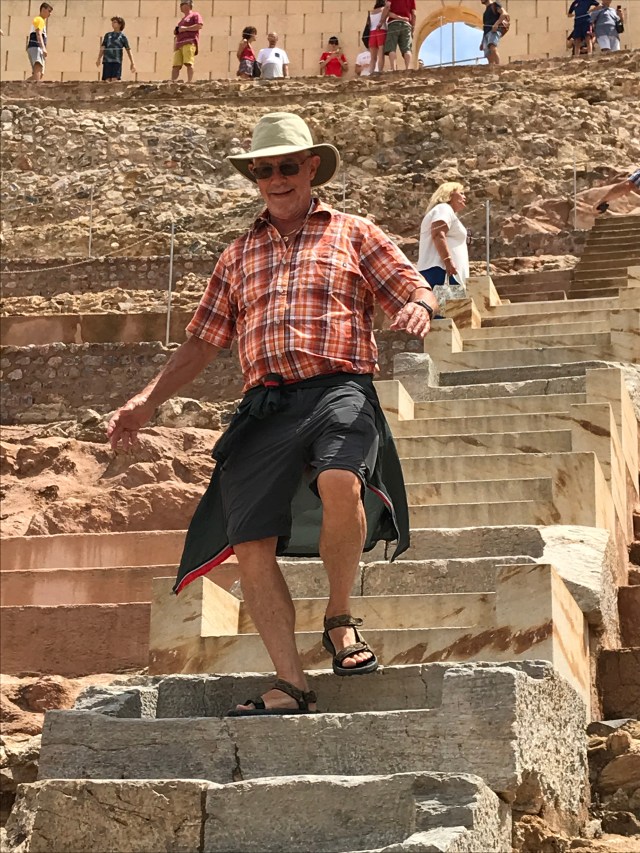 exploring the theater. Over the years, rubble from the theater was incorporated into other structures. Here, columns were used as building material.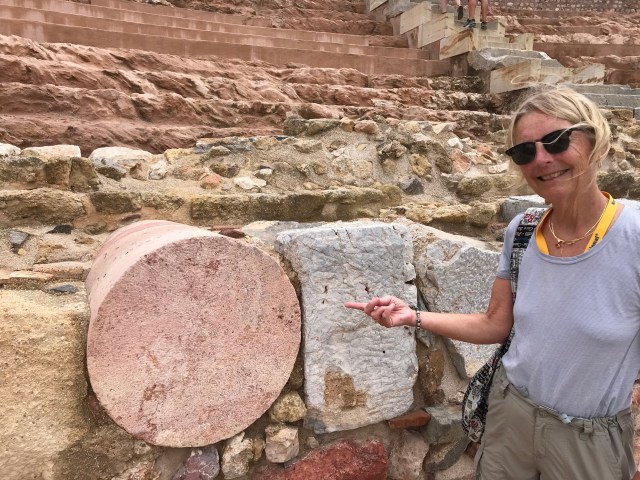
The ship then went to Barcelona, our current favorite European city. We walked and walked, first to the Ramblas, a famous wide boulevard with a pedestrian walkway in the middle. We stopped at the Boqueria, one of the most famous markets in Europe. Unlike a lot of famous markets, the Boqueria has not succumbed to the tourists and become a marketplace for tourist kitsch. It continues to be a huge, very real, marketplace for all kinds of seafood and vegetables, with quite a few counters where you can eat food sourced within a few meters. We went to our favorite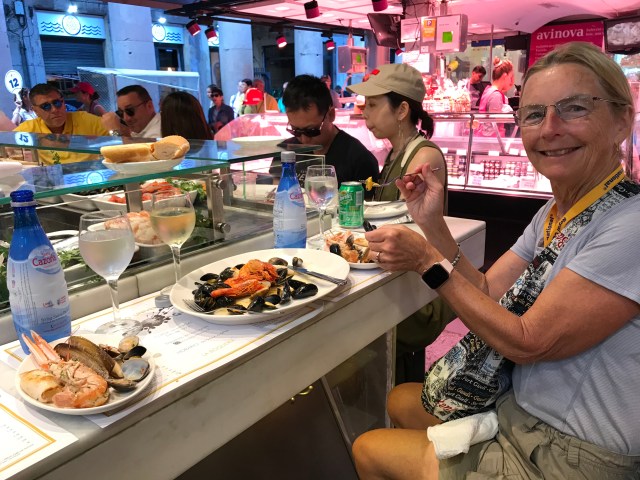
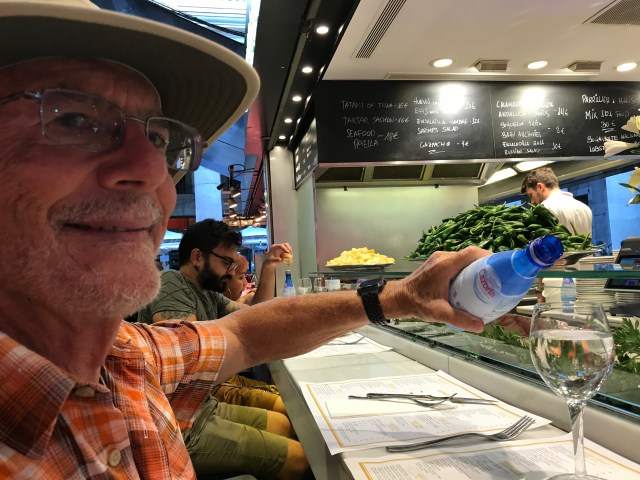 where we had grilled shellfish.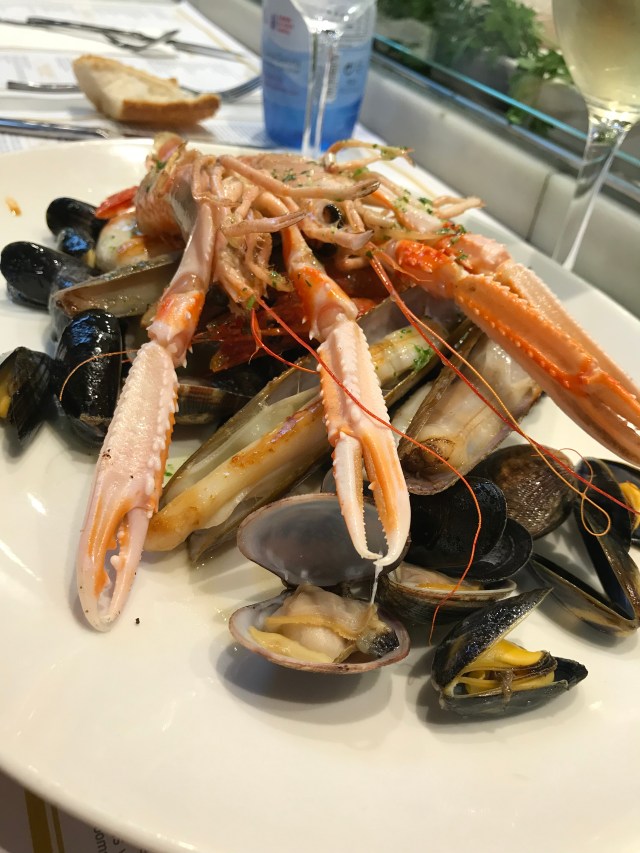
Then, we were off to the Sagrada Família to see how construction on the Gaudi designed cathedral was coming along. Gaudi began work on the cathedral in the early 1880s, and worked on it for the rest of his life. The plan is to finish it by the 100th anniversary of his death in 1926. It seems to be coming along well.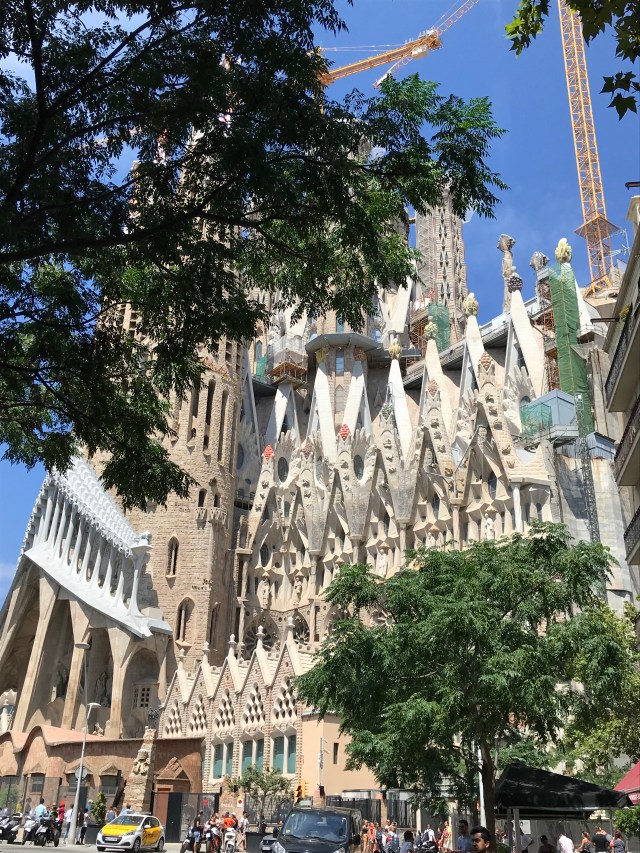
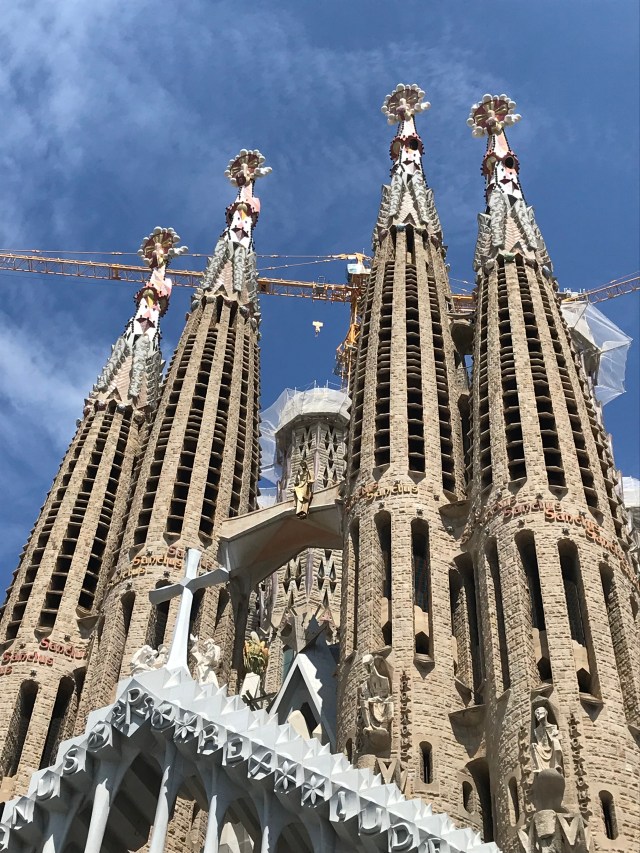
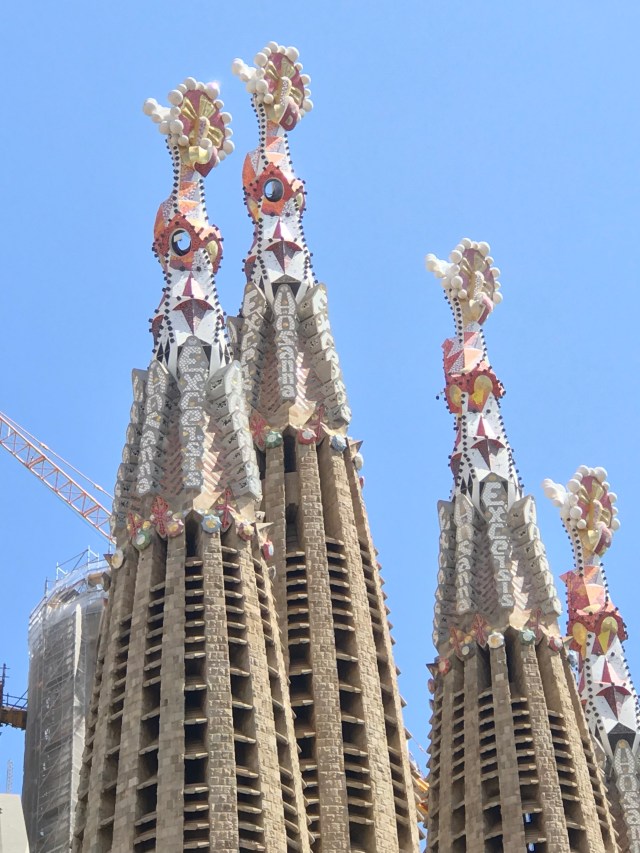
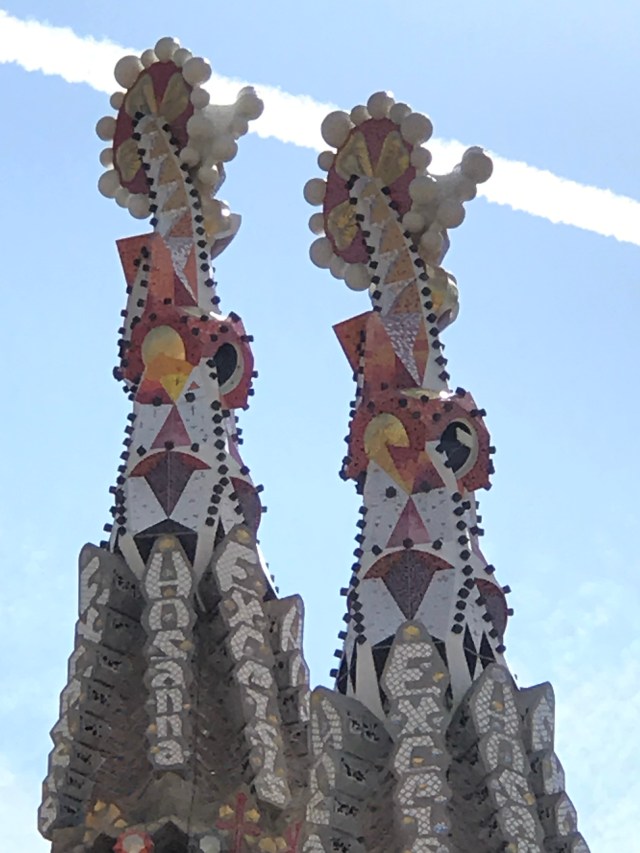
We returned to the ship, having walked about 12 miles.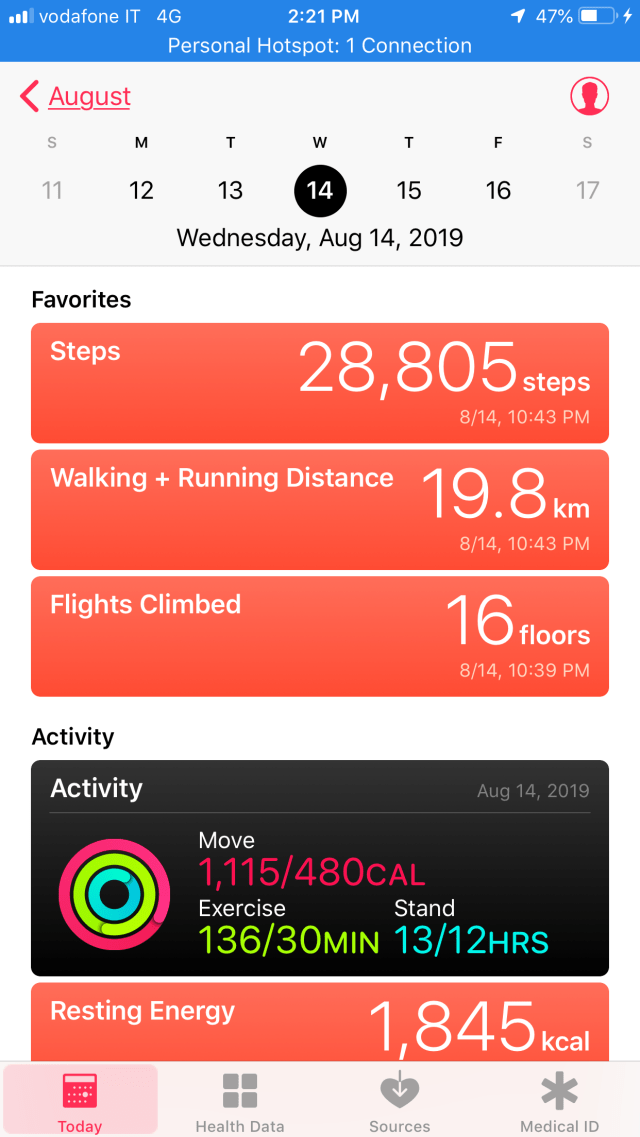
The next stop was Palma, a city on the Spanish island of Mallorca. We climbed up to the fort that overlooks the town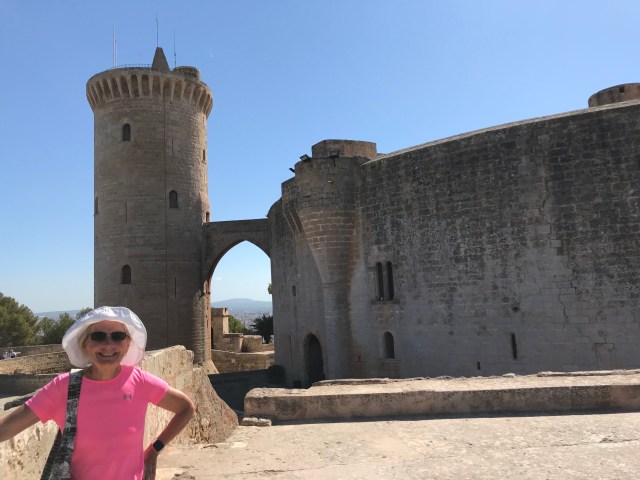
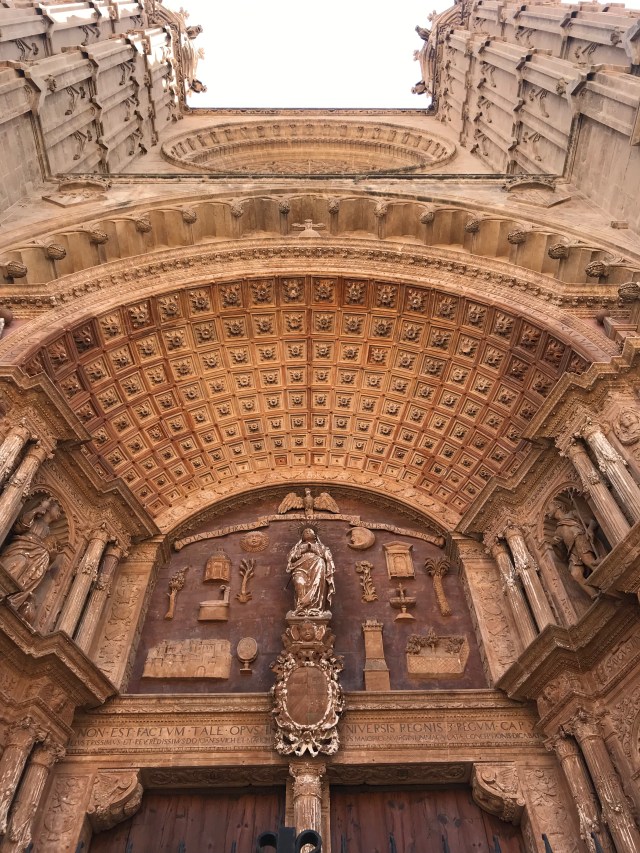
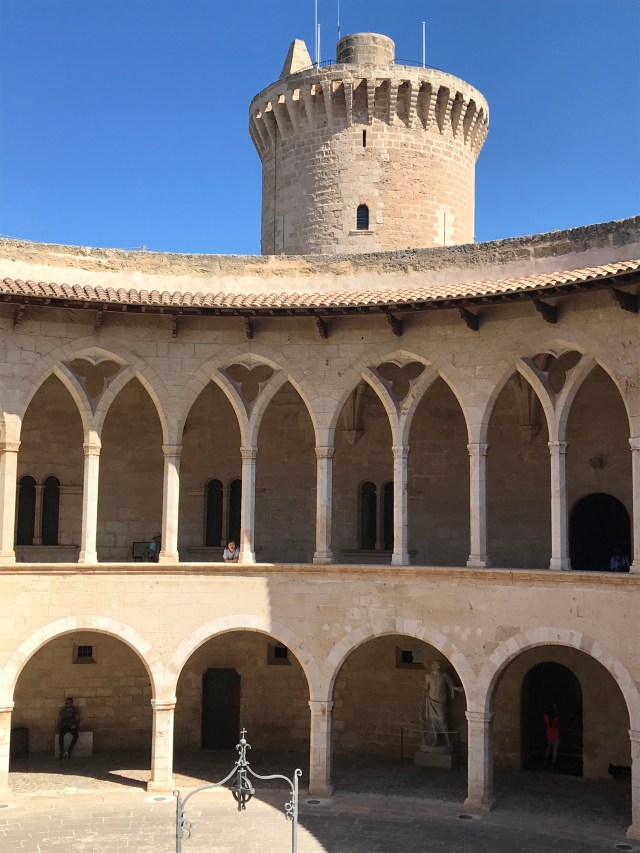 and then walked along the waterfront to the cathedral.
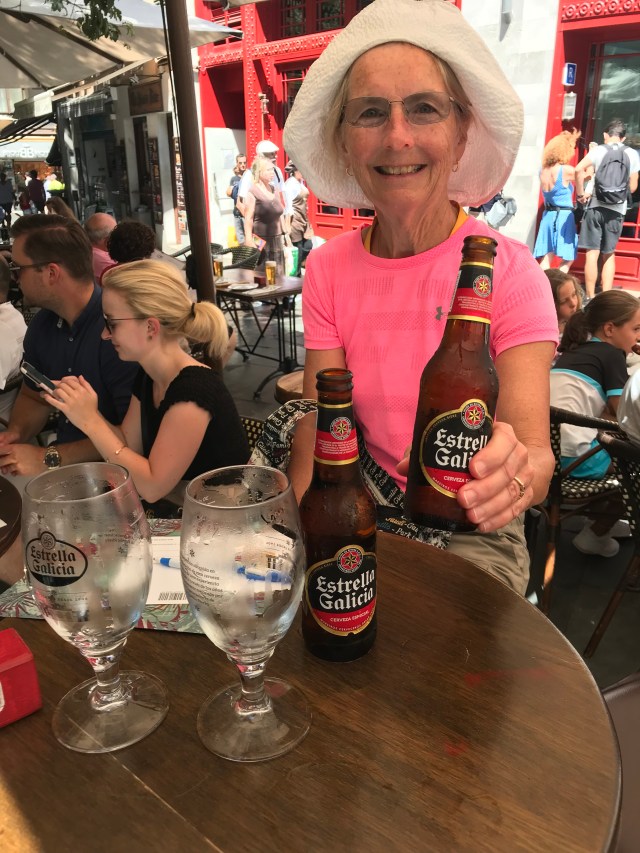
 Along the way, Leslie Ruth got to have one of very favorite beers, Estrella Galicia.
 On our return to the ship, we had walked another 12 miles.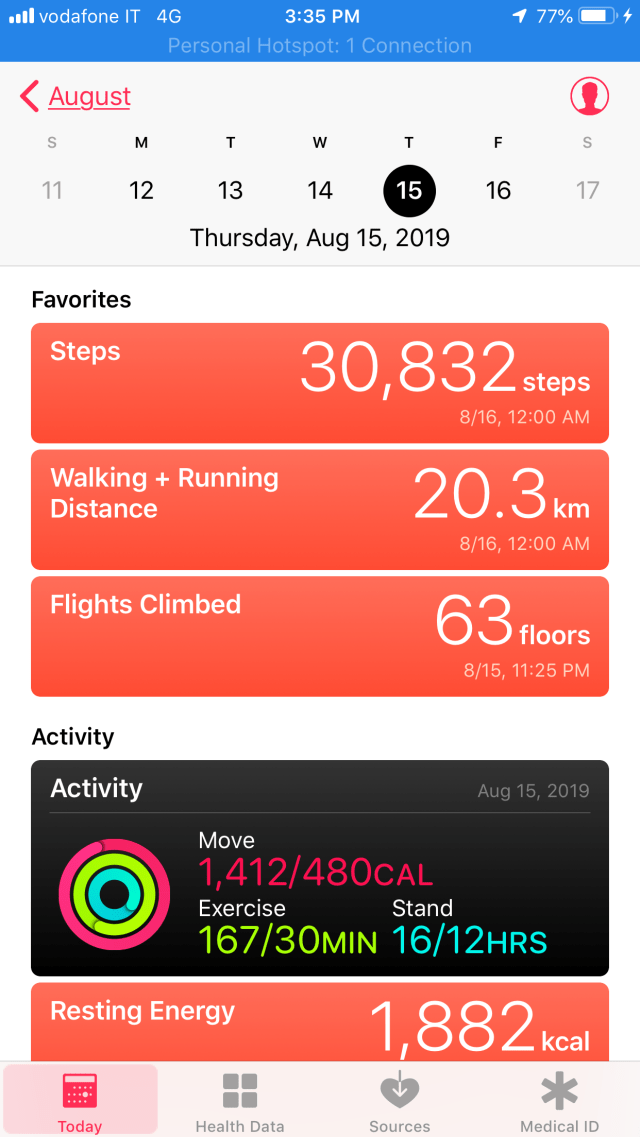
The next stop was at Ajaccio, on Corsica. Since Corsica is part of France, we had a great time using our French and eating a huge French meal.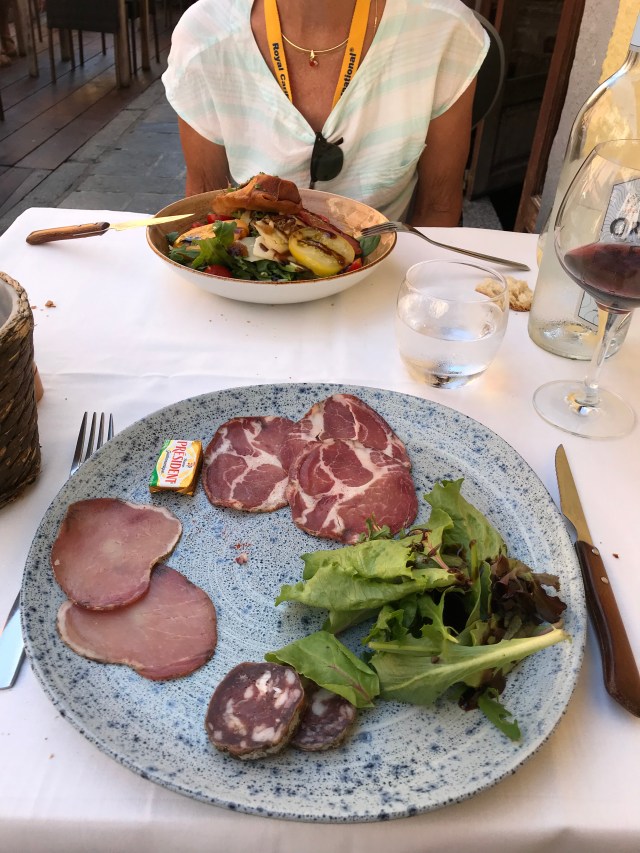
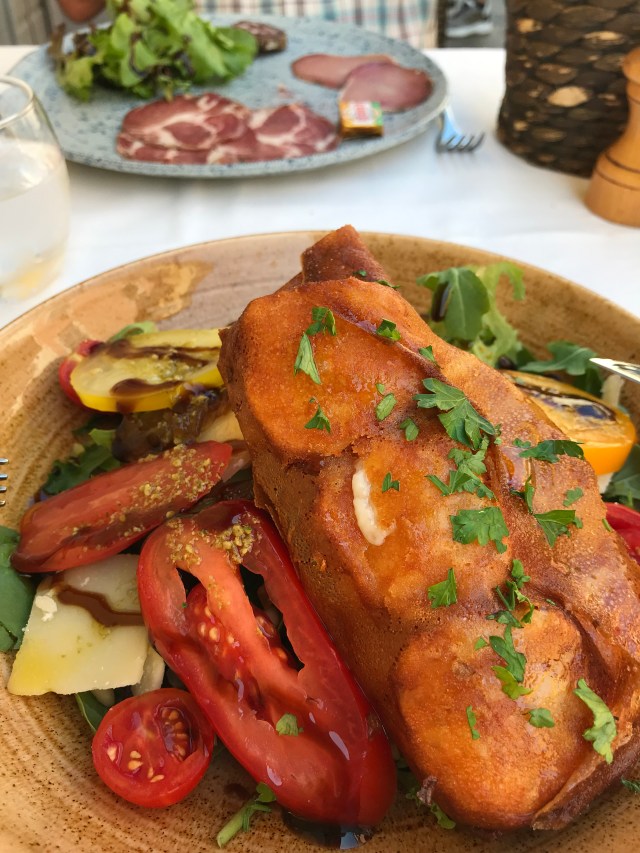 Afterwards we walked around the town (well, Leslie Ruth walked; Karl staggered a bit).
The final stop was Portofino, Italy. The harbor is small and not very protected. The ship deployed lifeboats as tenders to get us in.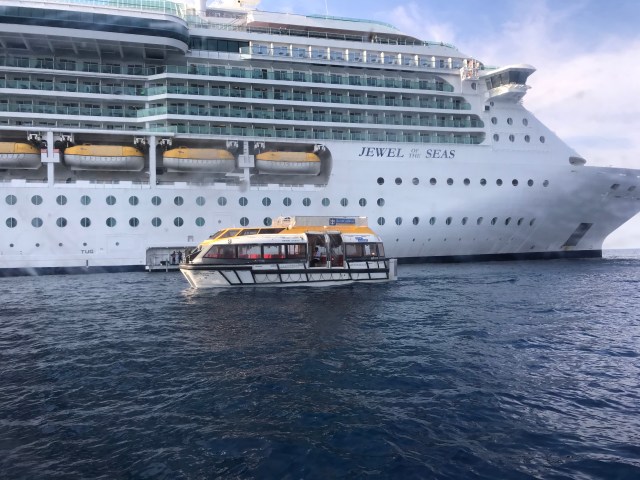
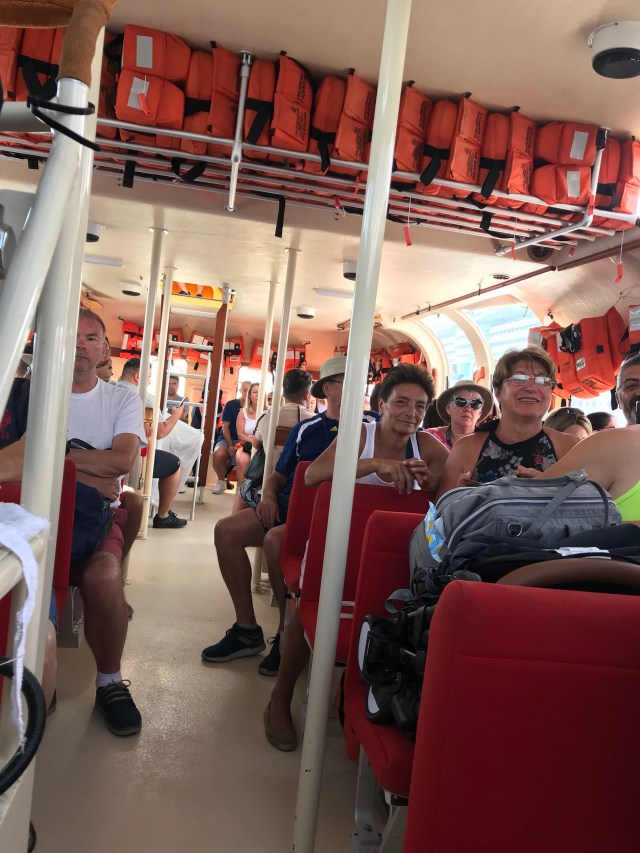 Many fellow passengers reported having this port cancelled on previous cruises due to the weather, so we were glad we could visit.
Portofino is very beautiful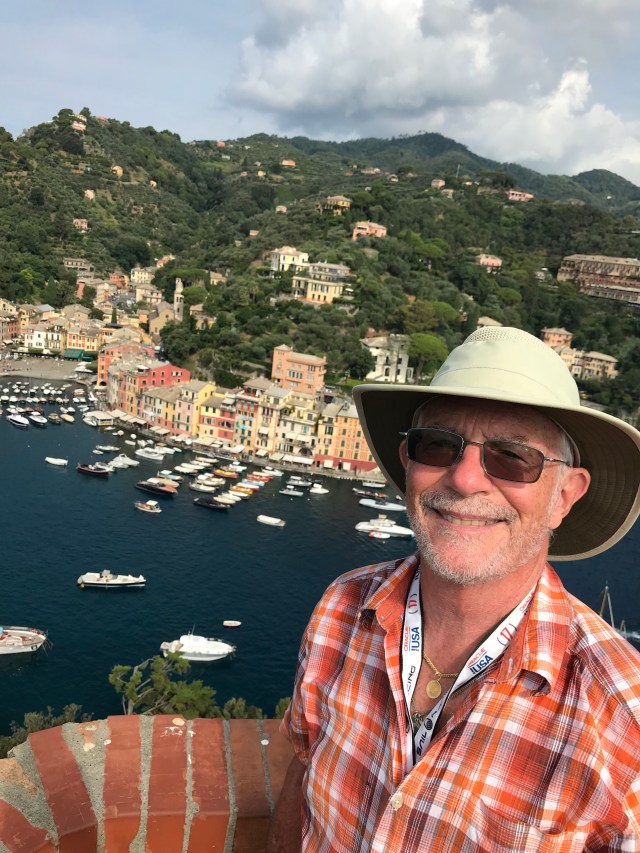
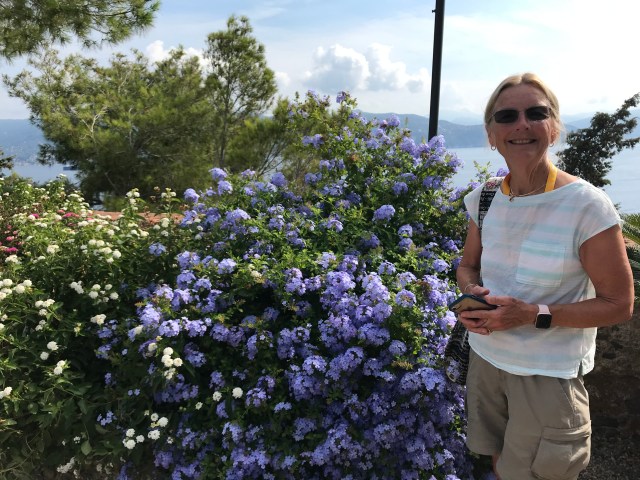
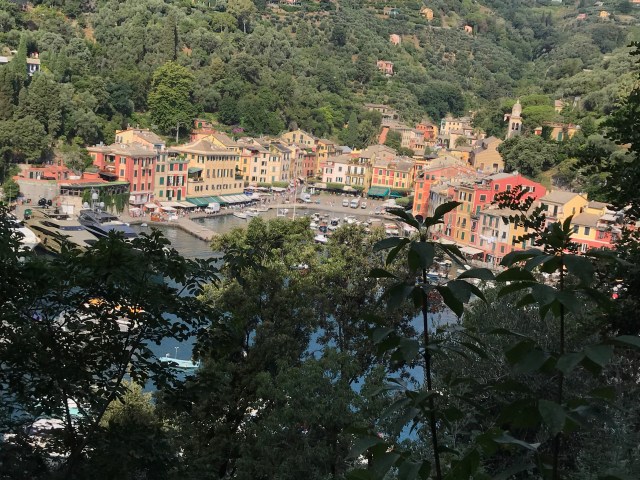 but it has been a favorite spot for the very rich and very famous for a long time, and does not feel very real. Sort of a Disney version of an Italian coastal town. We preferred Vernazza or any of the Cinque Terre towns which seem more real, and, at least at night, the tourists mostly leave.
We returned to Rome, having really enjoyed visiting some old favorites and some new places, traveling in air conditioned splendor.
 Mary to go to Scuola Saena Iulia with us and study Italian
 and Sal to do other things, such as researching his father’s career as a Carabinieri, or federal police officer, back before WWI, and to go on excursions with Karl.
 We last saw them in June, when they visited us in Lottsburg for a few days. We outlined our plans for our trip to Europe this year, saying we wished they could join us.
 saying “Wish you were with us.” Again, no response.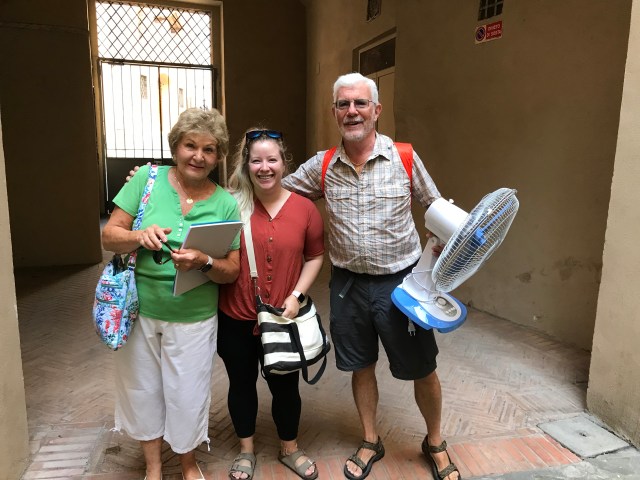
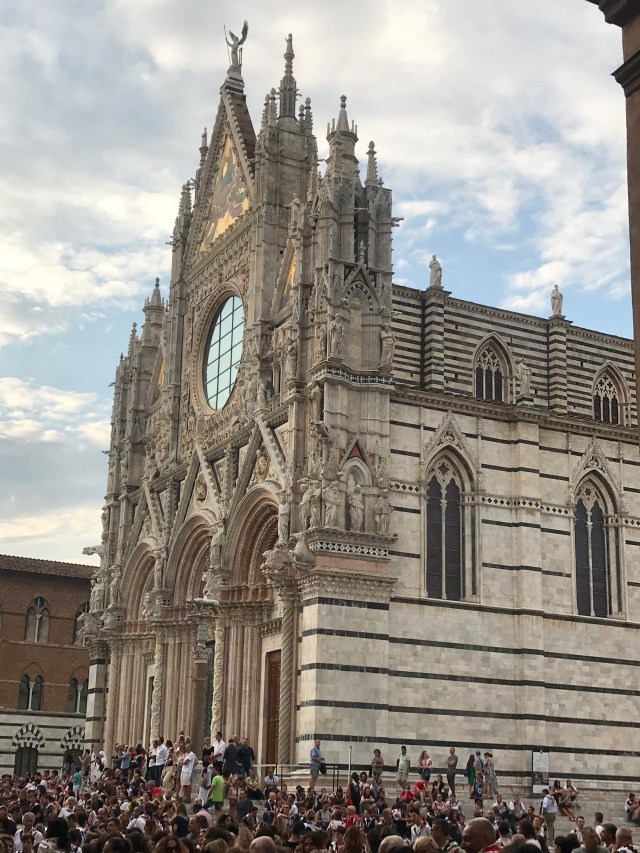 you begin to be suspicious, but other towns have Duomos. When you hear the drums
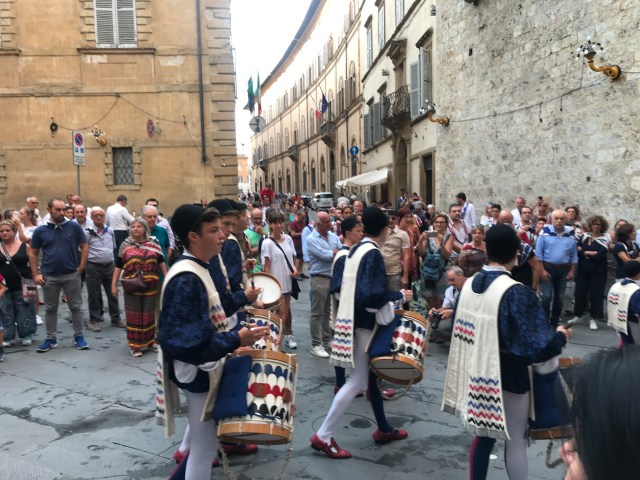 and see the flags
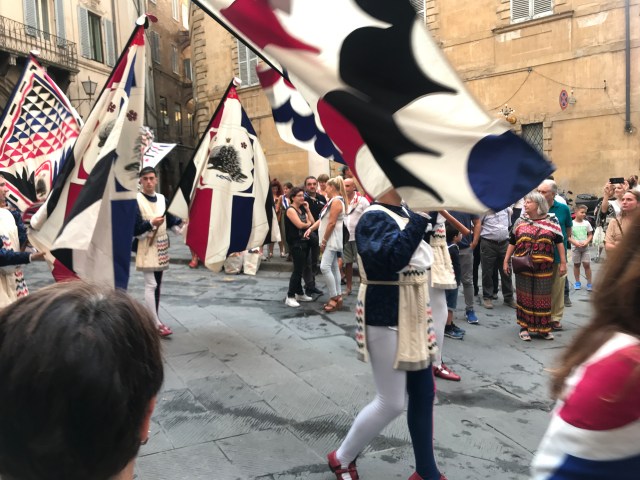 you are pretty sure, especially when you notice that all the females have been relegated to the back of the parade
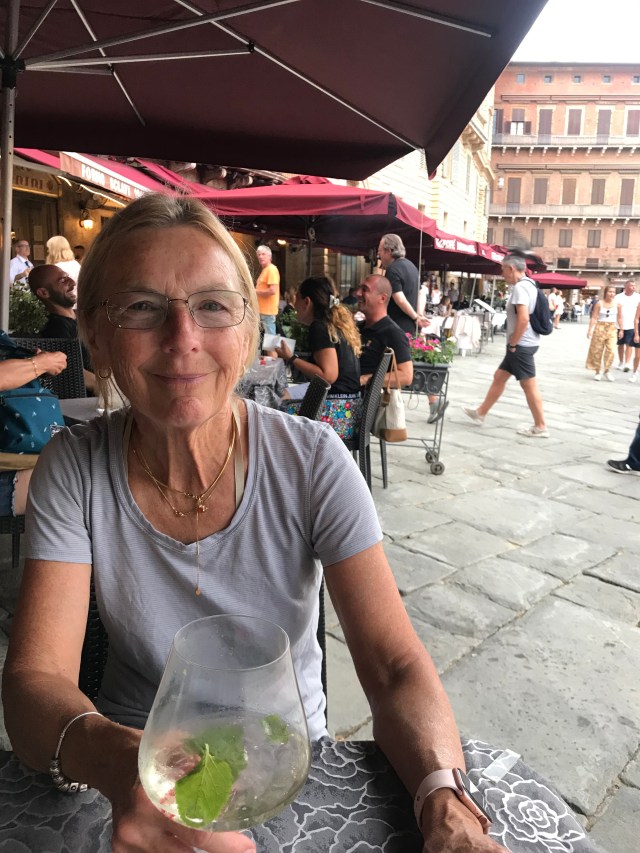
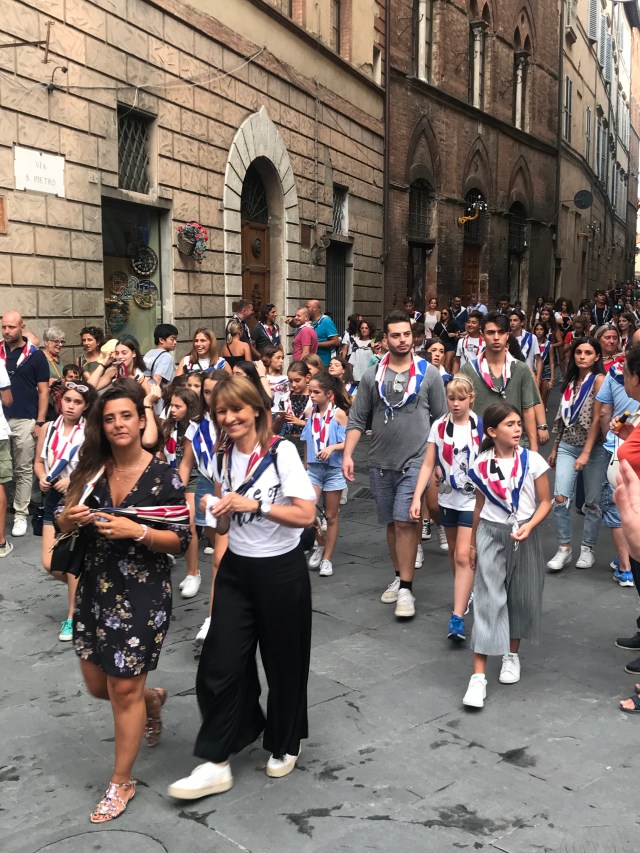 you begin to think this must be it, although other towns have drums and flags (but not as many as Siena, we think). Having an aperitivo on the Piazza del Campo, reinforces your suspicion.
 But, when you pass by one of your favorite restaurants and find it closed, but the proprietor spots you and comes out to welcome you back
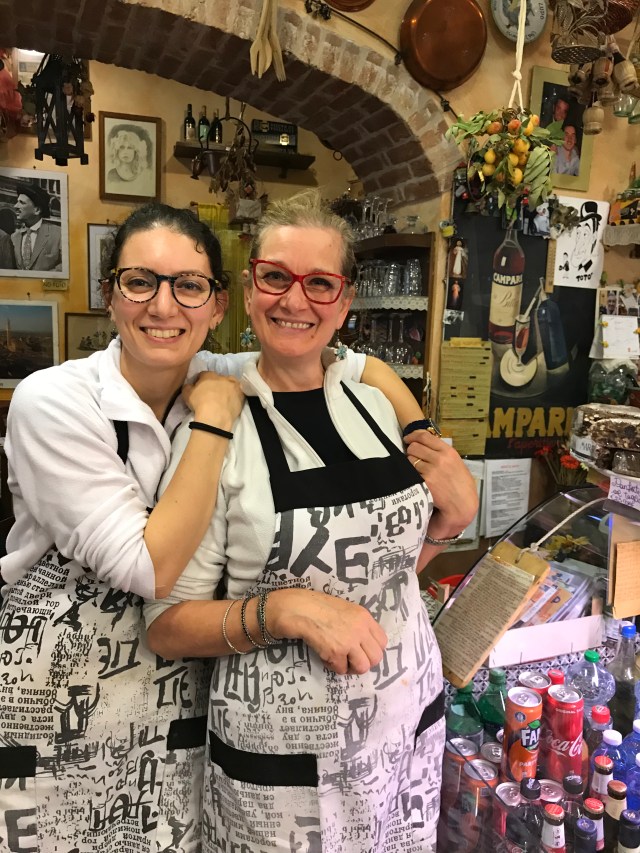 you know you are back in Siena again!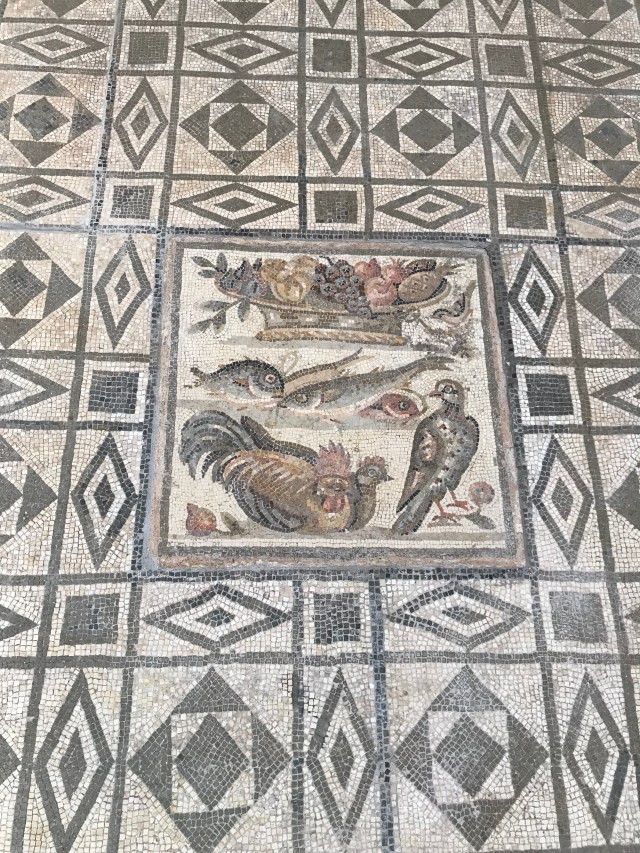
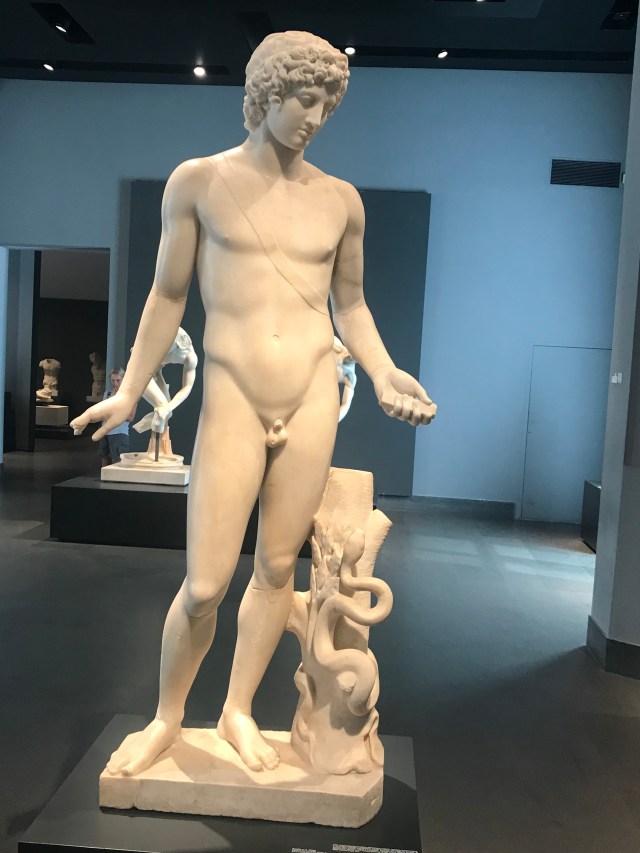
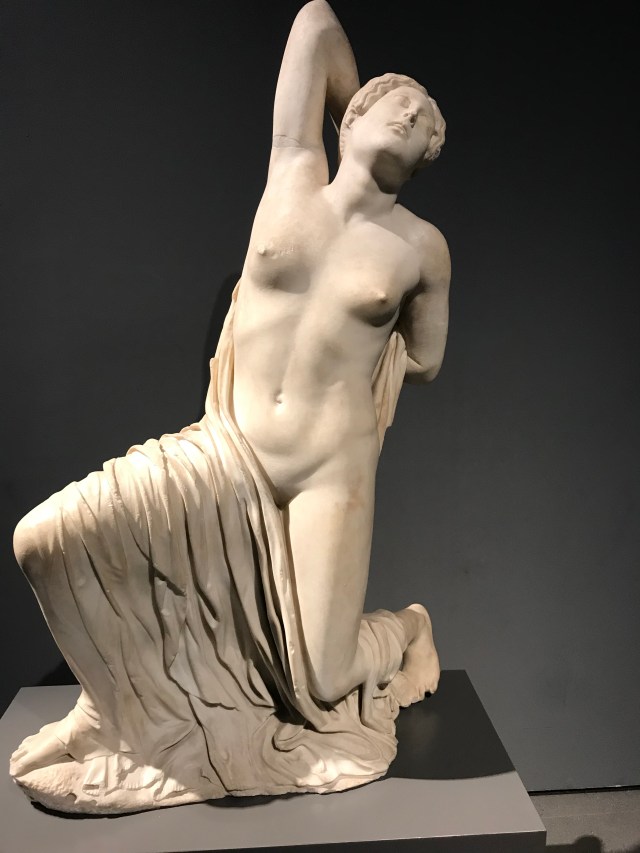 Leslie Ruth wanted to see how close her hands were.
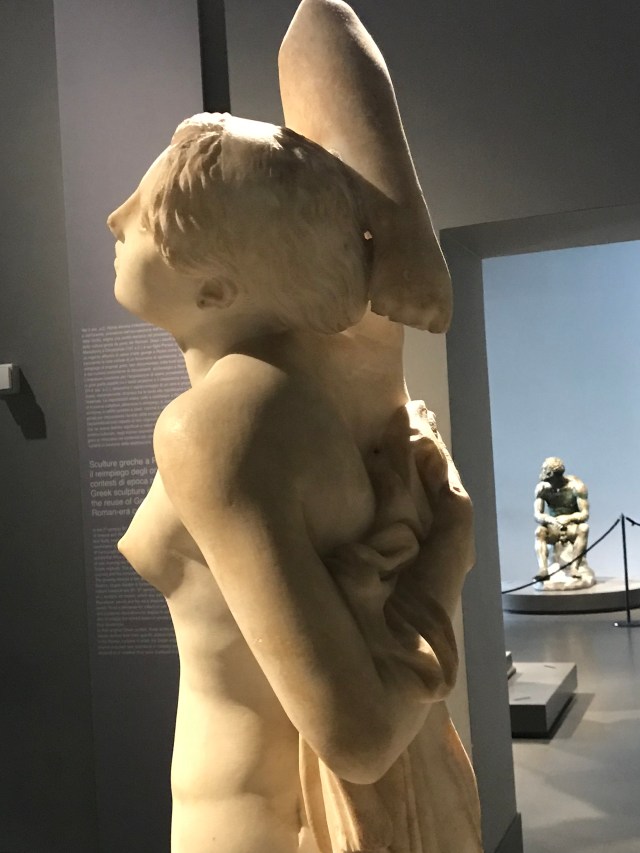 She determined that she was just as flexible and could strike the same pose. She should never need to, however; it turns out that in the legend illustrated by the statue, the woman was trying to pull an arrow out of her back.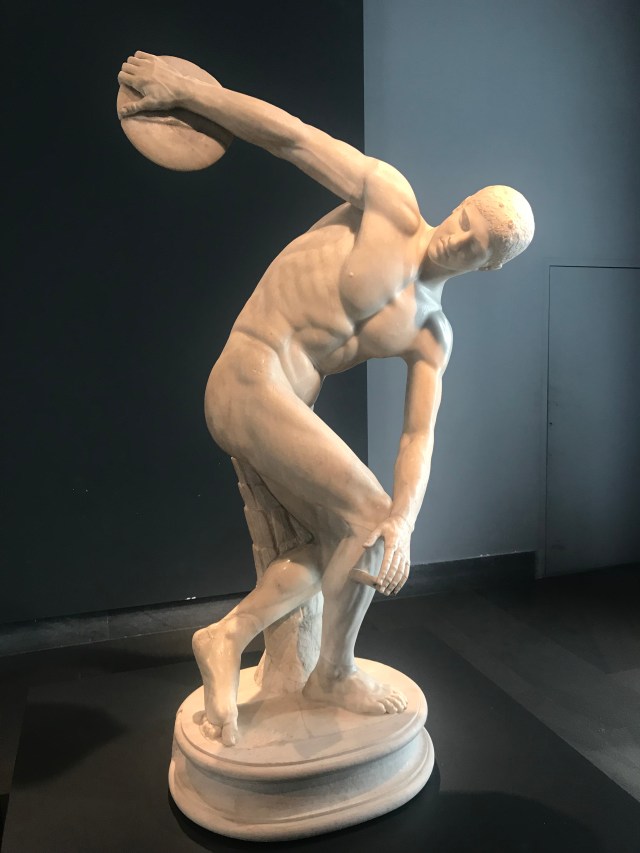
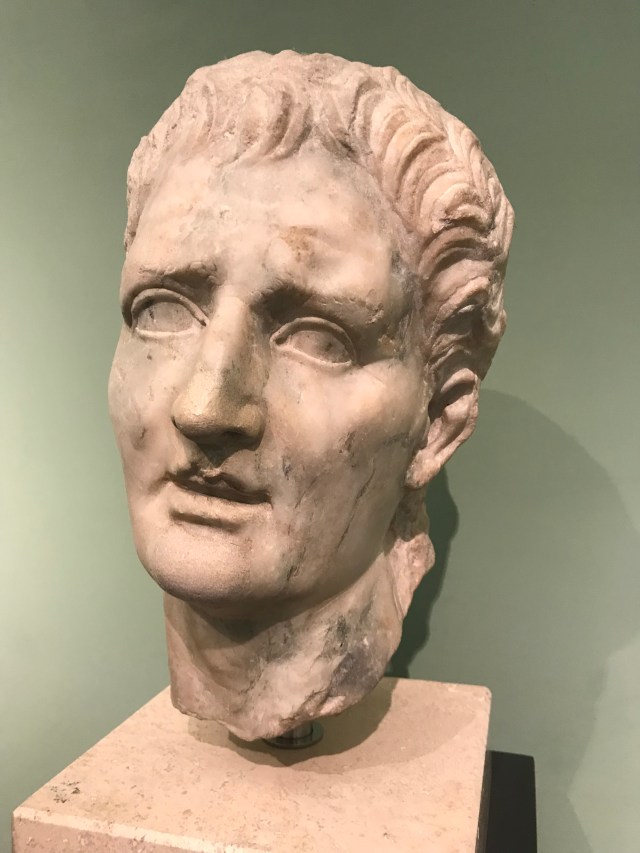
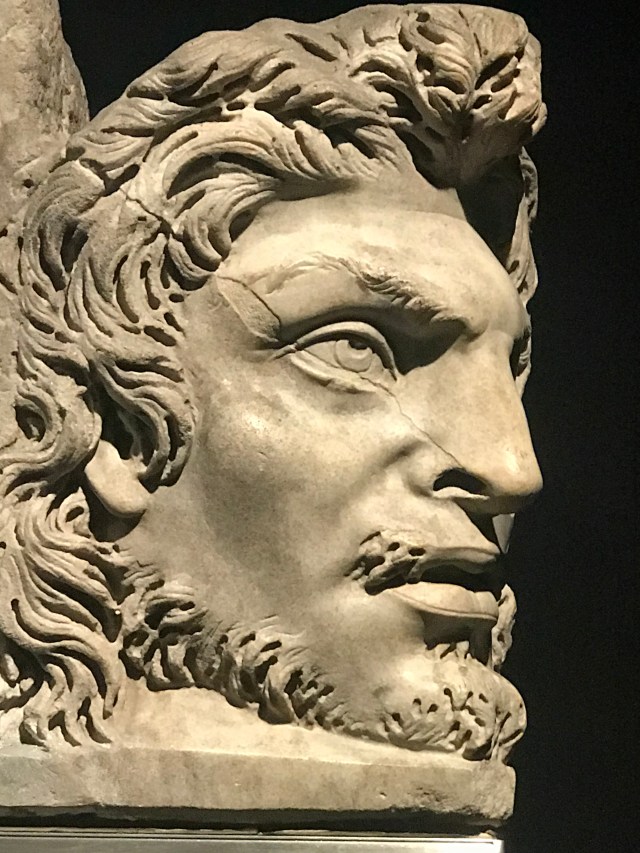
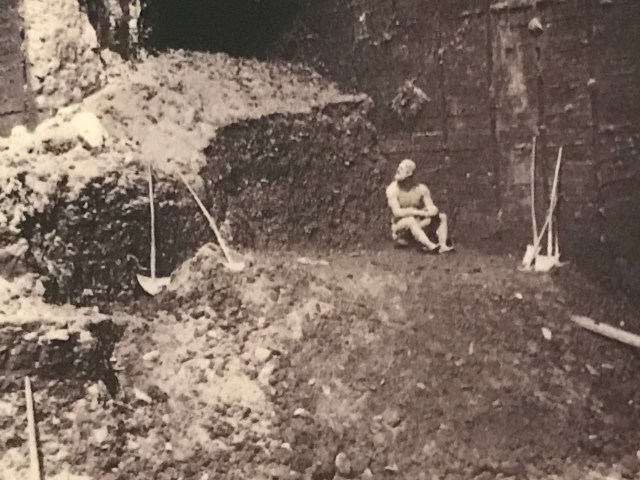
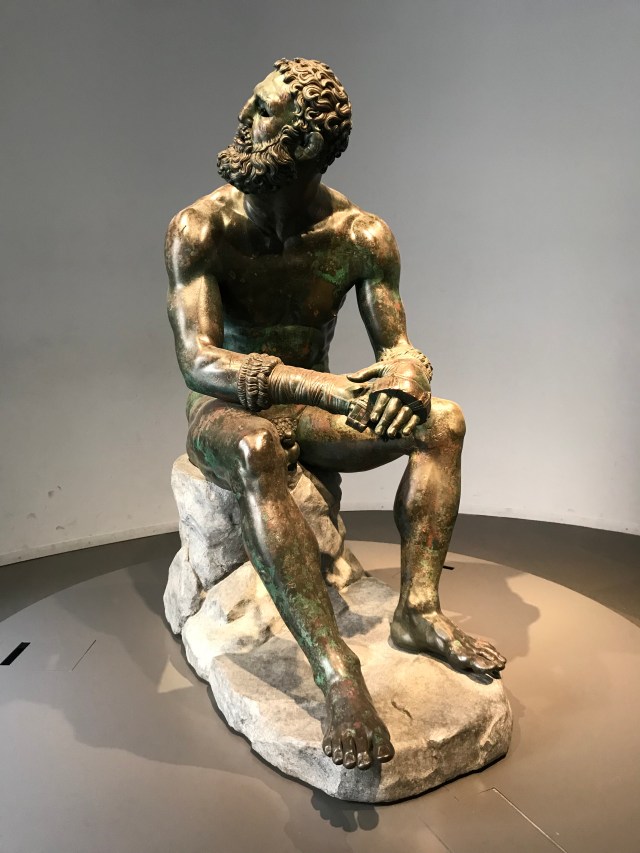 Like so many others, at some point this guy was buried under rubble – perhaps discarded, perhaps hidden away when the Visigoths or someone else were about to sack Rome. Then, hundreds and hundreds of years later, someone was building something, so they dug a hole. And there he was!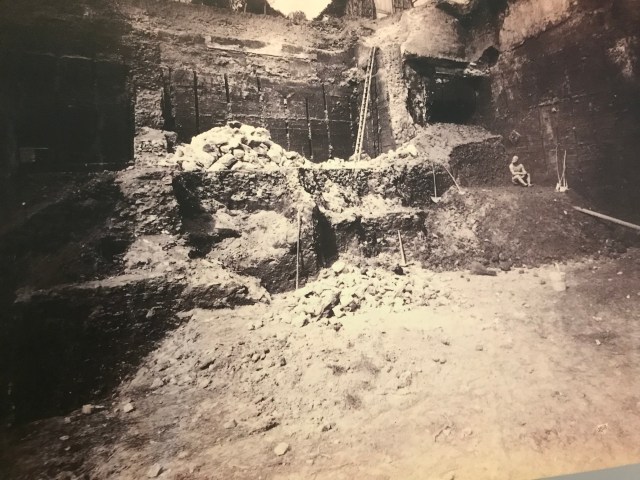
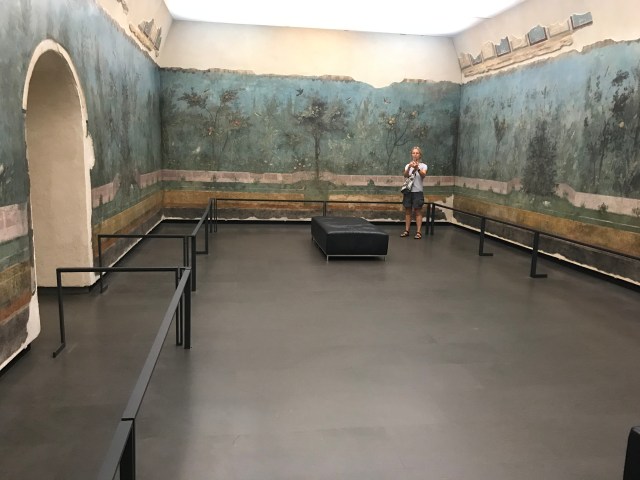
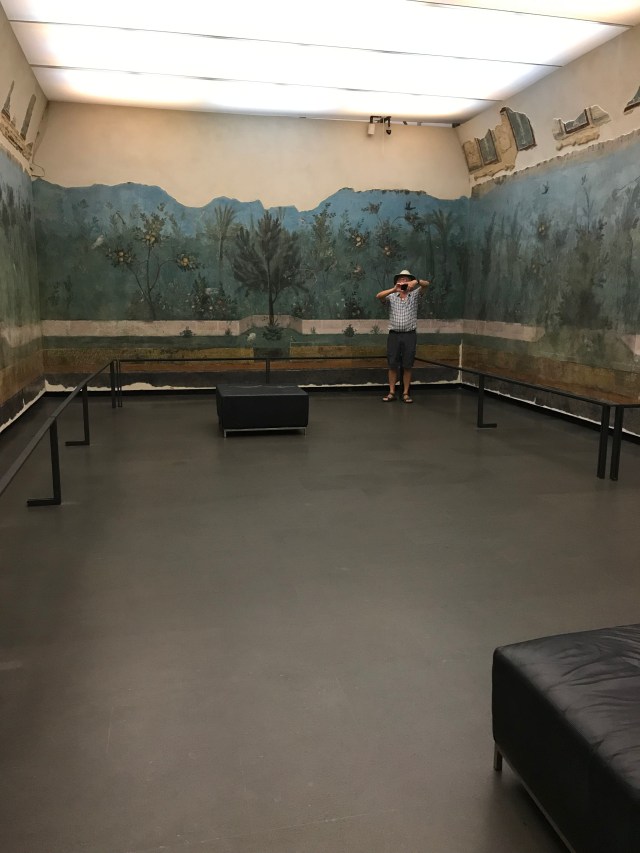 whose walls were covered with frescos of beautiful garden scenes.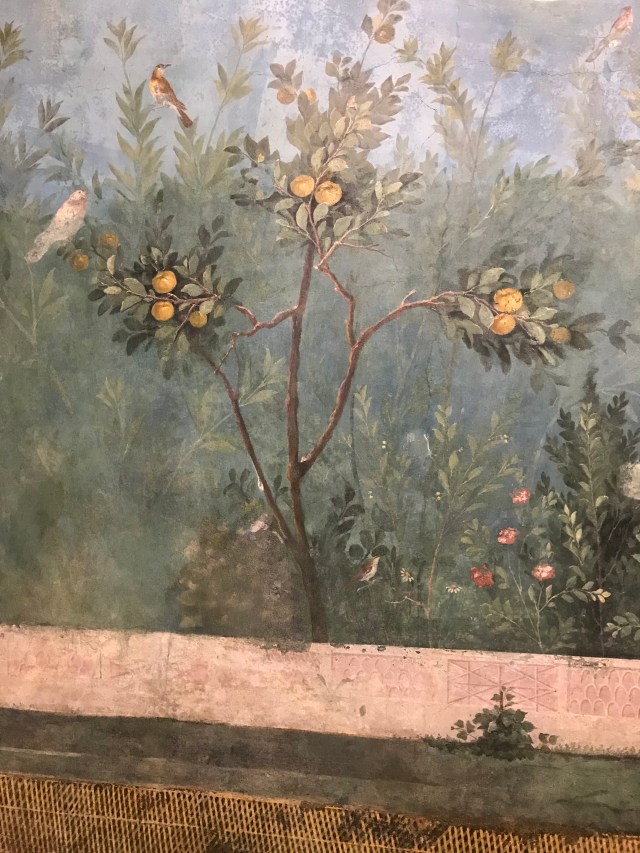
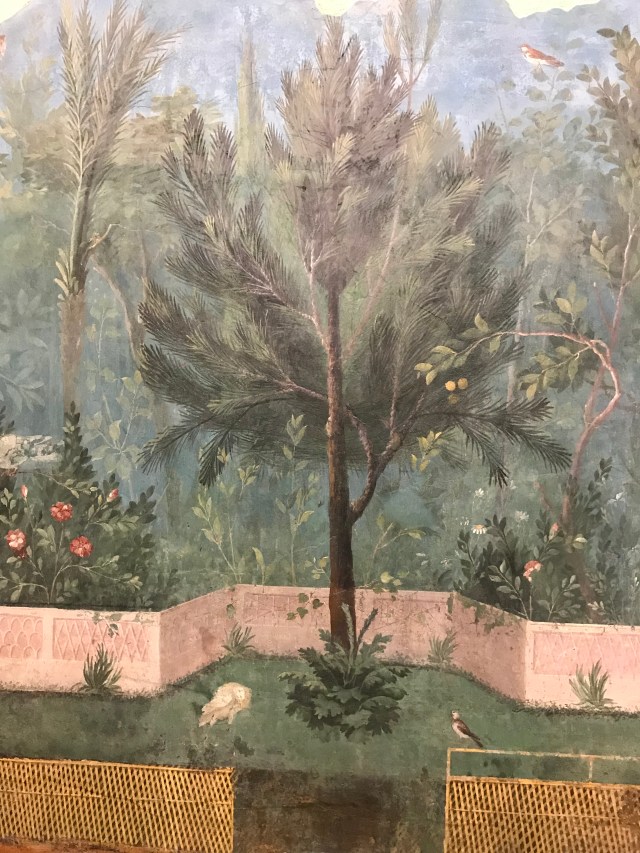 Upon excavation, the frescoes were carefully preserved and are now on display at the museum.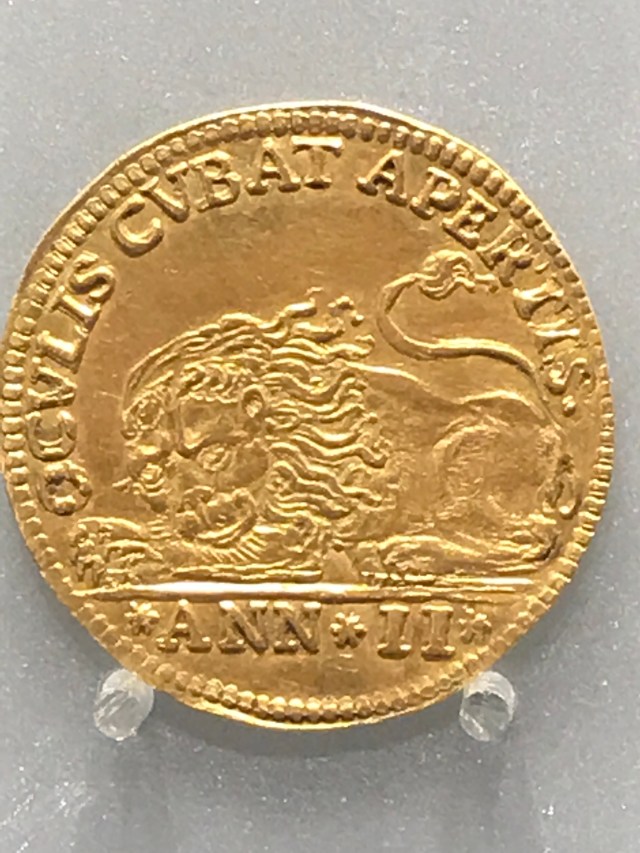
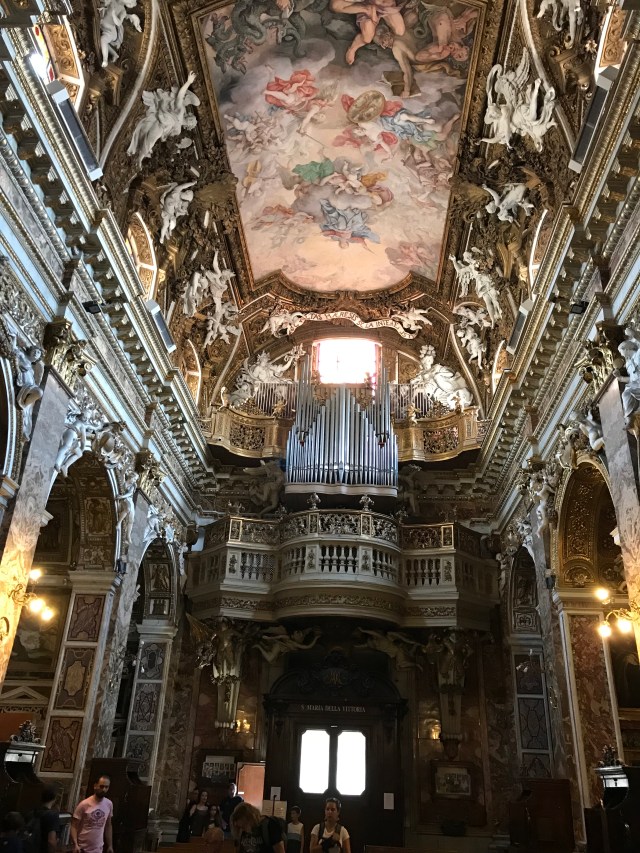 The famous Bernini sculpture, The Ecstasy of Saint Teresa, did not disappoint.
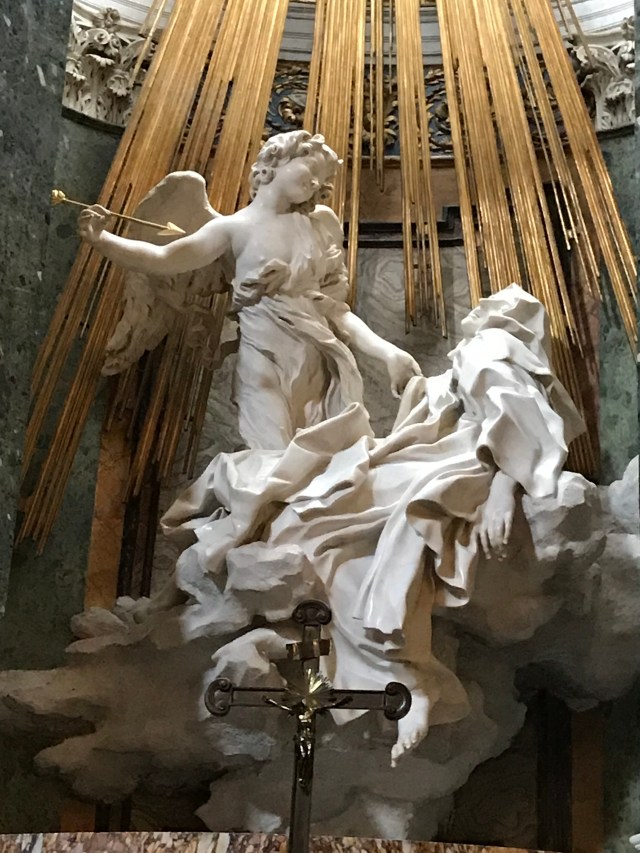 As one commentator put it, Bernini could carve marble is if it were wax. The sculpture is illuminated by natural light,
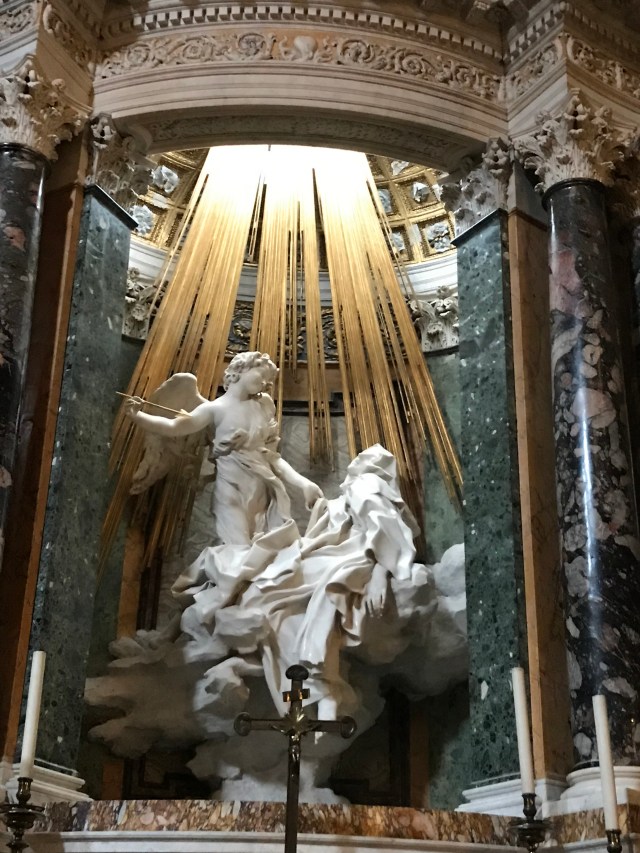 and it is hard to believe that Teresa’s robes are, indeed, carved out of stone.
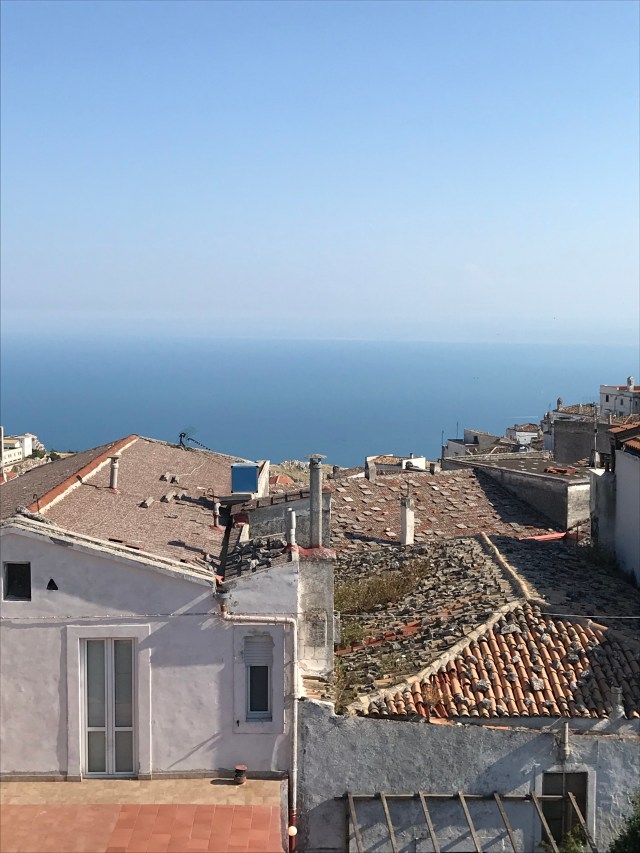 The shrine where Archangel Michael is said to have appeared is in a cave deep in the rock. You reach it by going into a church
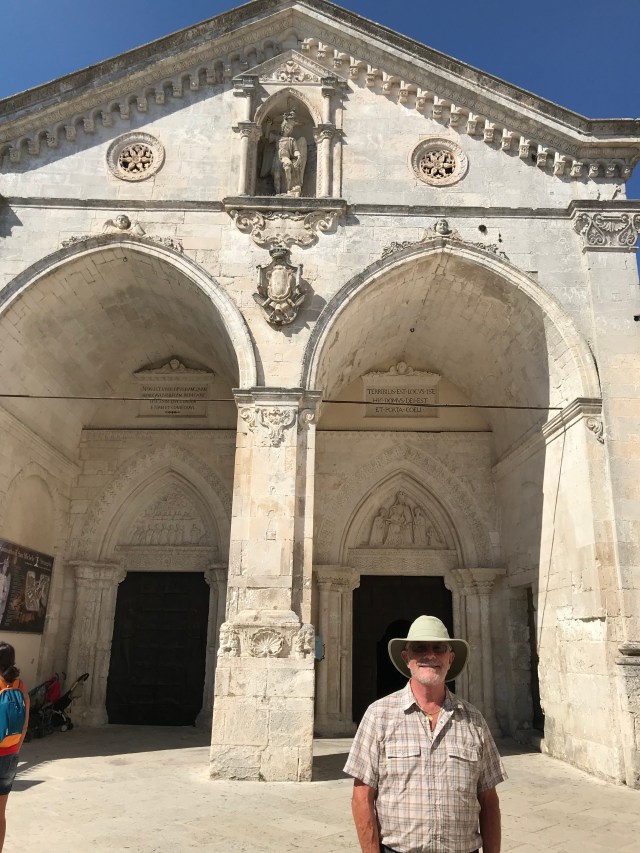 and descending a long staircase.
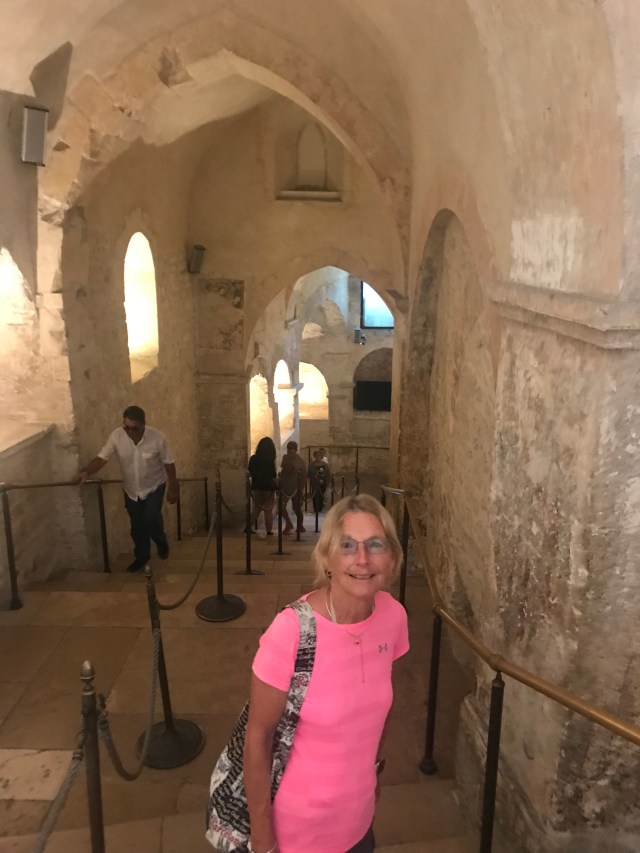 Many people question whether Michael the Archangel, doing battle against Satan, is real. It seems to be part of the popular tradition of the Catholic Church, mentioned in Dante’s Inferno, depicted in important works of art as early as the 4th Century and especially in the Middle Ages. Specific references to an “archangel” named “Michael” are found in the Epistle of Jude and the Book of Revelation in the Bible. Interestingly, Michael is one of two archangels mentioned in the Quran. Also, an angel appeared in a vision to Daniel as described in the Book of Daniel in the Old Testament, who identified Michael (but not specifically an archangel Michael) as a protector of Israel who will rise up in “the time of the end”. Therefore, there are some common threads about Michael in Christianity, Islam, and Judaism. Whatever the literal truth, I found the grotto to be a very holy place, perhaps made more so by the thousands of pilgrims and believers who come each year to pray there.
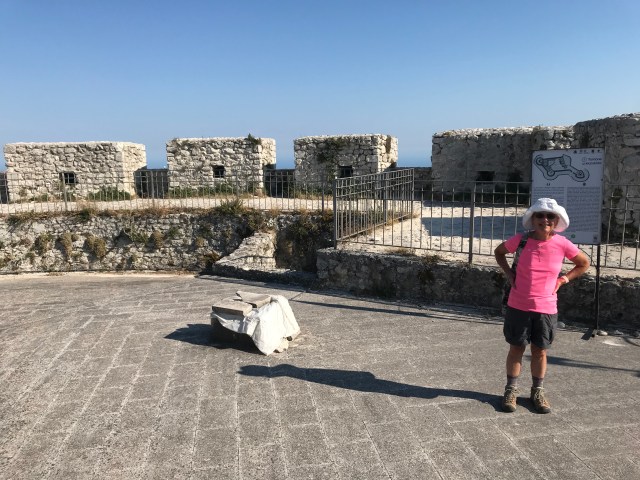 Part of it was shaped like an almond. It was hard to imagine how any army could scale the high walls. The views of the Parco Nazionale di Gargano and the Adriatic Sea from the top of the castle were incredible.
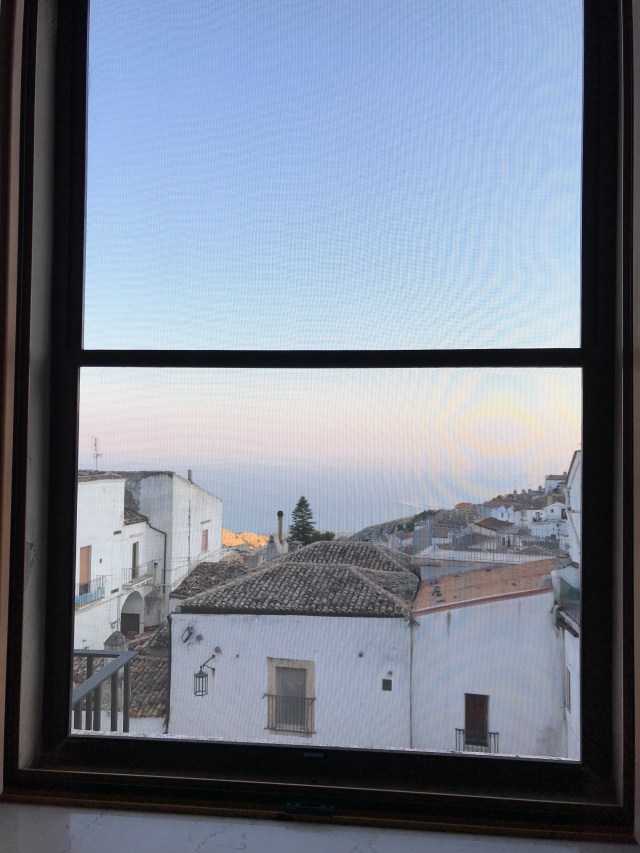 but the view from the hotel’s breakfast room was even better!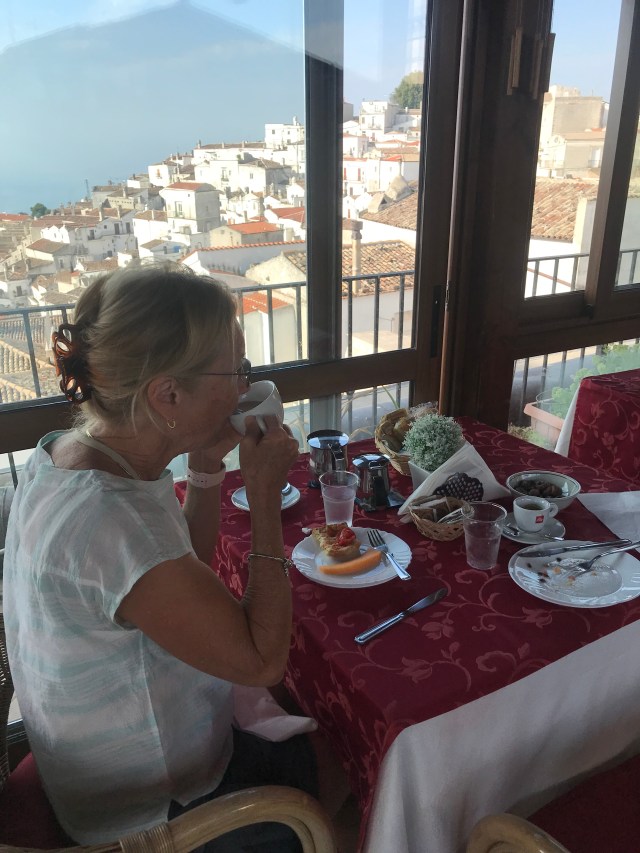
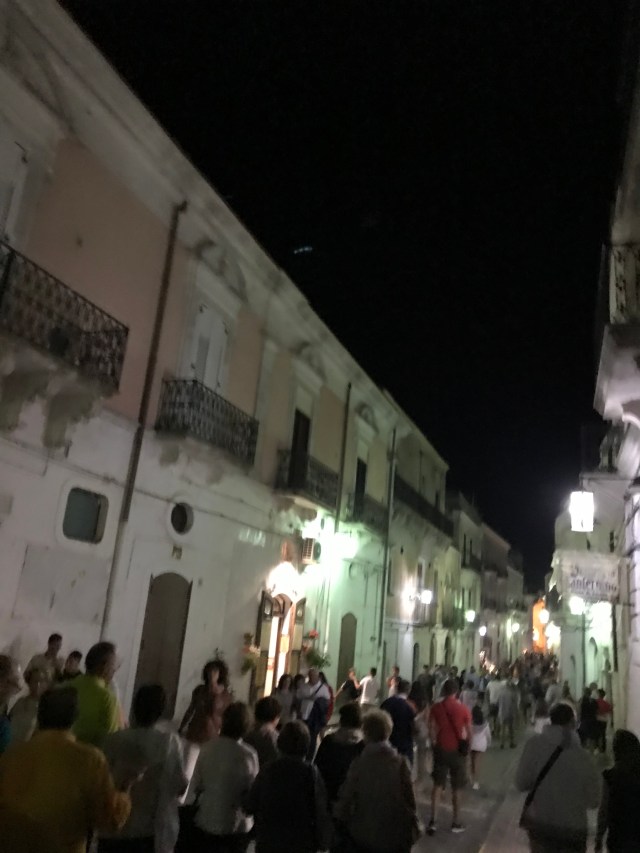 stopping to talk or have an Aperol spritz or a gelato. Karl and I joined right in.
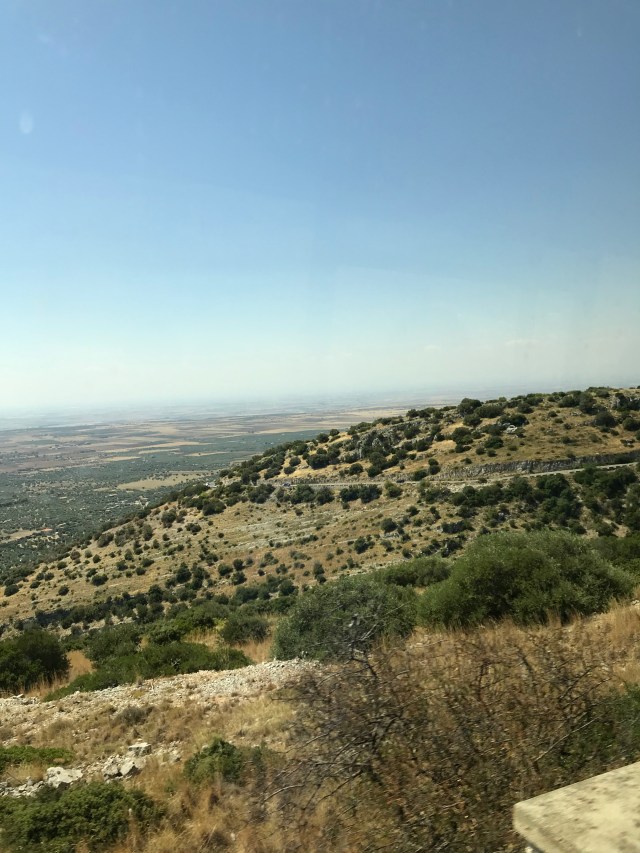 We have seen cars pass our bus at high rates of speed on impossible curves.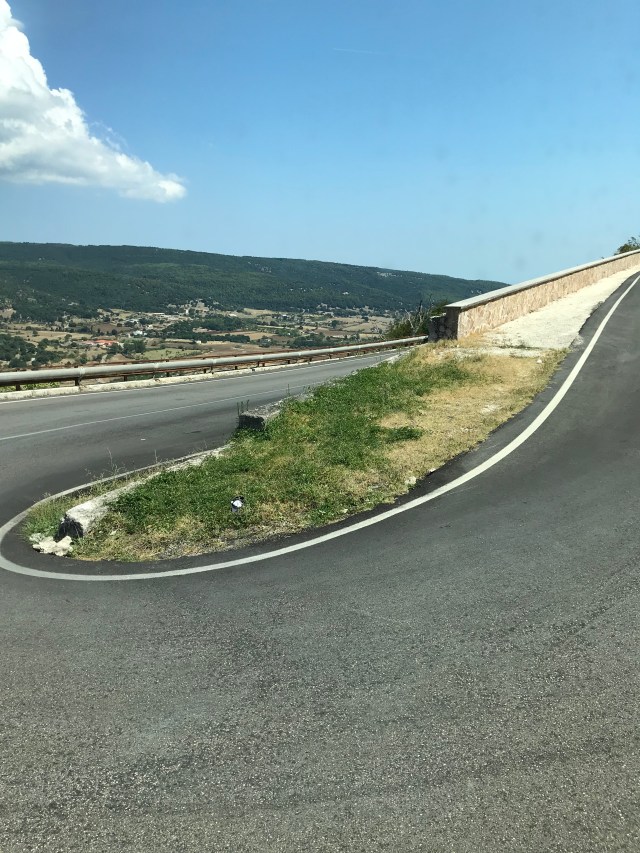
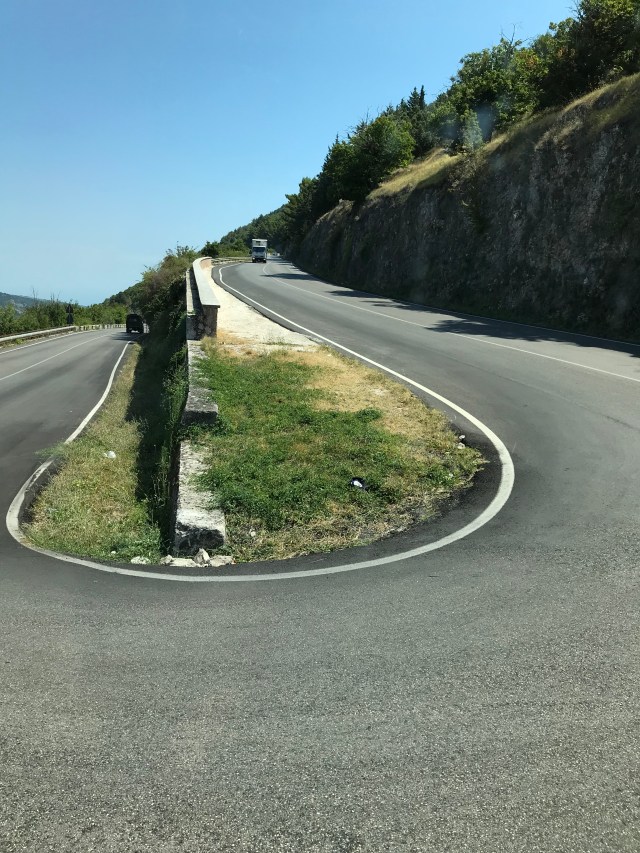 We have thanked God when a car has blocked our kamikaze bus driver on a winding downhill. We have felt the scrape of our bus against a stone wall
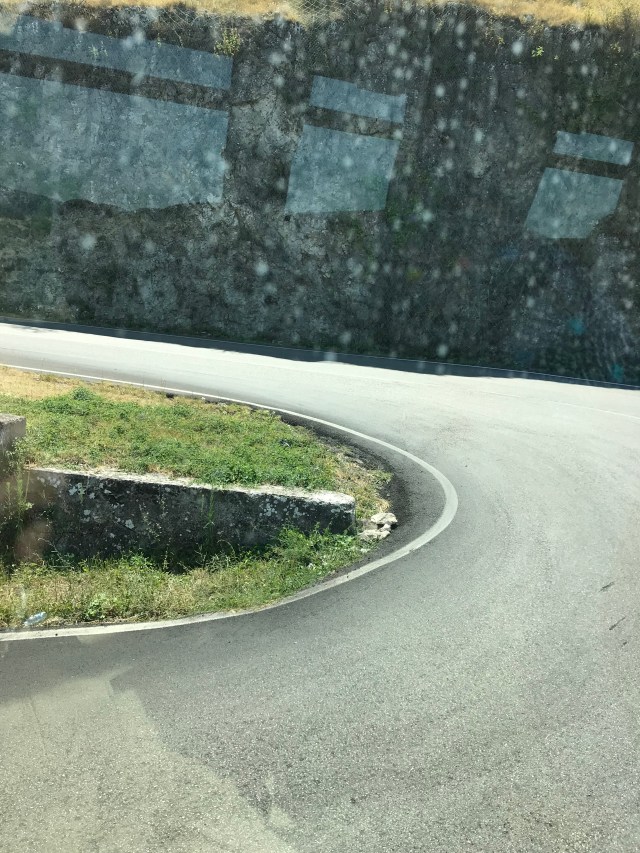 and watched the driver back down and up again in order to make the turn.
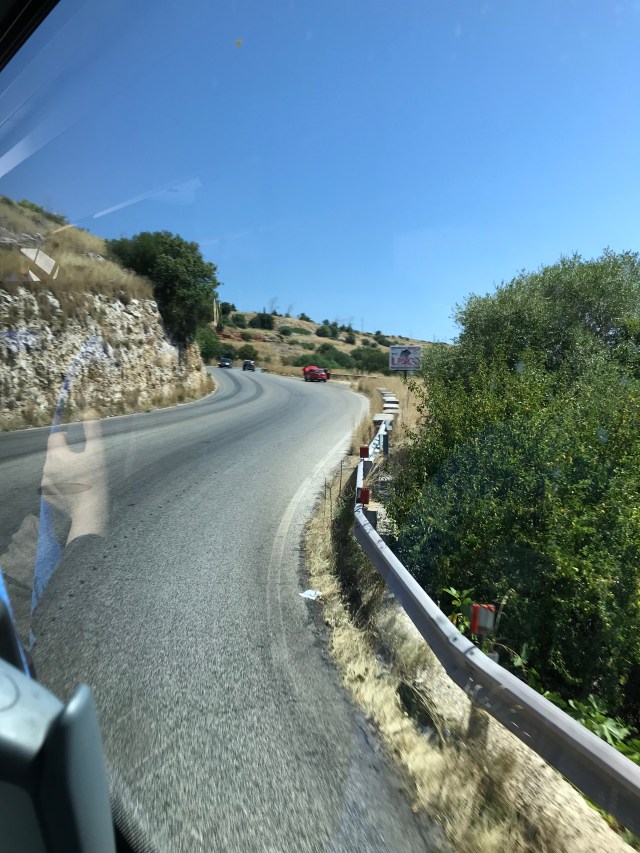 I must admit that even I have my limits. I refuse to take a bus from Sorrento to Amalfi. I would have nightmares the night before going, and I would not be able to calm down until at least a day after my arrival.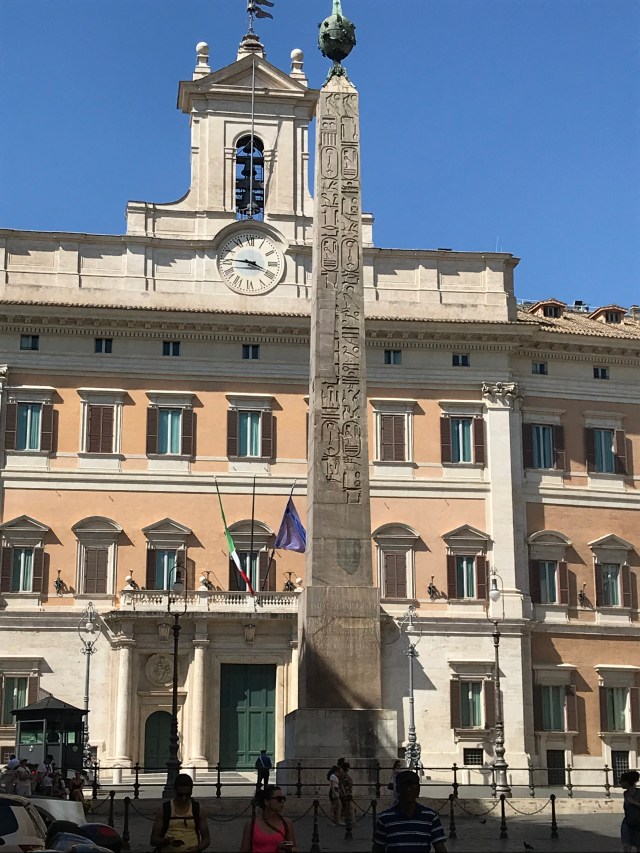
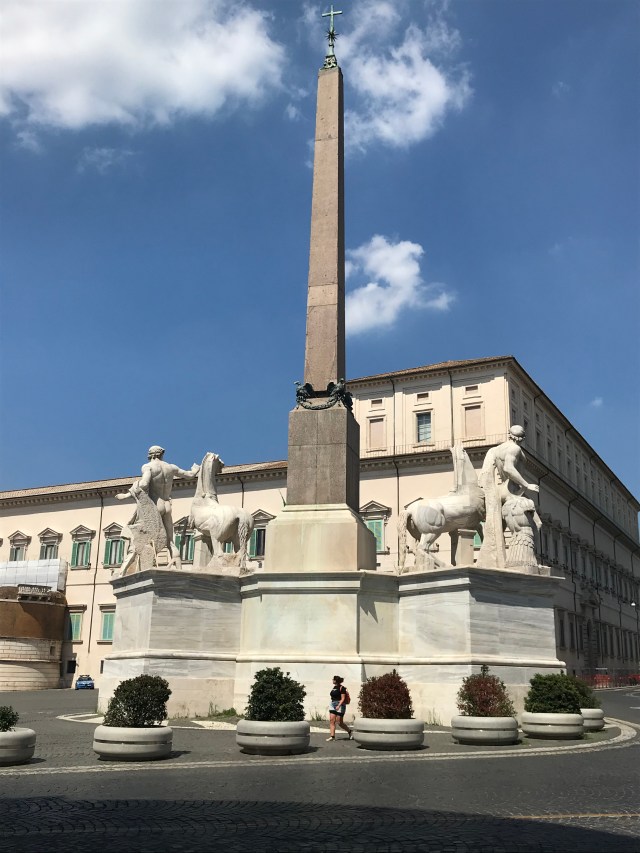
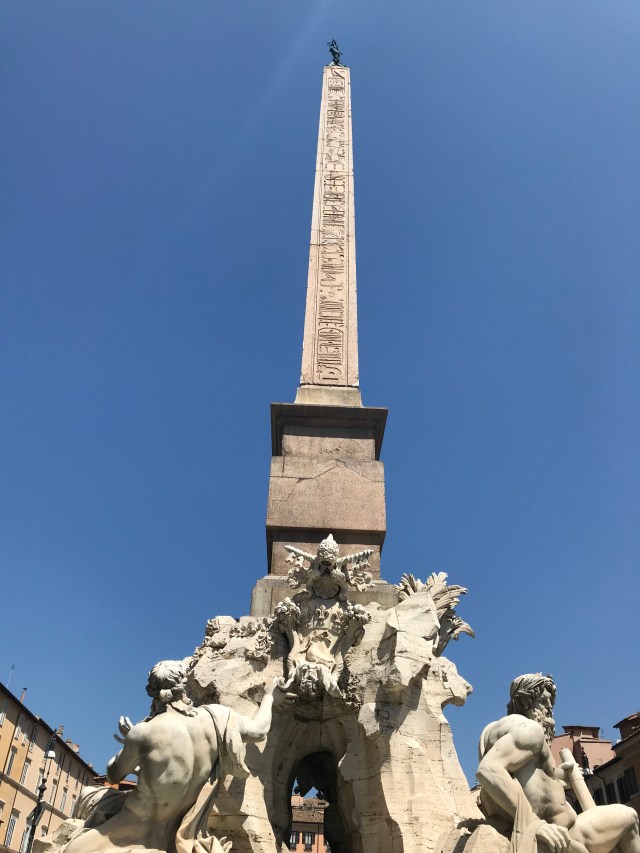
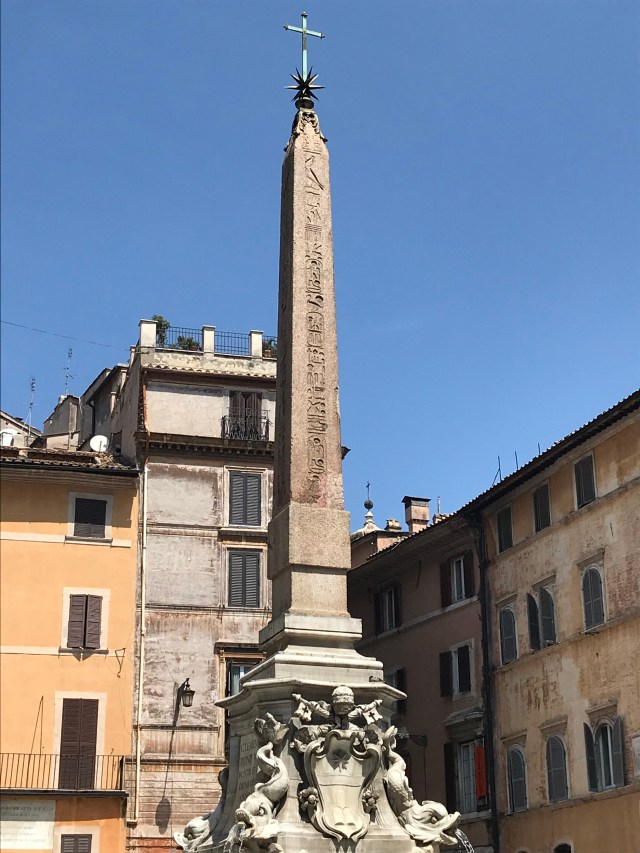 The rulers of Rome shipped them in from Egypt in great quantities. Some of the obelisks are so huge that it is hard to imagine how a multitude of Roman slaves could carry them onto a ship, or how the ship would not sink under the enormous weight of the stone. Egyptian Pharaohs considered themselves to be gods, and the people they ruled regarded their Pharaohs as gods. For this reason, Roman rulers greatly admired the Egyptians and promoted a sense of awe and submission in the people they ruled by erecting the Egyptian obelisks all around Ancient Rome.
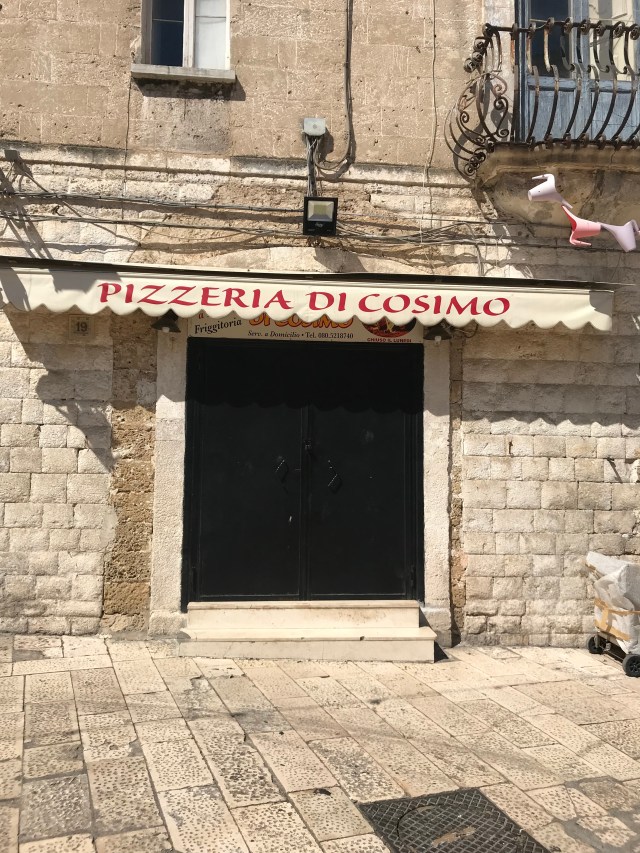
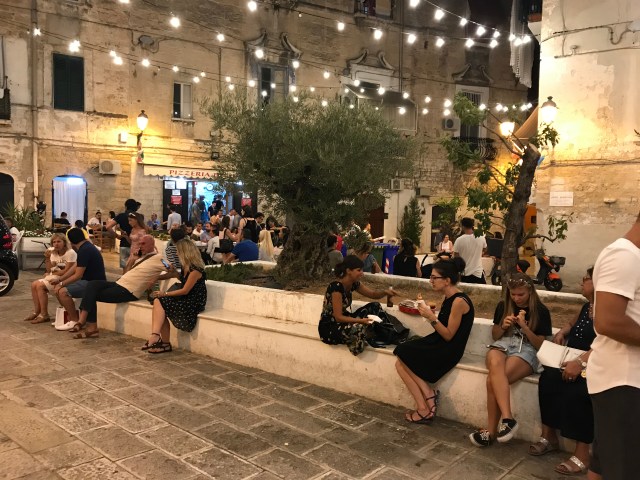 socializing, drinking beer, and eating pizza from the Pizzaria di Cosimo
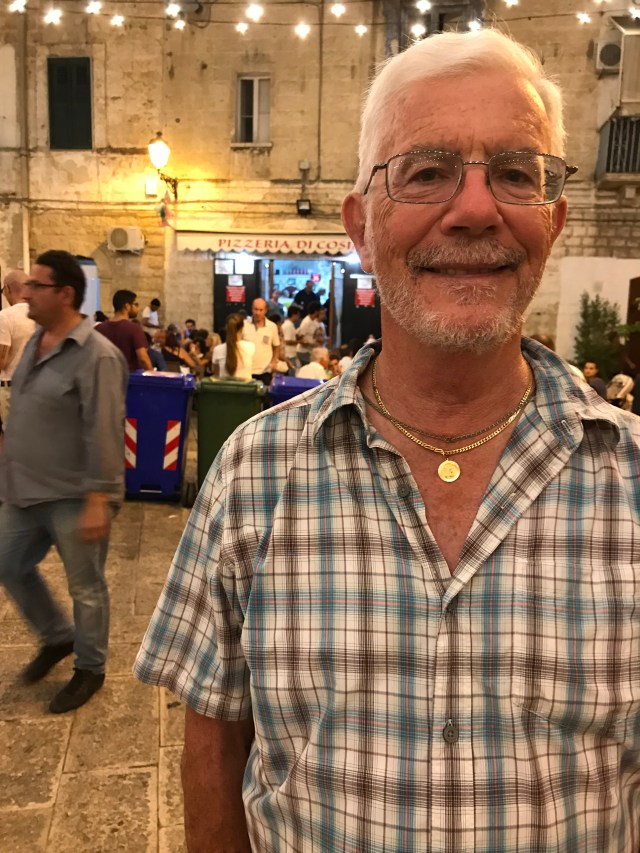 that looked really good.
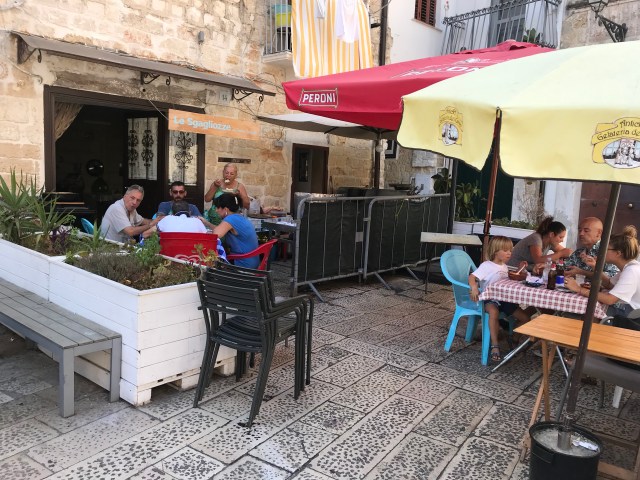
 The square was almost deserted except for one tiny reataurant.
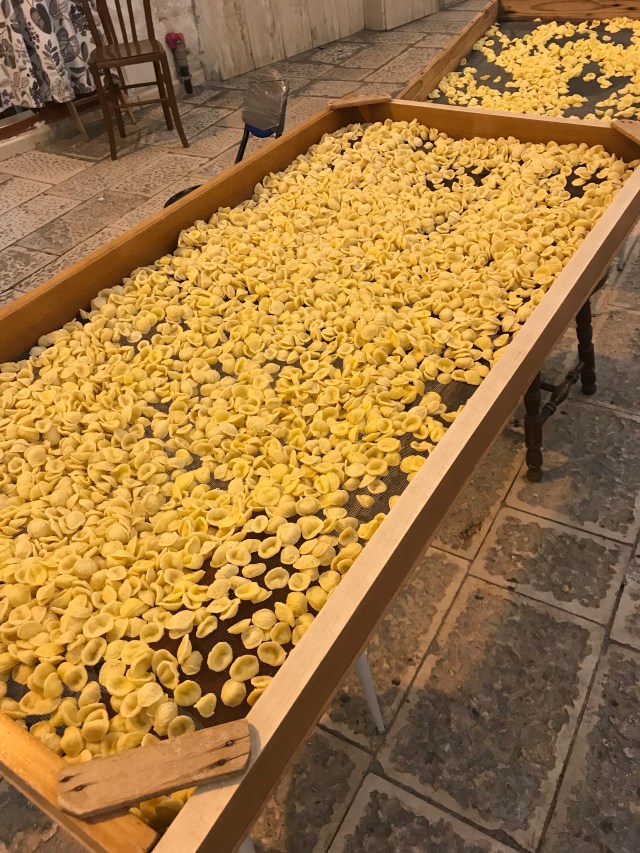
 We knew their pasta was home made as we’d seen them drying it on screens the night before.
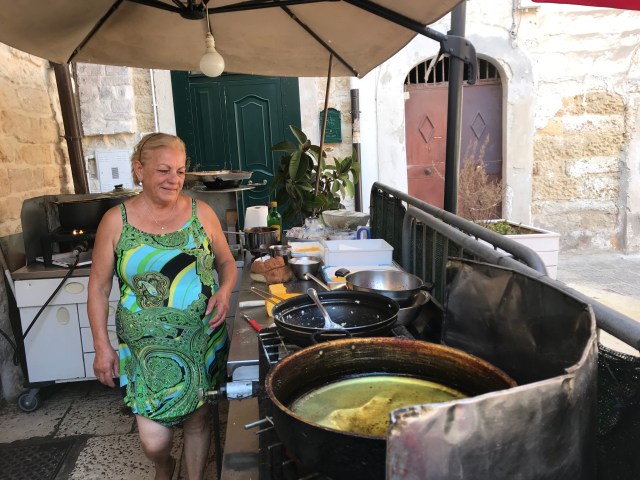
 All of the cooking was done out of doors.
 It was brutally hot, so we thought we’d leave, but the proprietor beckoned and invited us into their basement where they had a one table dining room set up.
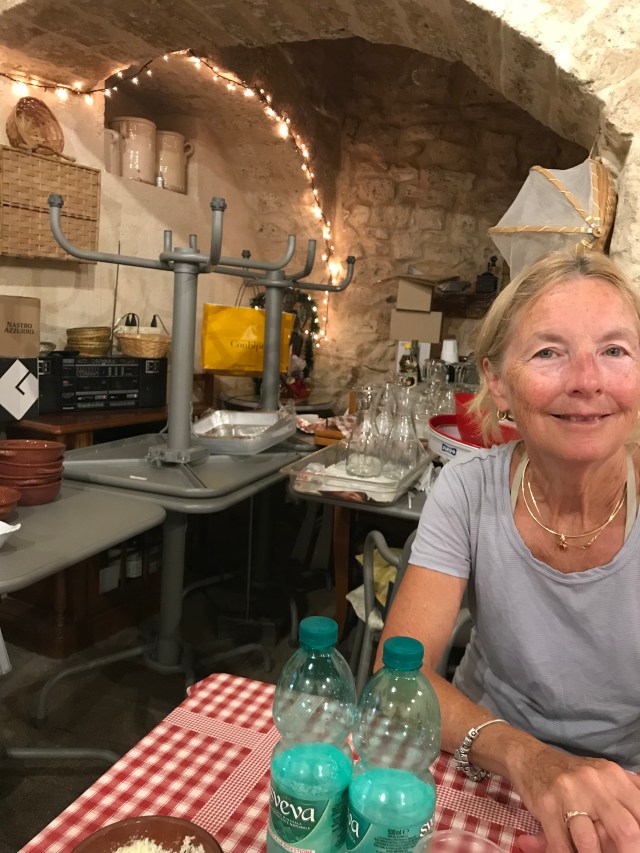 It was cool, so we decided to have our lunch there, joining four other people.
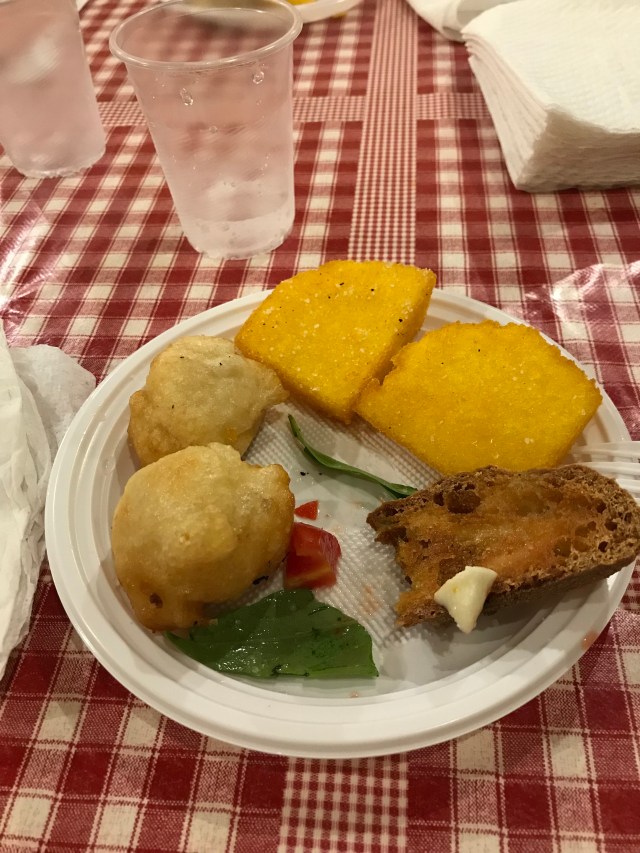 Next, we had eggplant, sort of like what we call eggplant parmesan back home.
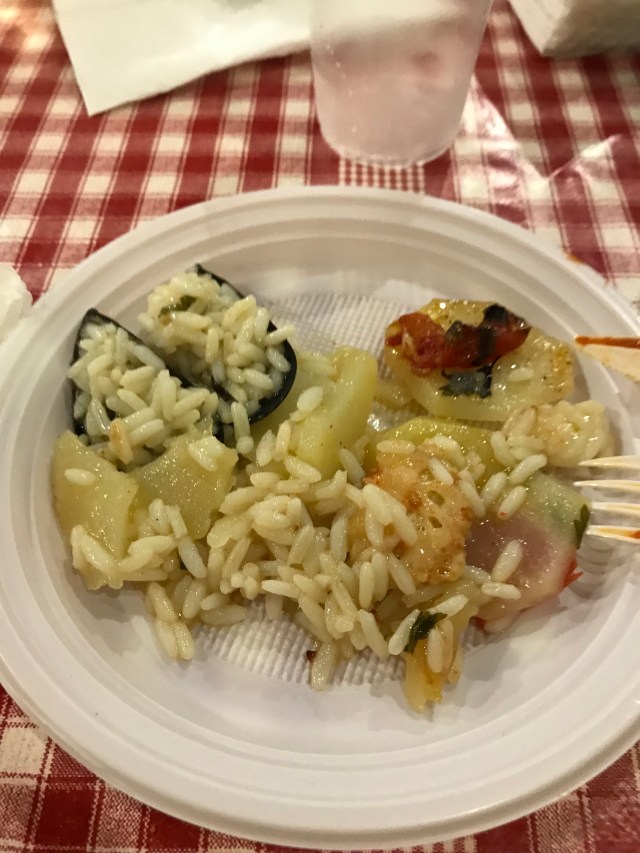
 Then, a mussel, potato and rice dish.
 And finally, “little ears” pasta and bracciole.
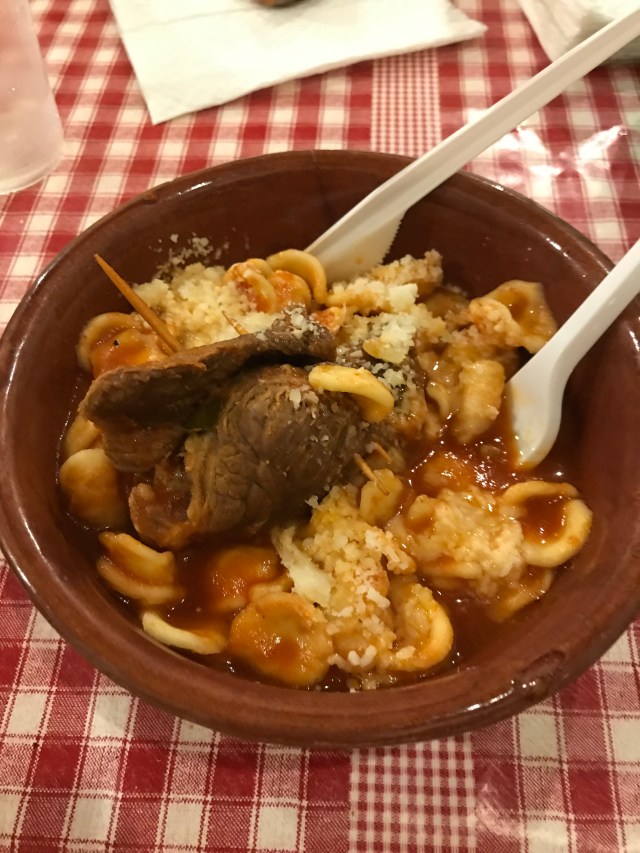 Bracciole can mean different things in different parts of Italy. Usually, it is some sort of chop. This was what we’ve had in the US at Italian American home cooked meals: a thin slice of meat wrapped around a cheese filling, tied up or closed with string or a toothpick, and tossed into the tomato sauce to cook and become tender.
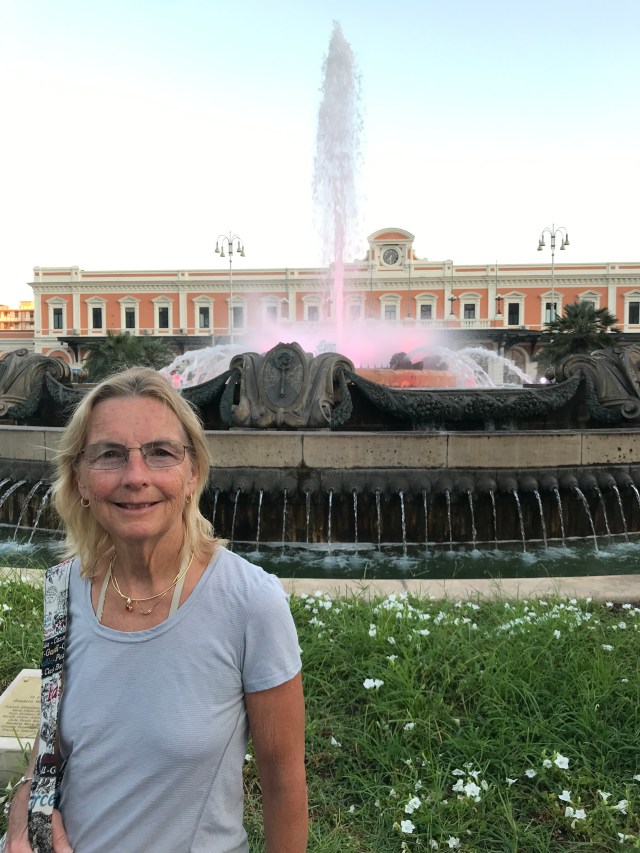
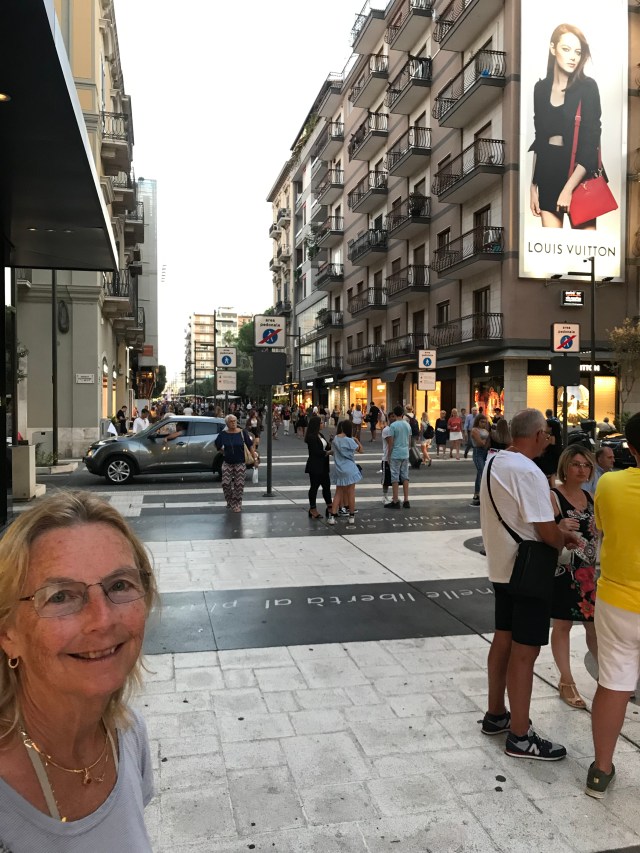 magnificent fountains
 all of the usual very high end stores found in the expensive sections of Rome and other cities, excellent restaurants, beautiful architecture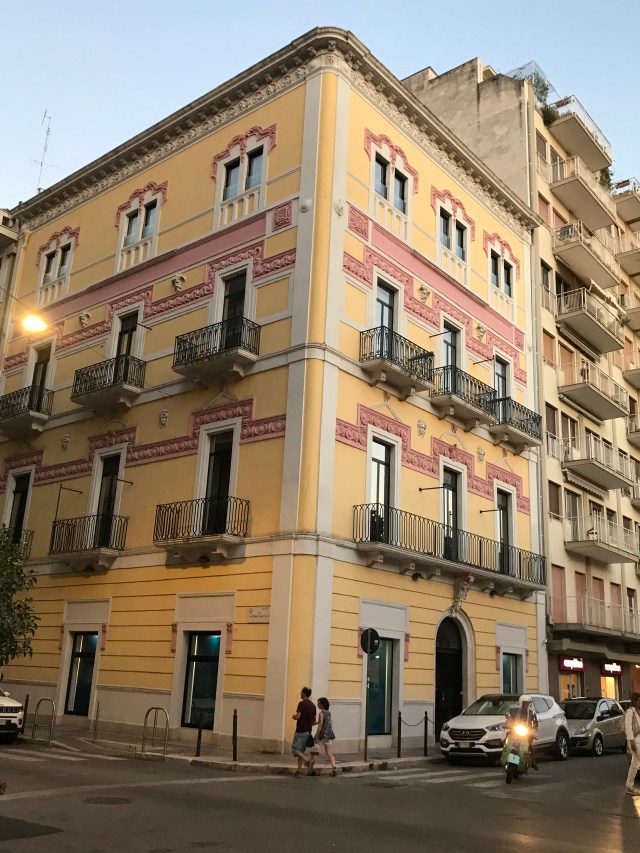
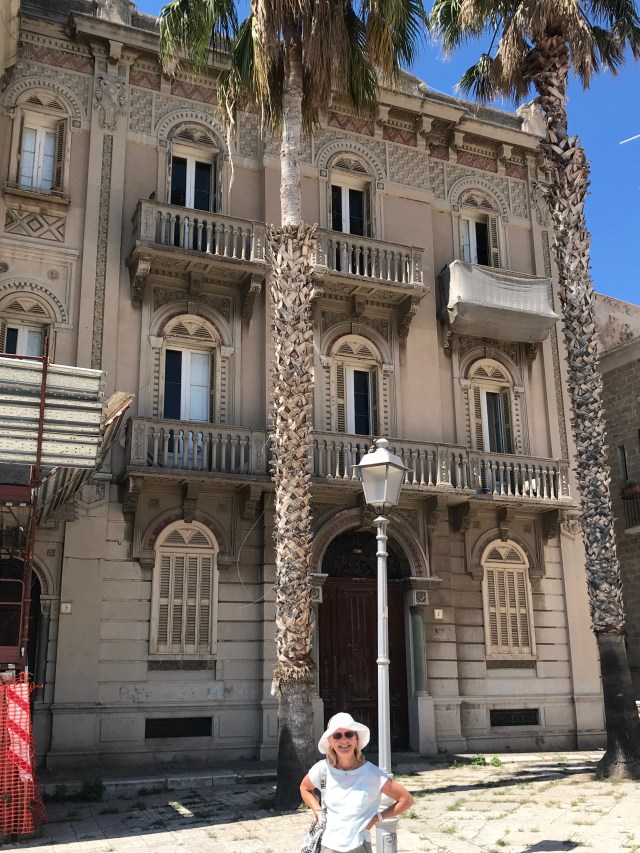 nice hotels, and a stunning waterfront
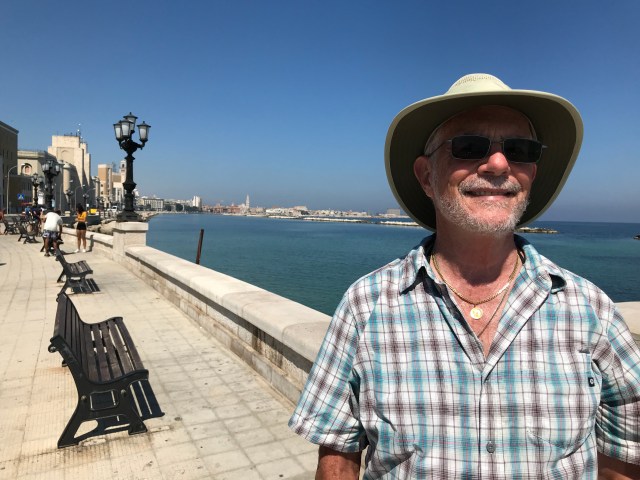 with an excellent public beach.
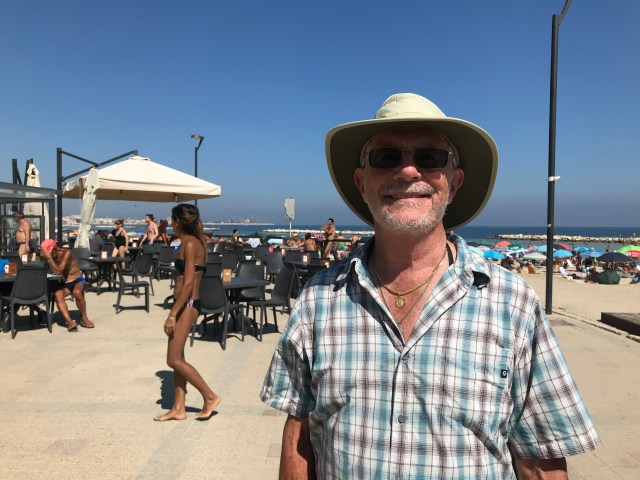 What’s not to love?
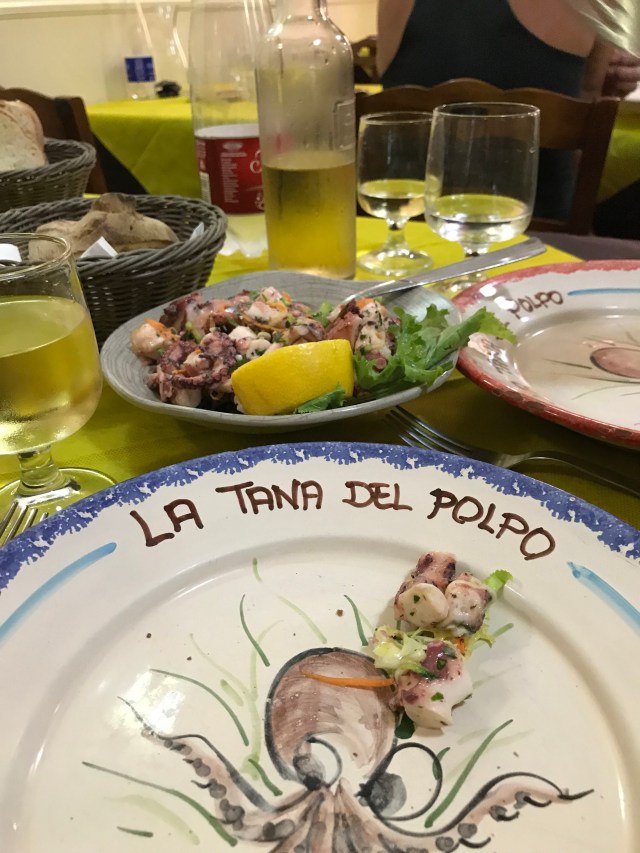 so we had that first and then inspected the fresh fish they were offering.
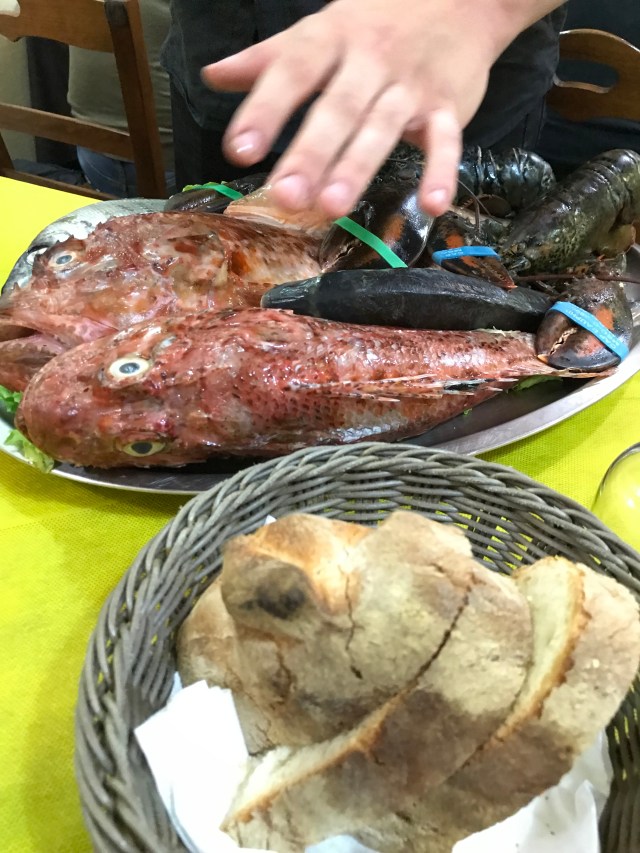 We chose sea bream
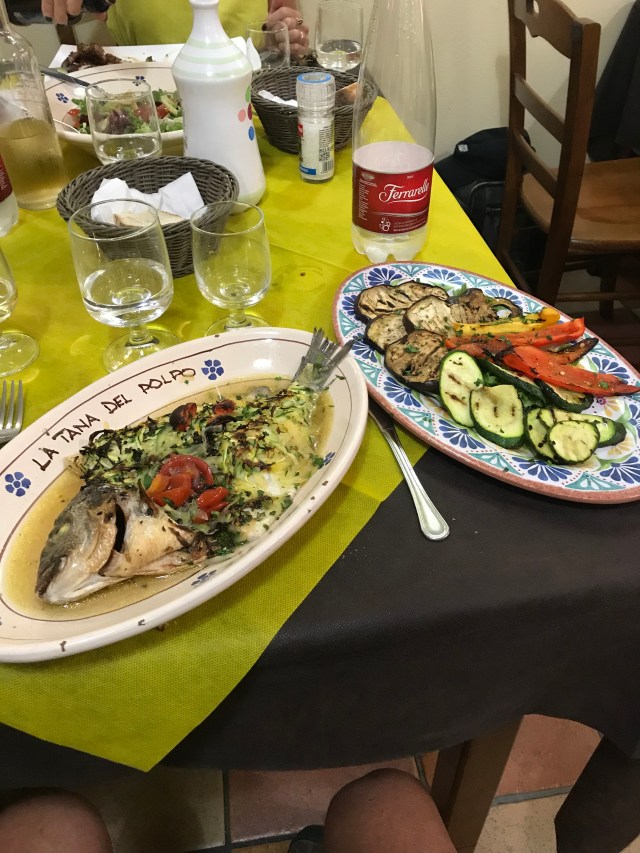 and it was excellent. As usual, there wasn’t much left after Leslie Ruth was finished!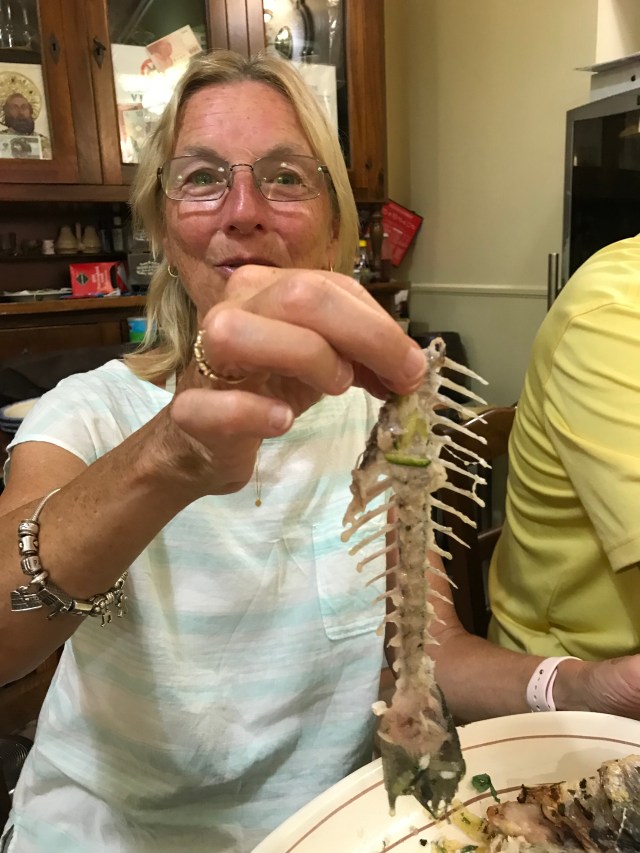
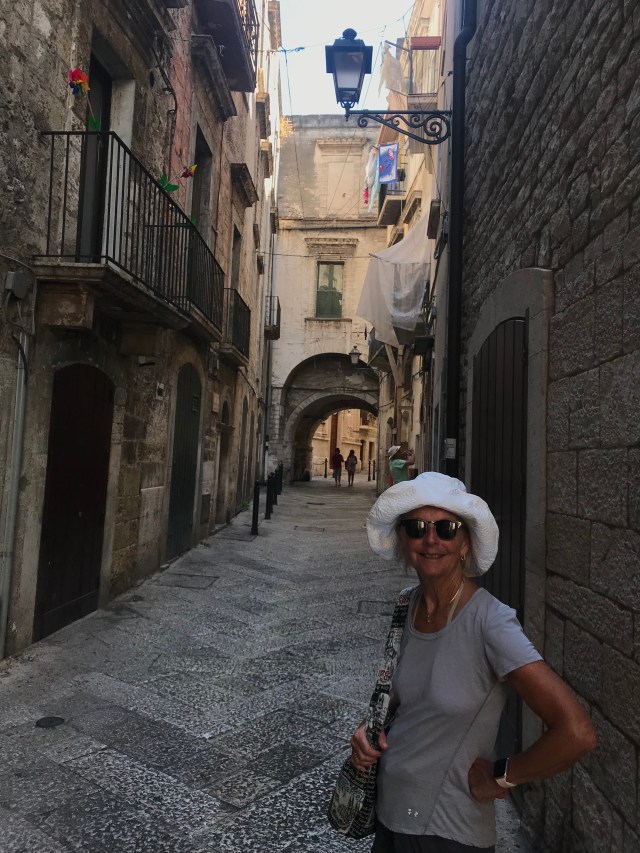 We had a great time wondering around, soaking it all in.
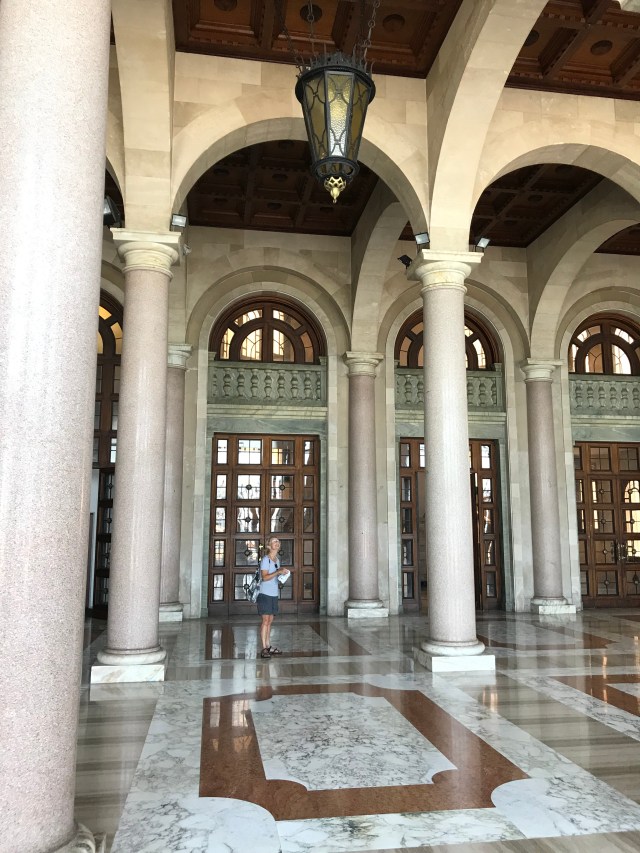 with a great collection of paintings, and featuring the works of an artist we had not heard of, Guido di Renzo. Some of his portraits were, in our opinion, spectacular.
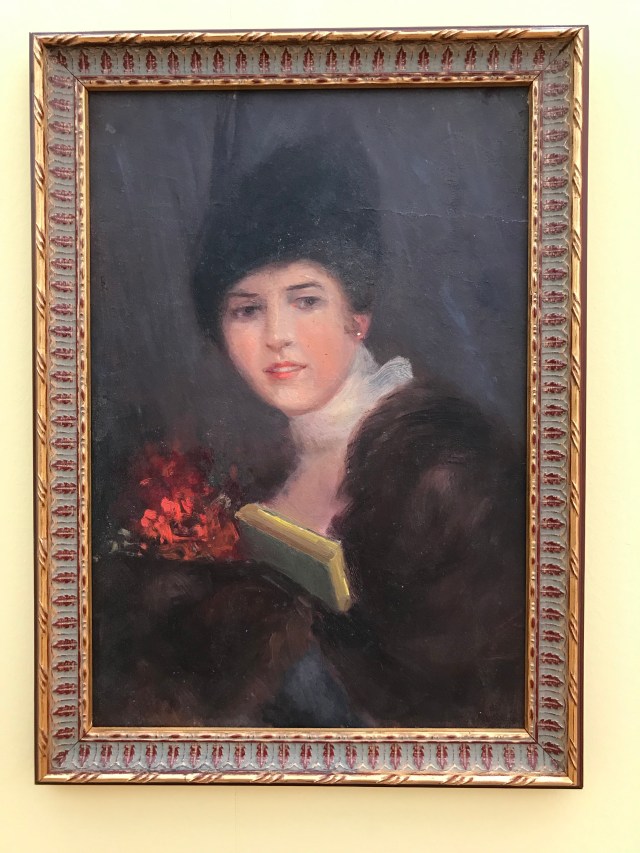 There were also many works from the 11th through the 14th century which were just hanging there with no glass or rope barriers. Their accessibility was unusual, and, we thought, very enjoyable.
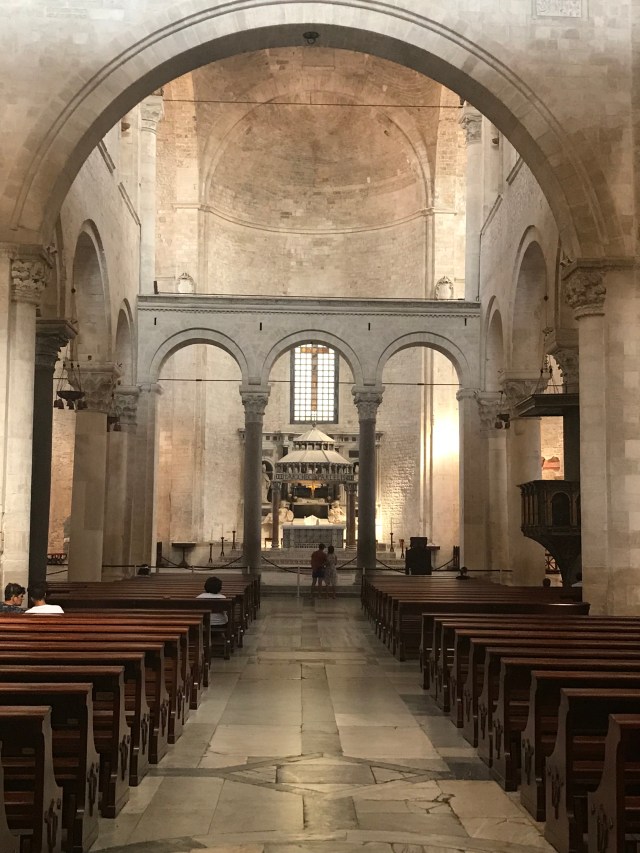 (old St. Nick!) where we saw various relics, including wood from the box his remains were transported in when they were brought to Bari from Myra, Greece
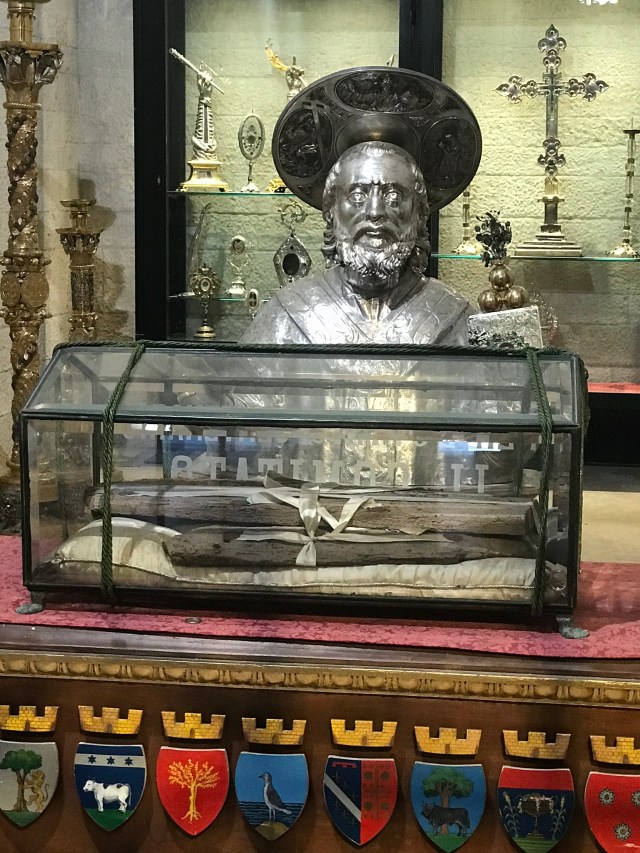 by a group of merchants, whose motivation escapes us.
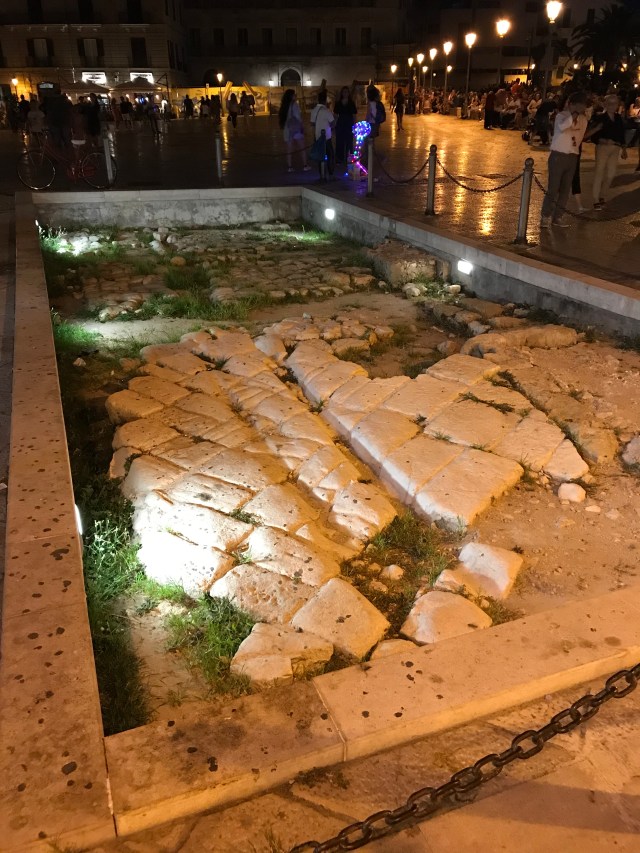 It was fascinating.
 ITALY, GERMANY, AND MORE!