When we travel, we don’t often stay at fancy hotels. When we are walking, we look for convents and monasteries which will accommodate pilgrims, typically in a dorm with double decker beds. On the Camino de Santiago, there are lots of albergos, or hostels, also with bunk beds, typically for about $10 – $12 a person. In Italy, there are few hostels, so if we can’t find a convent or monastery, we stay in a simple hotel or bed and breakfast. We spend so little time in our lodging that we don’t really need much; typically we arrive, wash up, eat, sleep, and head out in the morning.
This is not to say that we never celebrate with a nice hotel (when we finished the 1,000 mile Chemin de S. Jacques /Camino de Santiago pilmgrimage in 2016 we stayed in a beautiful, luxurious, Parador, albeit one run by the Franciscan Friars, in Santiago) but all we normally want is a hot shower and a reasonably comfortable bed. Clean is good, too, we like clean, and, in very hot weather AC is nice. Having someplace nearby where we can eat is good, but not critical, as we usually carry a little food with us.
In Rome, in the past, we had been staying at a little facility run by nuns which is just down Via Vaticano from the Vatican museums. Not expensive, and they give us a comfortable private room. We love the Vatican neighborhood.
This year, to our dismay, the sisters had no vacancies. We were disappointed, as we thought we’d be paying a lot more money for not much more comfort. But then we found Villa Vaticano, right next to the nun’s facility.
It’s not exactly a hotel; there is no front desk or other on-site service. You need to let them know when you are arriving so they can send someone to let you in (and there is a $35 penalty if you arrive after 7:00pm), but for $50/night (plus city tax) it costs even less than the nuns charge, so we thought we’d give it a try. We paid two and half times as much for two bunk beds in Iceland once, so we thought the price was great.
It’s turned out to be an outstanding place to stay. We texted them on our way in from the airport, and someone was waiting to let us in. The property is completely fenced in and very secure. Our host led us down entry stairs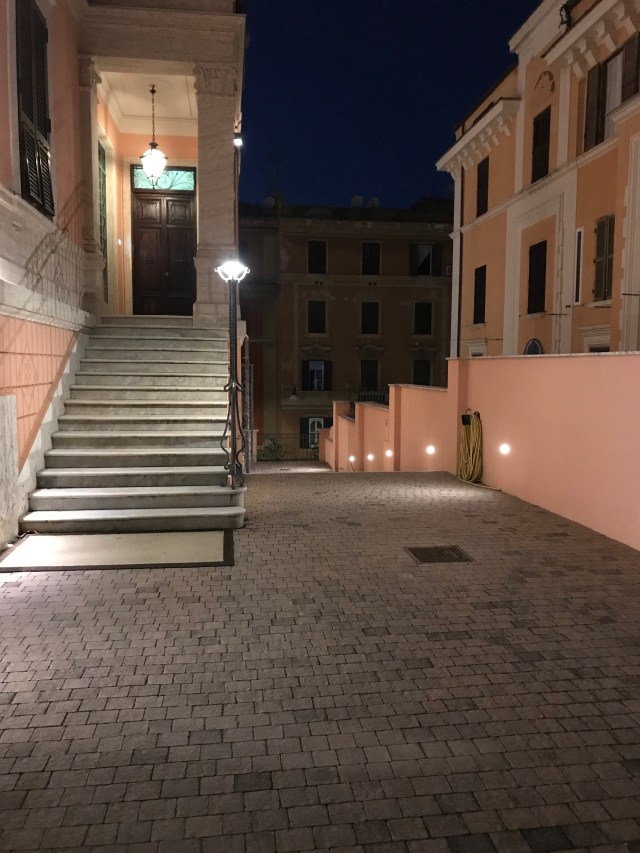 to enter the building though a door
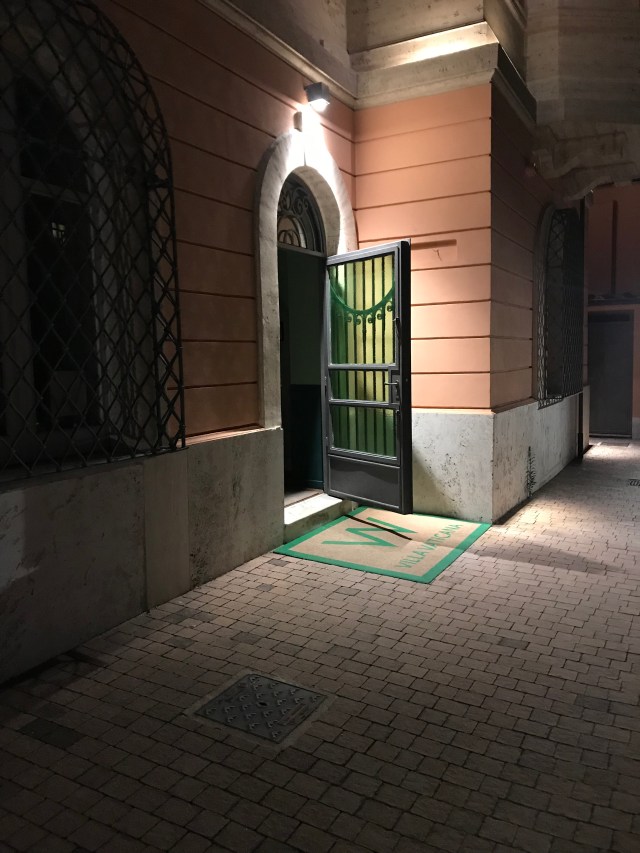 and into our room.
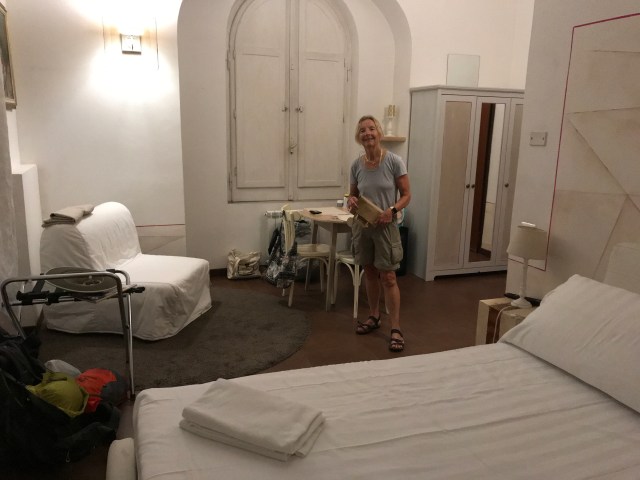 The room is very large, the bed is very comfortable
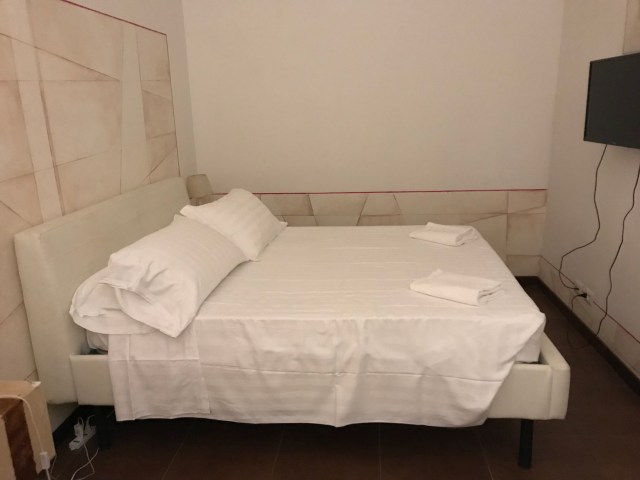 the bathroom is large (certainly by Rome standards), the shower is excellent, towels are changed daily, sheets are changed each third day, and breakfast is included!
Breakfast, of course, is an Italian breakfast, but that’s fine with us. The room has a LavAzza branded coffee pod machine with LavAzza pods.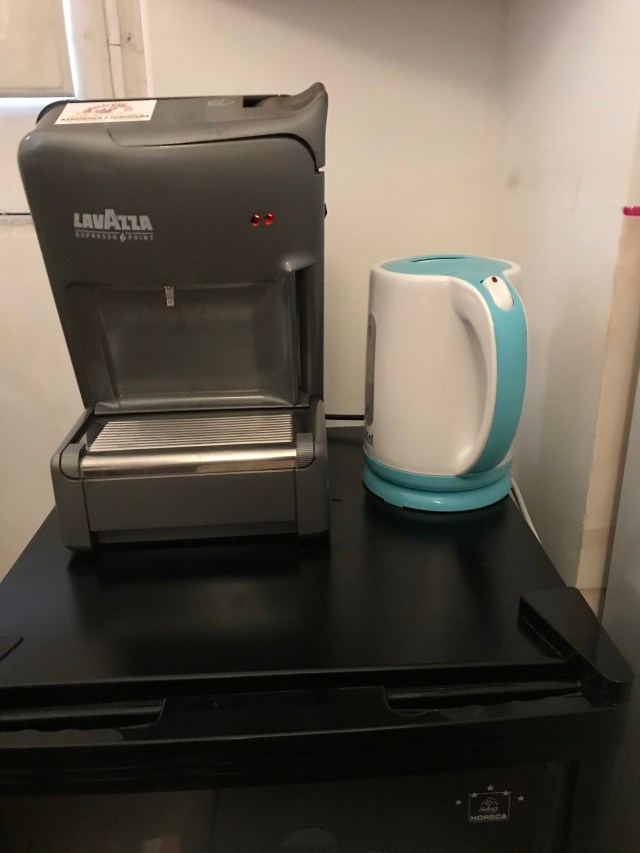 Each morning when we get up there are two croissants or other pastries, still warm from the bakery (if we get up early enough) hanging from our door knob in a little bag.
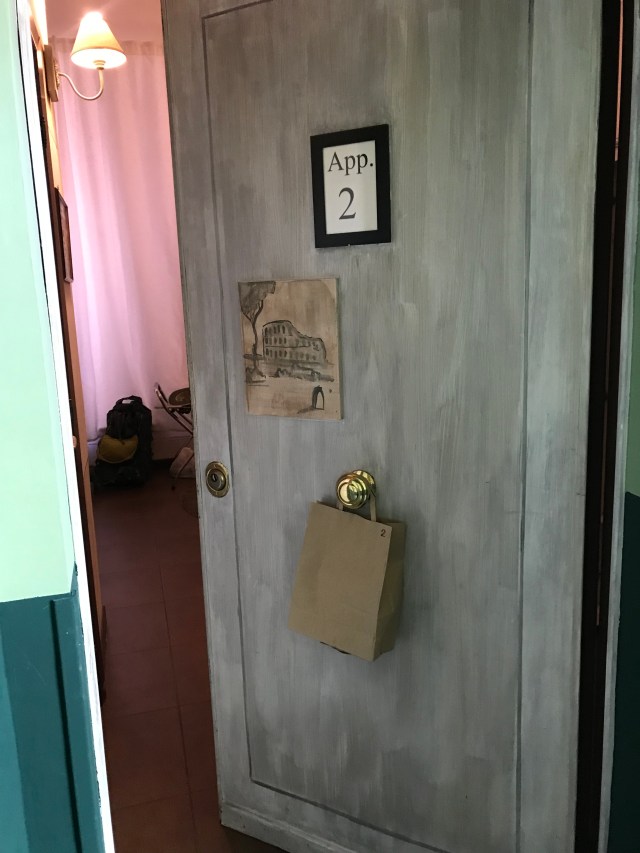 We also get packets of toasts, yogurt and juice.
Even the AC is great, Karl had to get up the first night and adjust it; it was too cold!
By our standards, this has been a fantastic find.
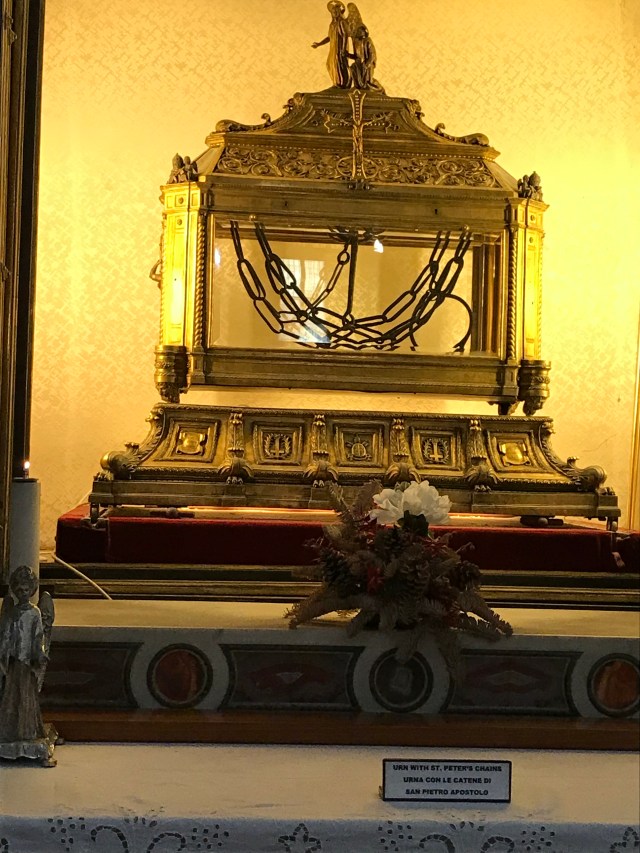
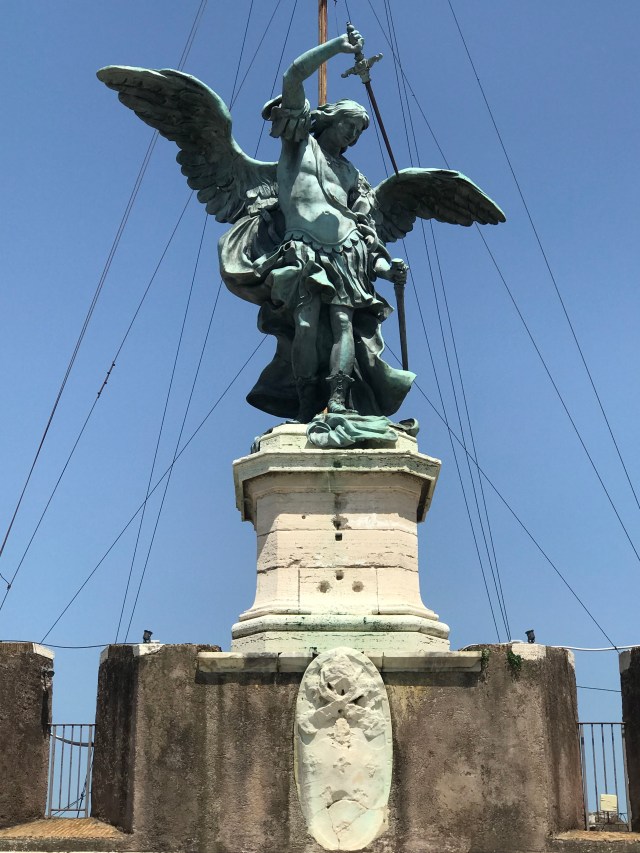 and the Saint Peter in Chains Basilica, with what are said to be the chains worn by St. Peter when he was imprisoned in Rome
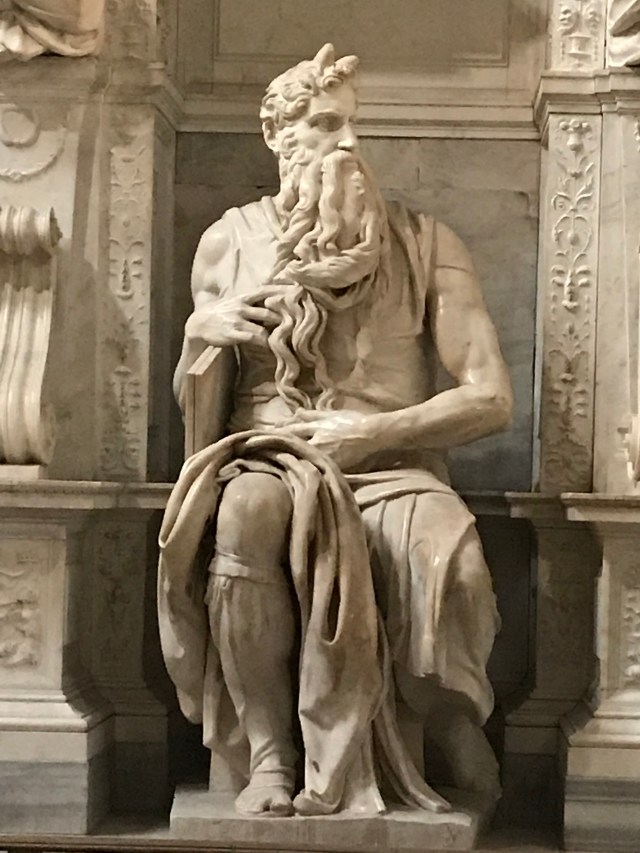
 and an exquisite statue of Moses sculpted by Michelangelo
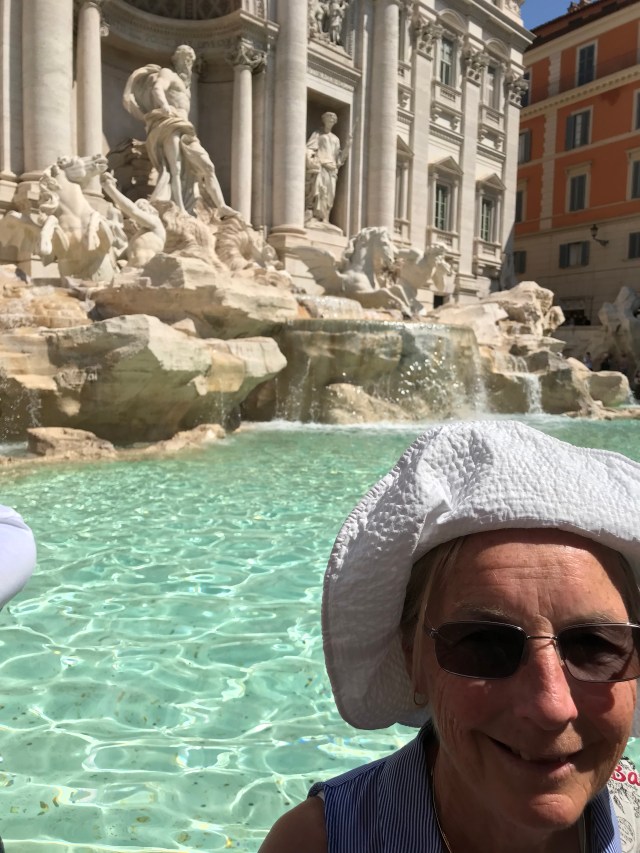
 but most of our time was spent walking to and revisiting places we’ve seen before, such as Trevi Fountain
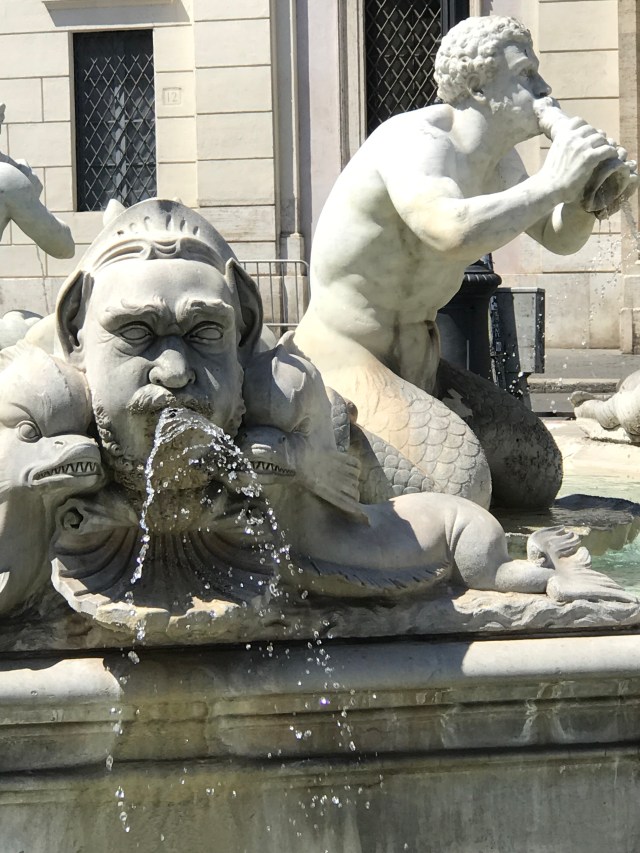
 Piazza Navarona, with its amazing fountains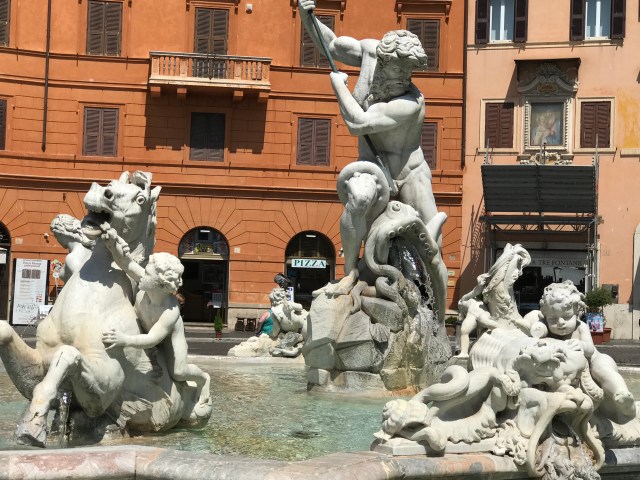
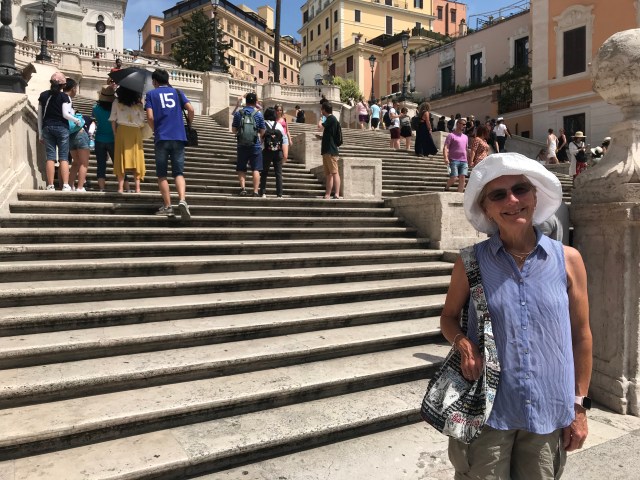
 the Spanish steps
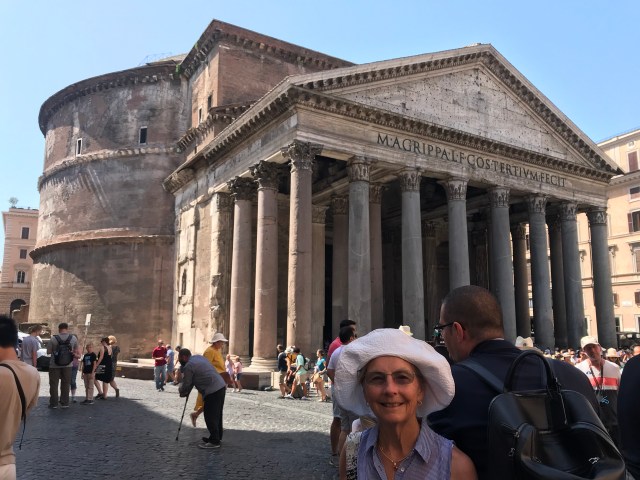
 the Parthenon
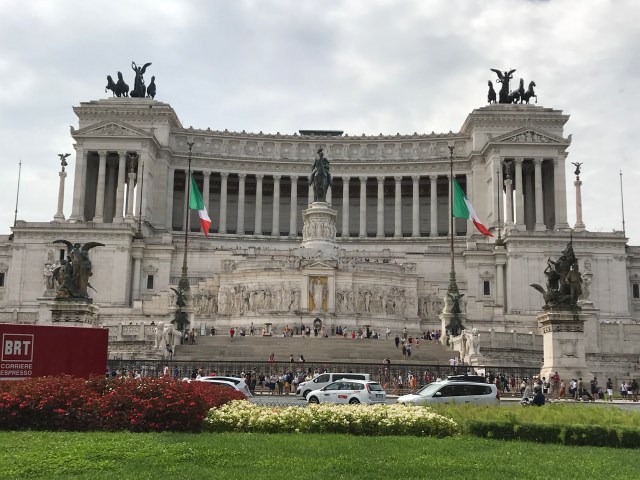
 the Vittorio Emanuele II “Alter of the Fatherland” memorial
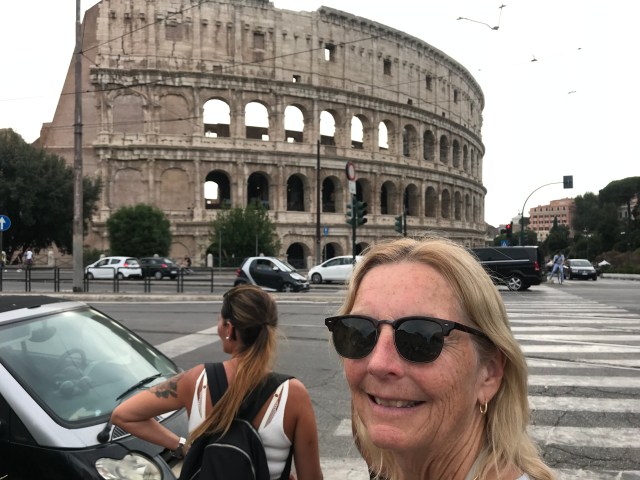
 the Coliseum
 and, of course, St. Peter’s Basilica.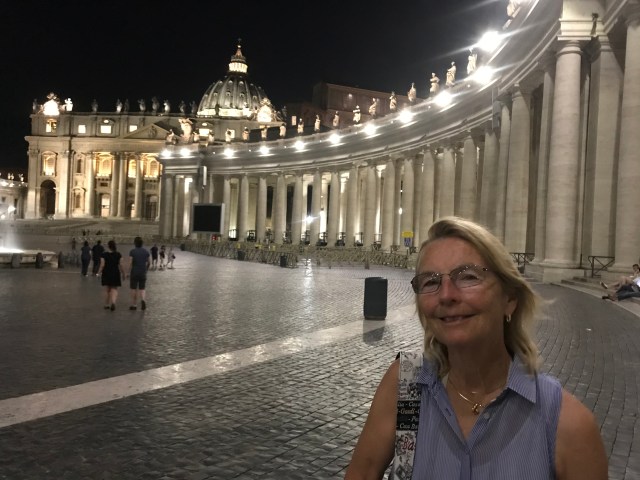
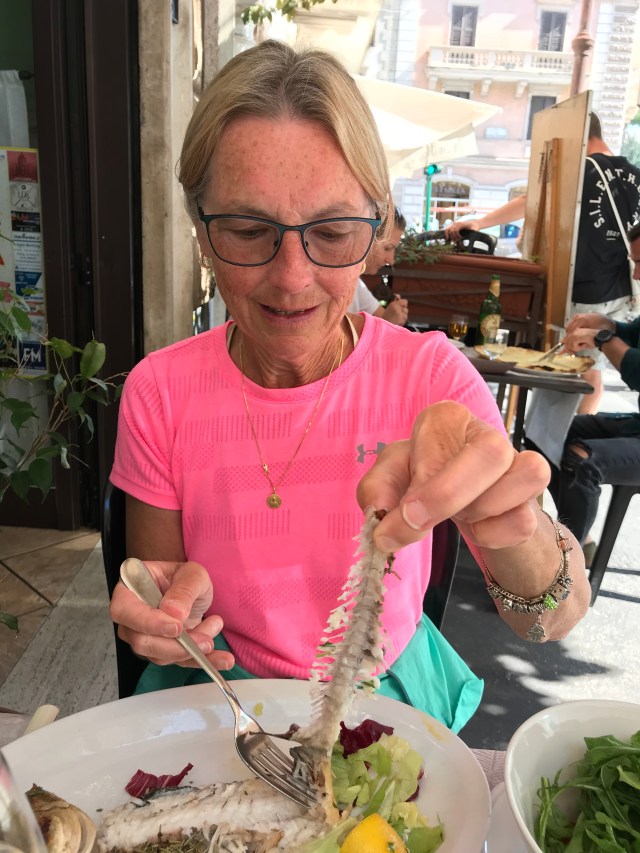
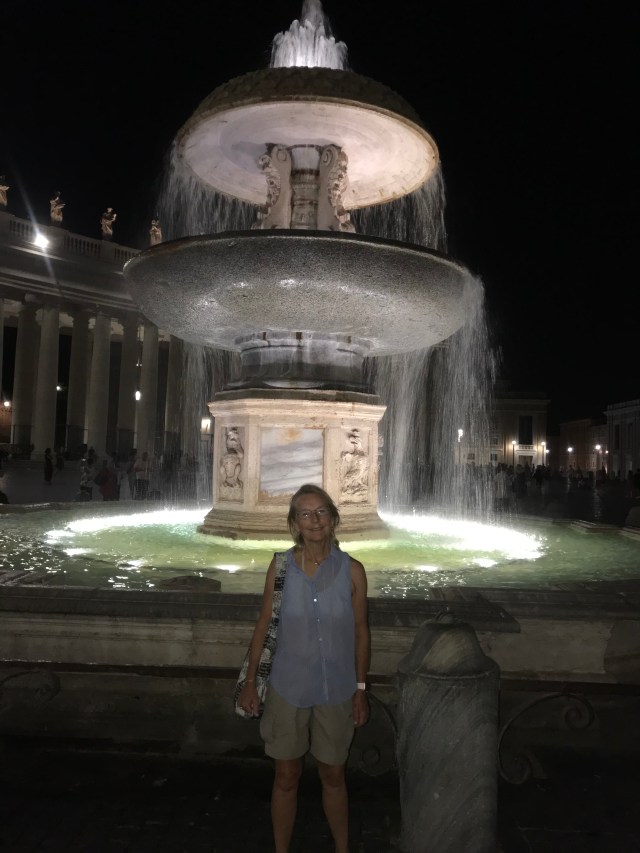 Each day we would have a nice lunch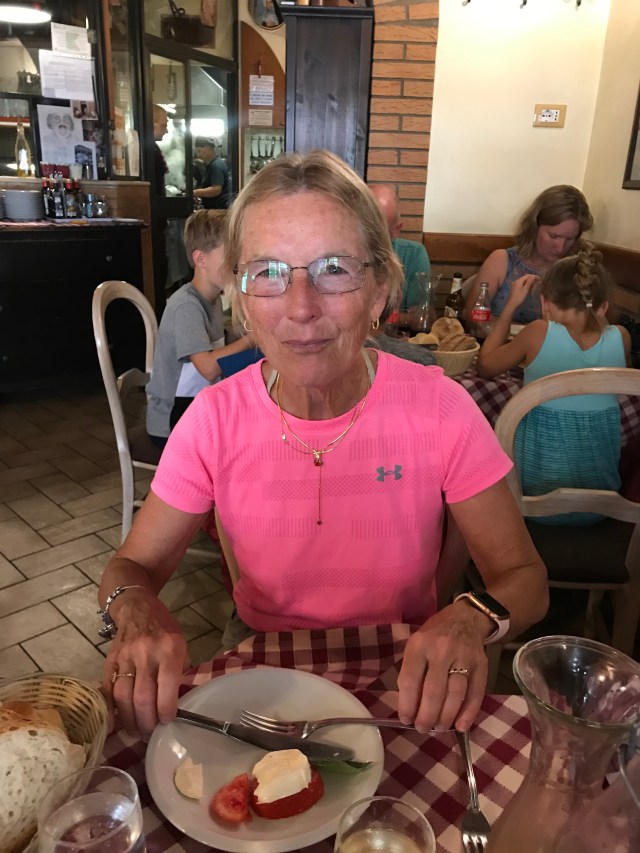
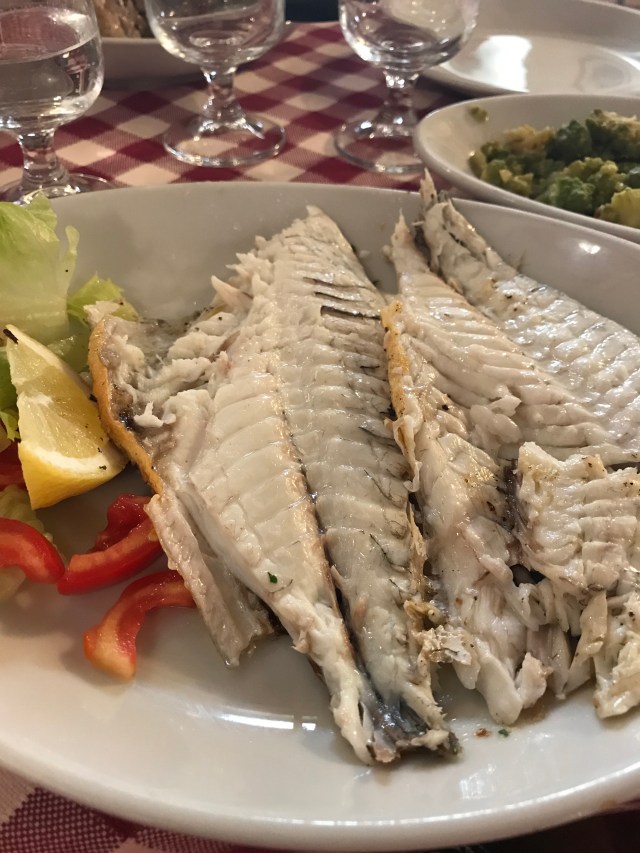
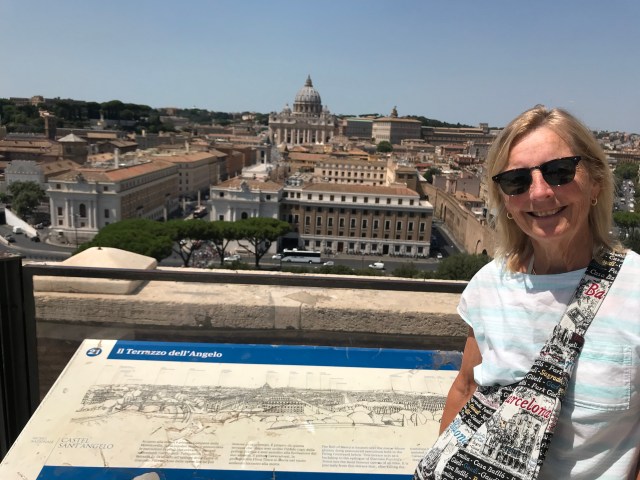
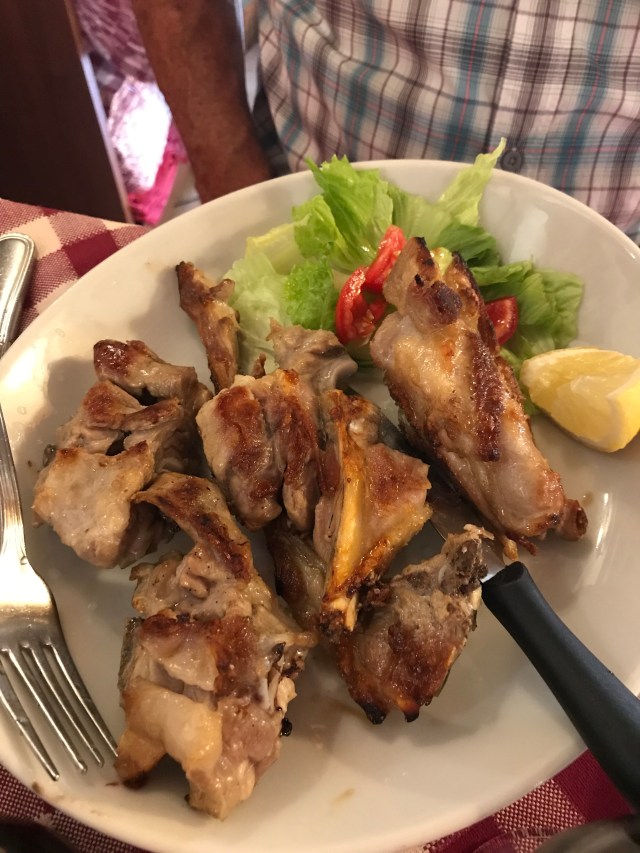 and each evening we would climb the nine flights up to the rooftop bar at the Atlante Star Hotel for some Prosecco
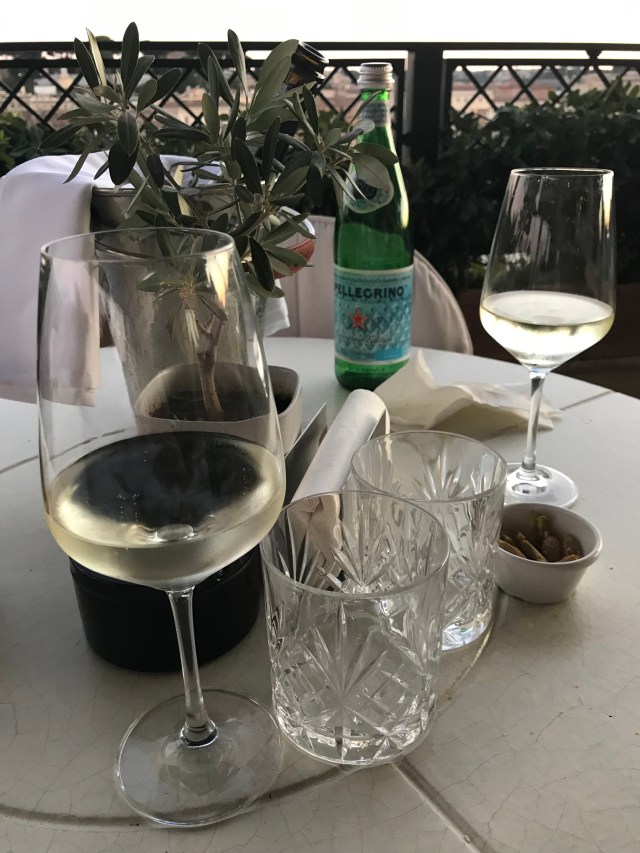 and the view.
 It was a great visit to a wonderful city.
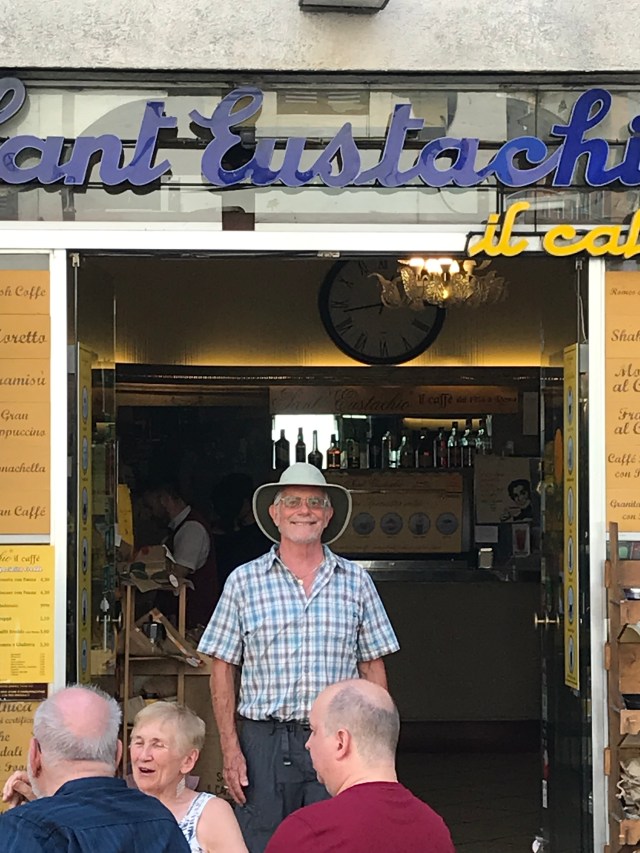 This trip, as always, Karl made a pilgrimage there. The coffee was great
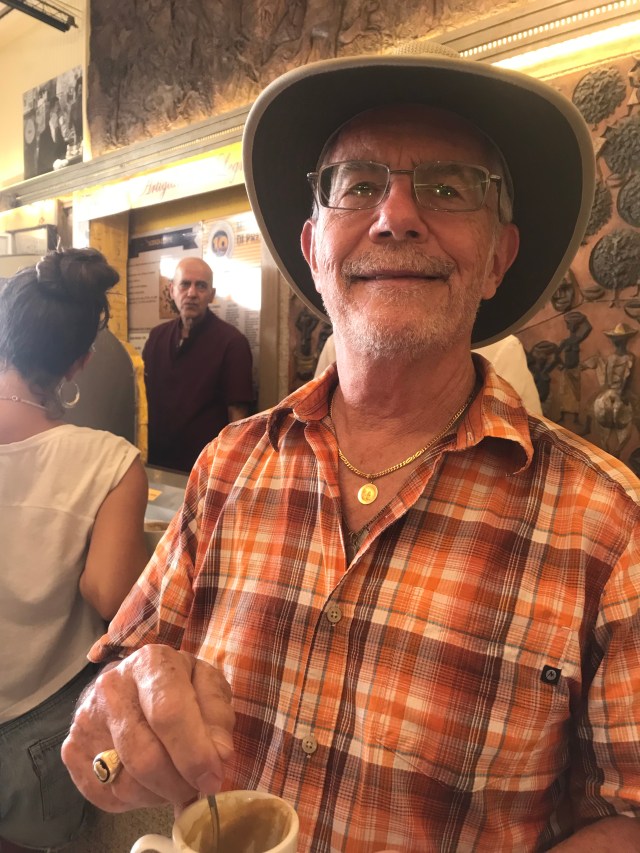 but he was disappointed that even Caffé Sant Eustachio has succumbed to modern trends. The coffee they serve is the same wonderful extraction it has always been, but they now sell the dreaded capsules!
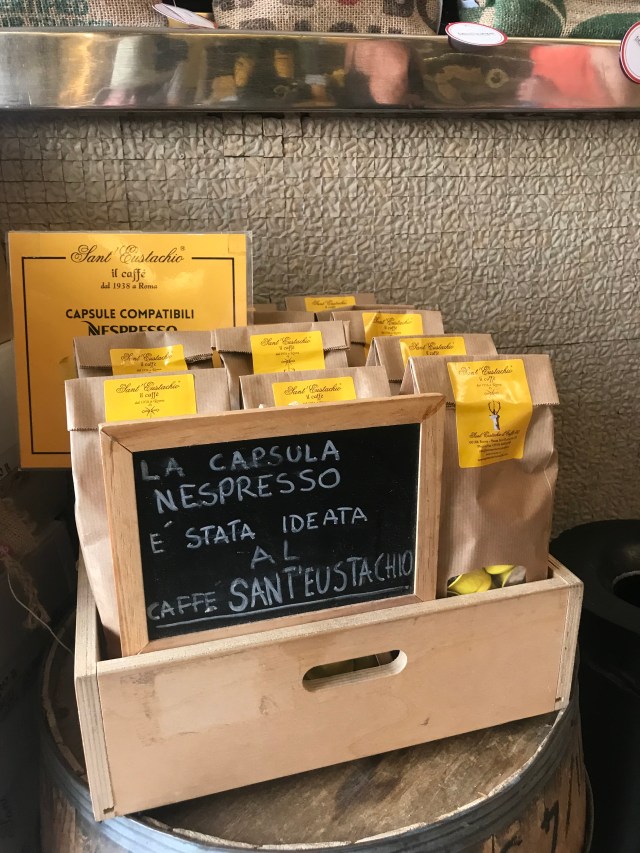 What will be next, Karl asks? Instant Sant Eustachio? Where will it all end?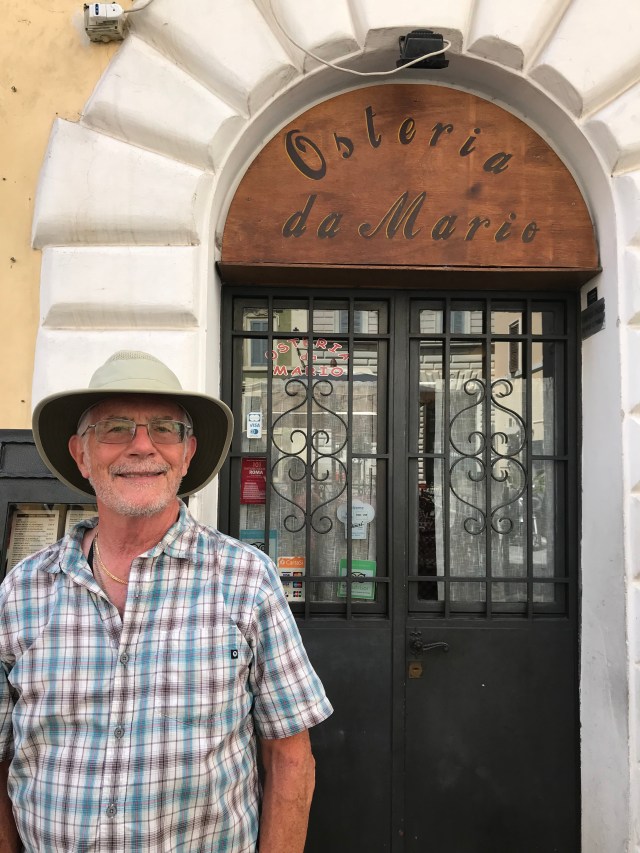
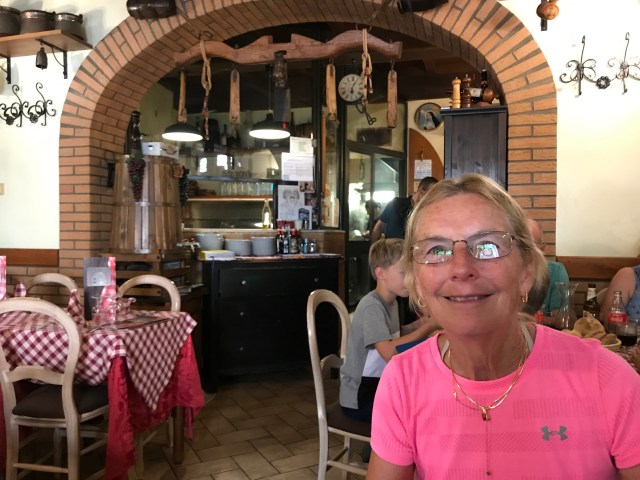
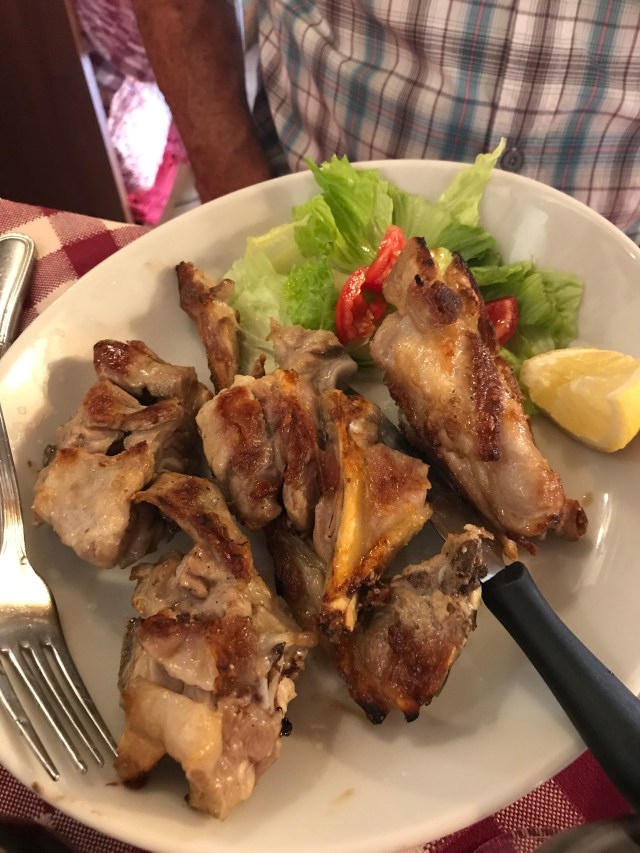
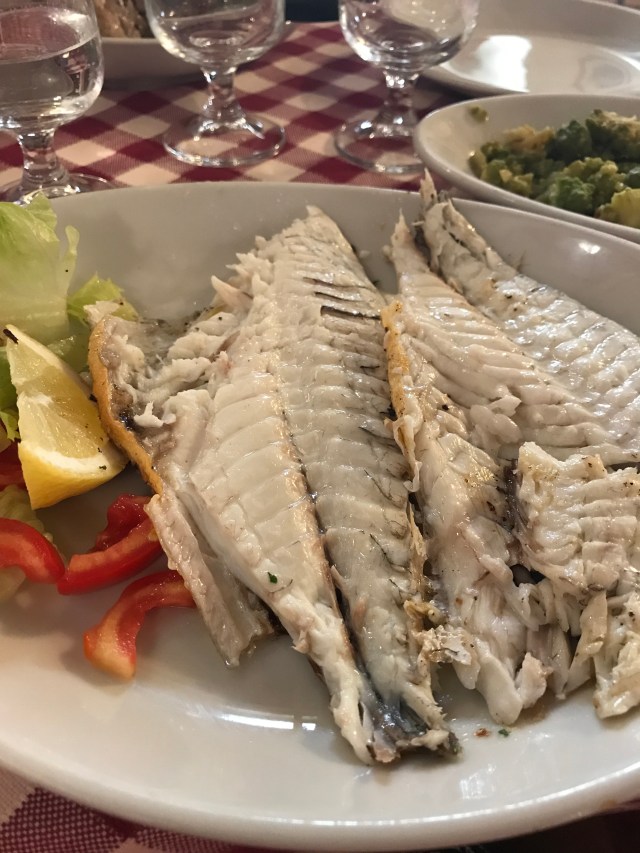 grilled lamb for Karl
 tiramisu for both of us
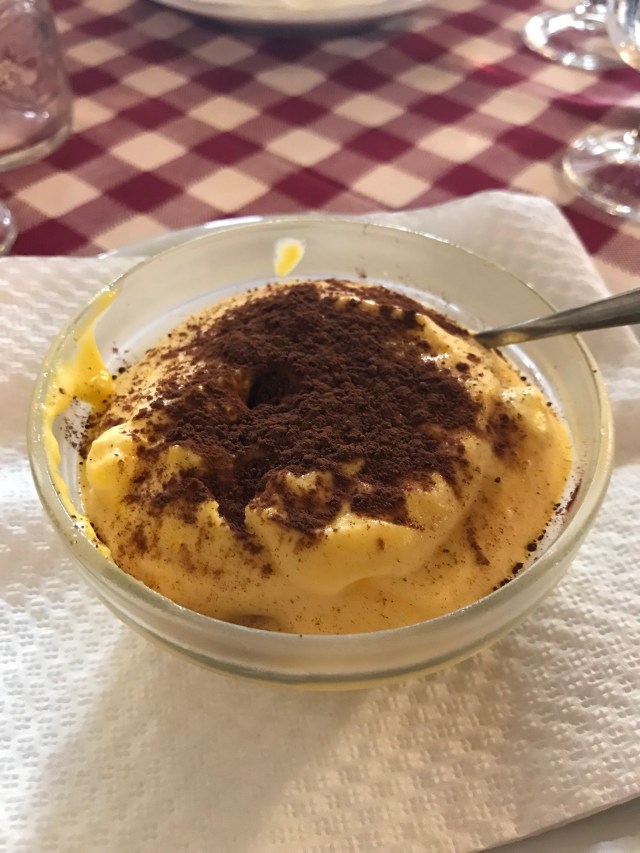 all under the watchful eyes of the restaurant’s mascot.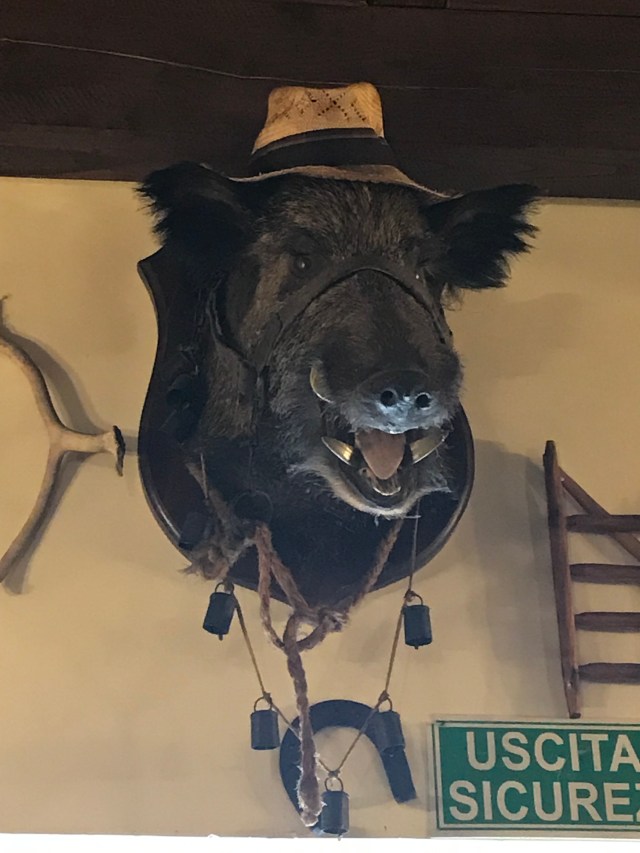
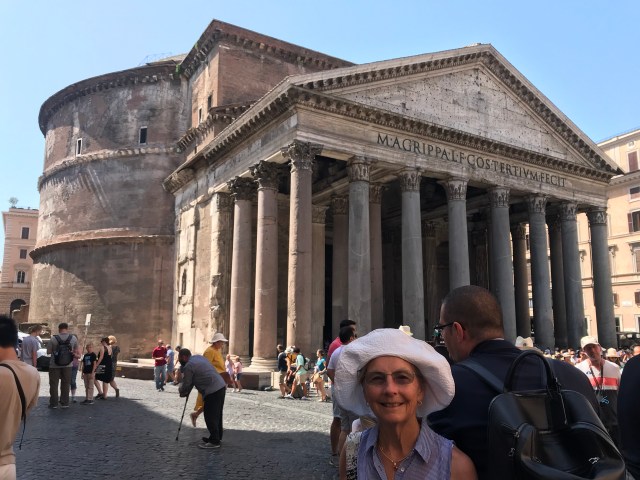
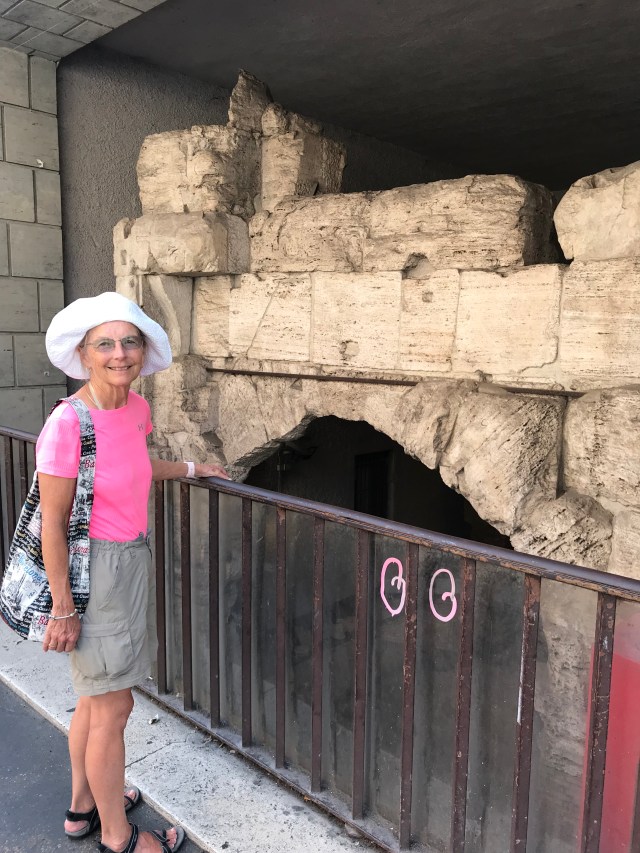
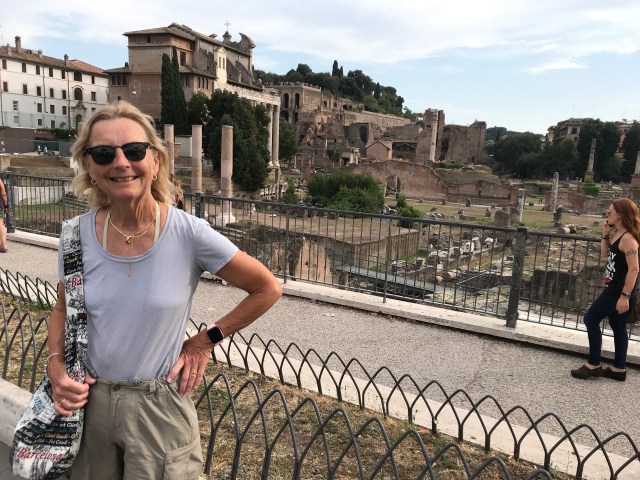 Over better than two thousand years, the city has kept tearing things down, filling in space with rubble, and building new structures. With this, the city has gradually risen. The beautiful Pantheon, the best preserved of any Roman temple, was built on a hill but is now in a bit of a depression:
 The ruins near Piazza Navona are over 30 feel below the current street. Here is Leslie Ruth standing at street level, nearly at the top of the remains of a high arch.
 Where the rise in street level is the result of a volcano covering everything with ash or lava, as in Herculaneum (this was a seven story building)
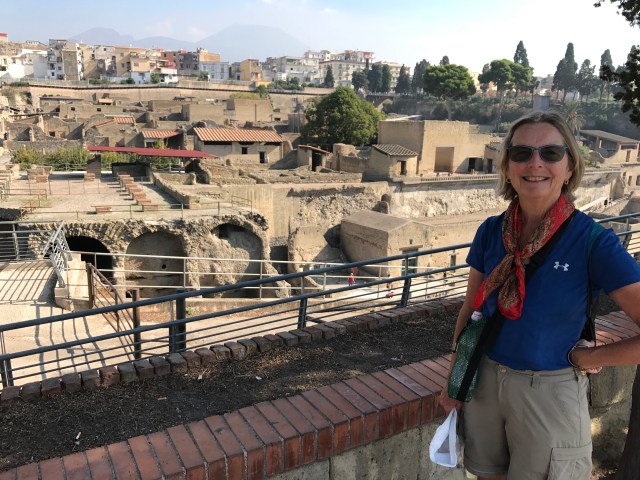 this is easier to grasp. But it is hard to believe how Rome has simply risen up by human demolition and construction over the centuries.
 and the year before that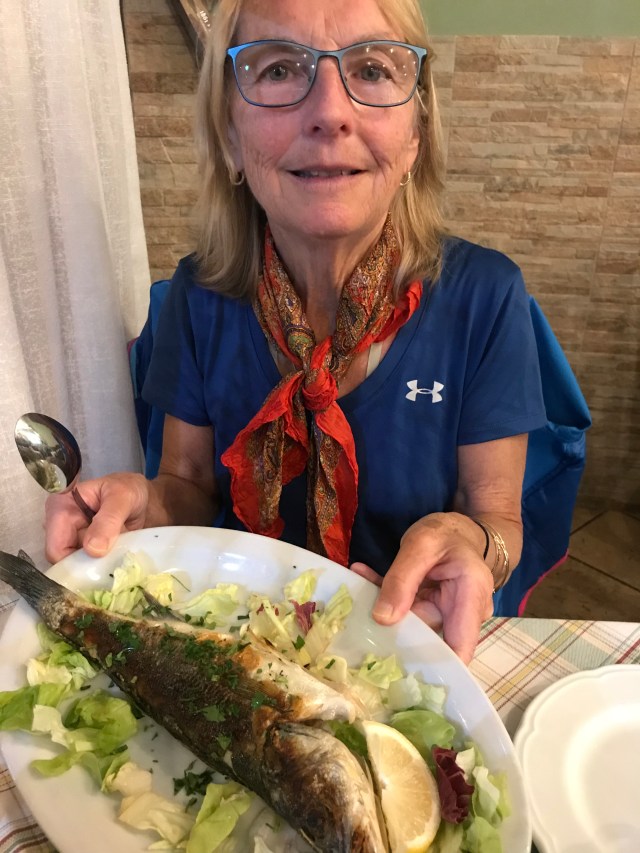
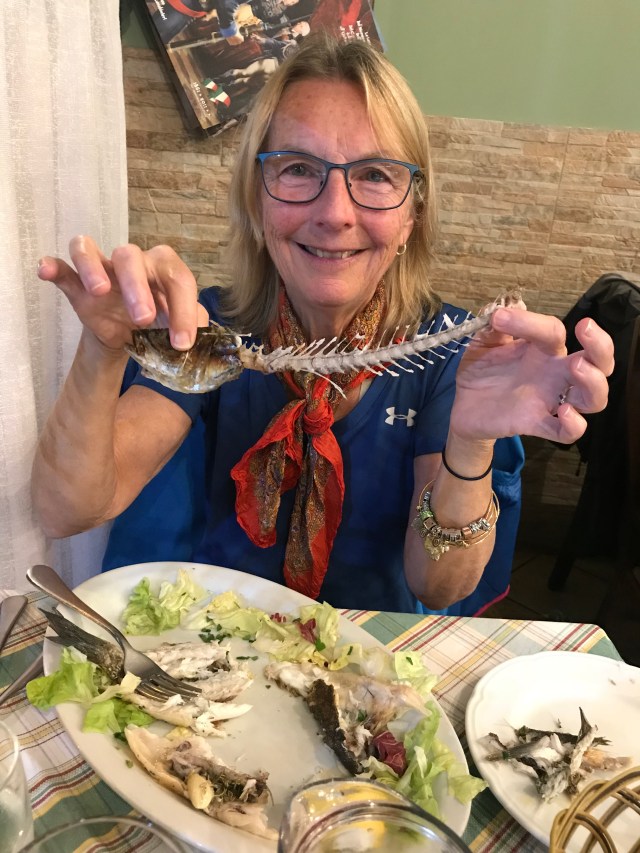 and the year before that
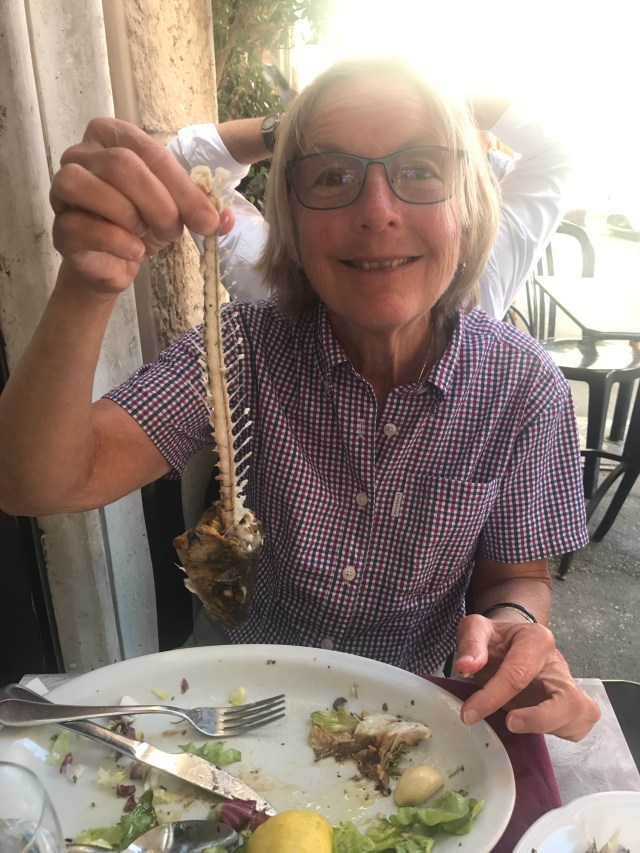 and the year before that!
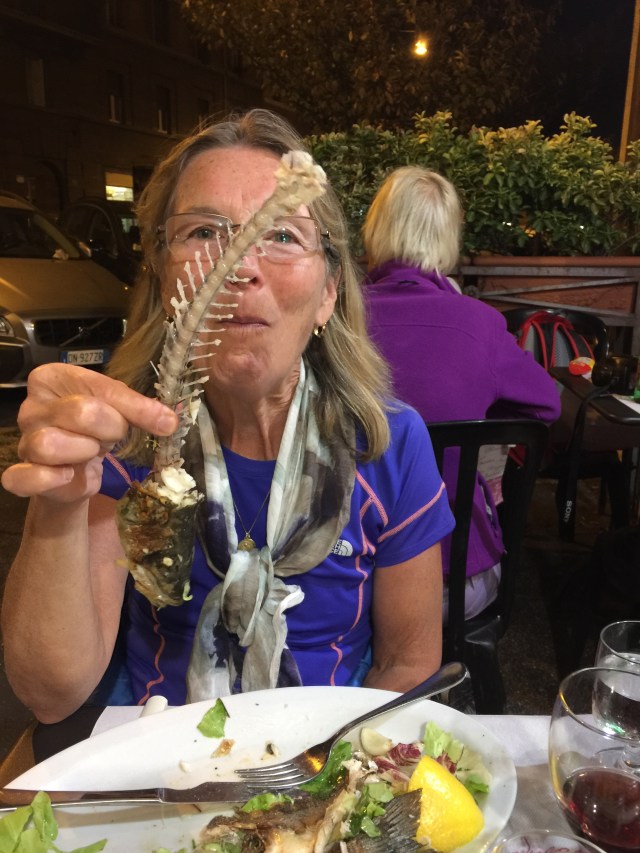 Karl likes their pasta cachio e pepe, followed by grilled lamb chops.
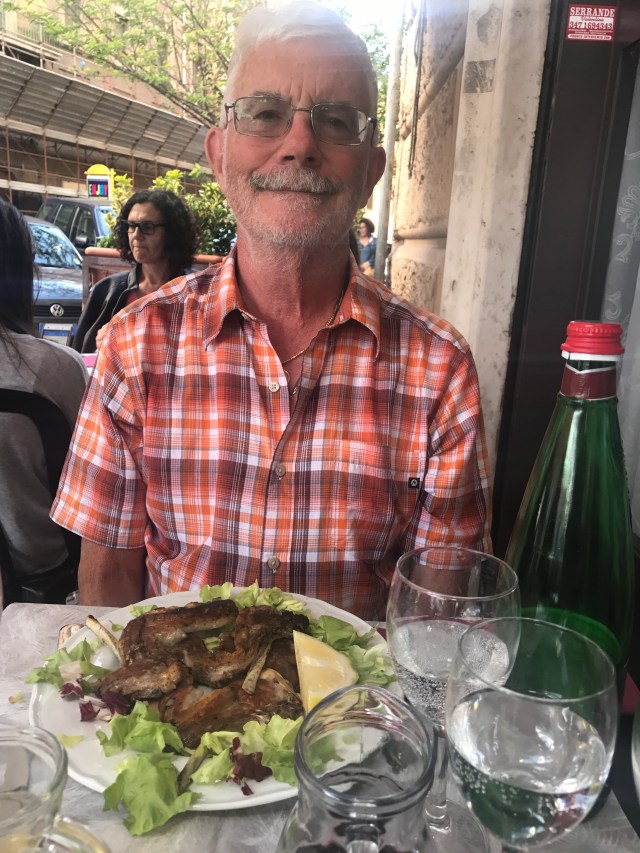 You can imagine our distress when we went by there yesterday and found that they were closed for most of the month! This confirmed that they do not rely on tourists for customers but left us to find a new favorite place.
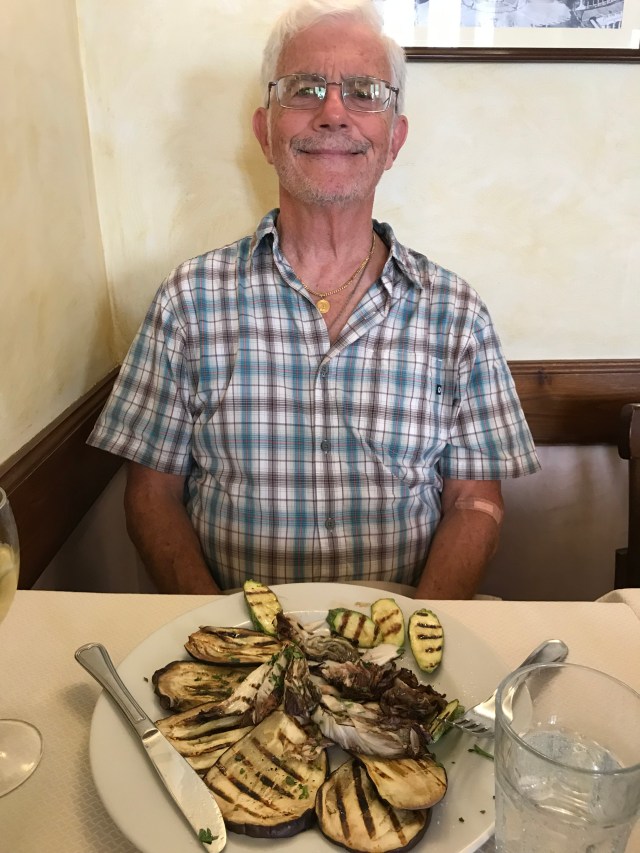 followed by a very good pasta cacio e pepe. The house wine was excellent.
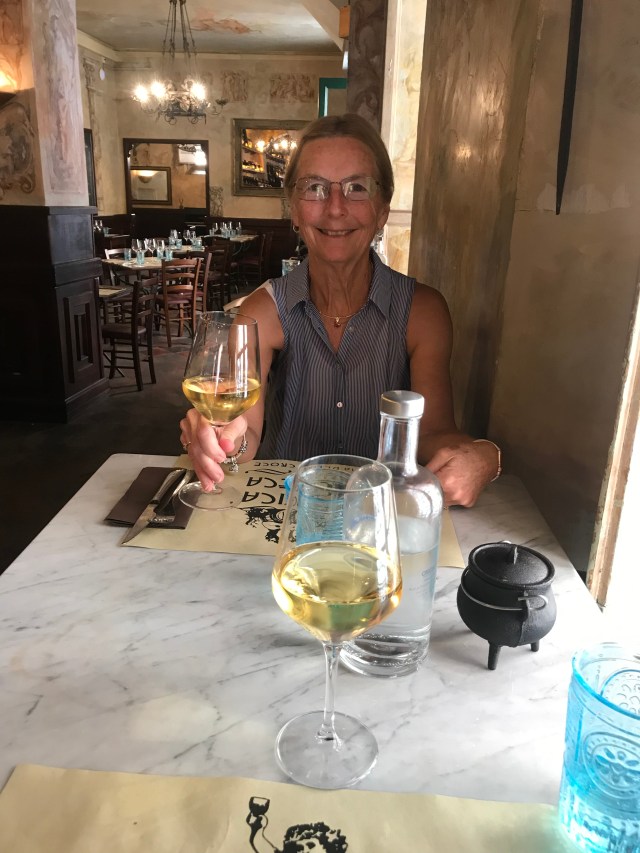 We had a meat and cheese platter and a bruschetta platter, with local (Lazio) wines.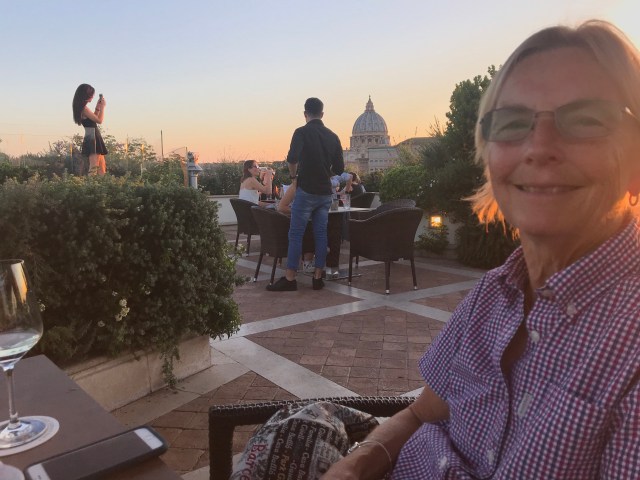
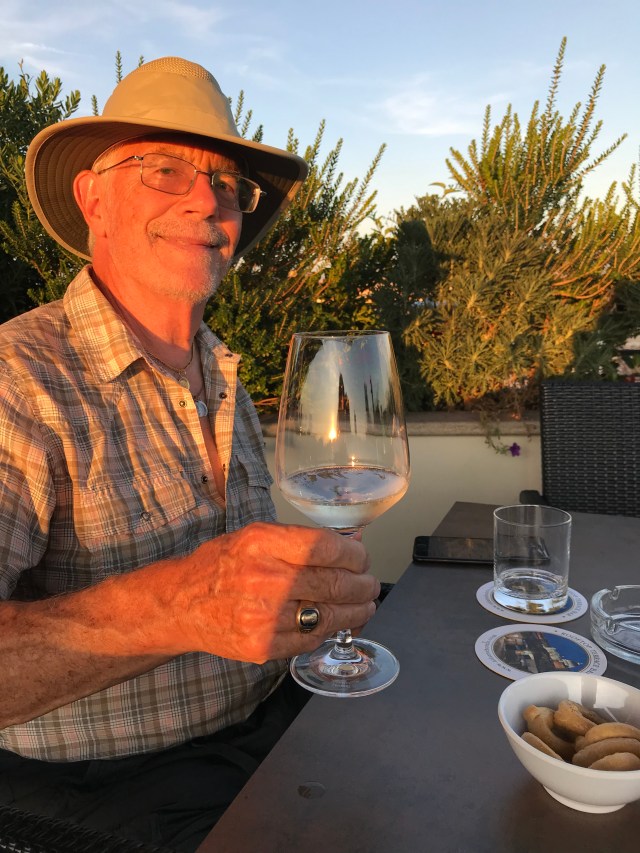
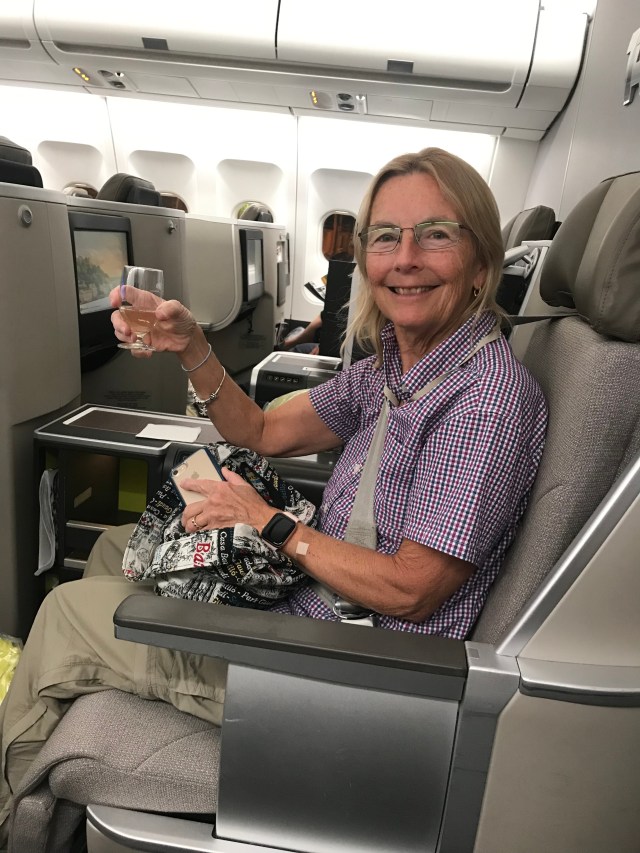
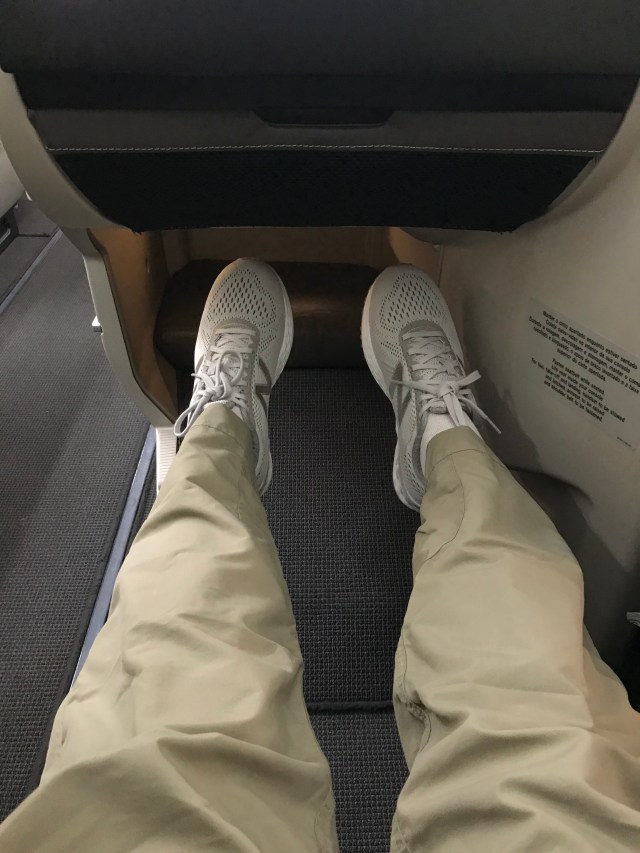 and they reclined completely to make beds.
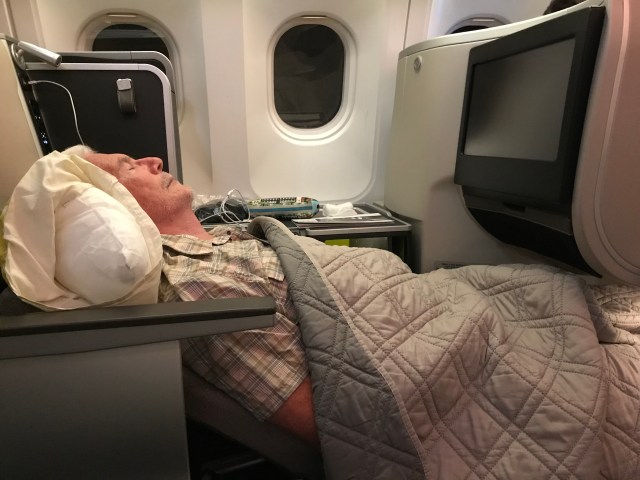 The food was excellent and the service was outstanding. We really felt like the cabin stewards were glad to see us and wanted us to be happy. We thoroughly enjoyed the excellent selection of Portugues wines.
 ITALY, GERMANY, AND MORE!